


Scientists discover how a chemical chain reaction drives brain inflammation in Parkinson’s
June 1, 2026
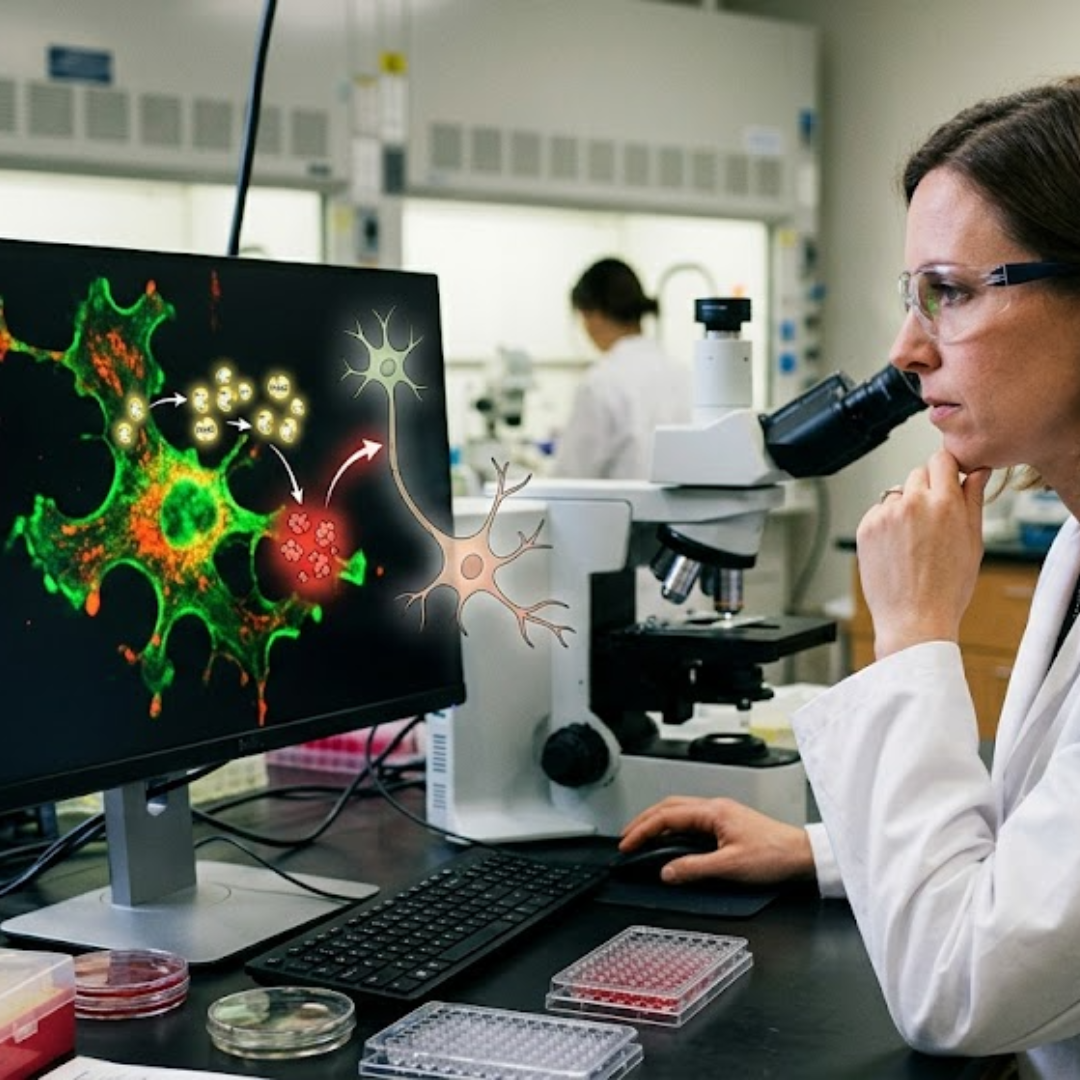
A new study has mapped out a precise chemical chain reaction showing how environmental toxins trigger harmful inflammation in the brain, while also highlighting a natural plant compound that might be able to stop it.
The research focuses on microglia, which are the immune cells responsible for protecting the brain. In a healthy brain, these cells act like tiny security guards, clearing away waste and keeping things running smoothly. However, if they get locked into an angry, overactive state, they stop protecting the brain and start attacking it. This long-term inflammation damages the vital dopamine-producing brain cells, which is the underlying cause of Parkinson's.
To understand exactly what flips this switch, scientists exposed brain cells to a pesticide called rotenone, which is widely used in laboratories to recreate the features of Parkinson's. They discovered that the toxin forces the immune cells to completely rewire how they generate energy, shifting into a frantic state called aerobic glycolysis. Instead of burning fuel efficiently, the cells begin rapidly gorging on glucose sugar.
This sudden change in the cell's engine is controlled by a specific enzyme called PKM2. The pesticide forces PKM2 into overdrive, giving the immune cells a massive burst of quick energy. However, running this cellular engine too hot creates a dangerous waste product called methylglyoxal.
As this toxic waste builds up, it turns into sticky, damaging protein clusters known as MG-Hs. The researchers discovered that these clusters act like an internal panic button inside the cell. They activate a master genetic switch called NF-κB, which orders the cell to flood the surrounding brain tissue with inflammatory chemicals, creating a continuous loop of damage.
After figuring out this entire destructive pipeline, the team tested a way to break it using a natural compound called shikonin, which is extracted from the roots of the red-root gromwell plant. Because shikonin is known to calm down the overactive PKM2 enzyme, the scientists wanted to see if turning off the cell's runaway engine would stop the inflammation at the source.
The experiment worked remarkably well. By introducing shikonin, the researchers successfully blocked the PKM2 enzyme, which immediately stopped the cells from gorging on sugar. Because the engine slowed down, the dangerous waste products never accumulated, the genetic panic button was never pushed, and the flood of brain-damaging inflammation was completely halted.
By showing that brain inflammation is directly driven by a sugar-burning engine gone wrong, this study opens up an exciting new avenue for treatments. It suggests that by using targeted compounds to fix the metabolism of our brain's immune cells, we might find a way to protect vital neurons and slow down the progression of Parkinson's.
Comments (0)
Loading comments...