


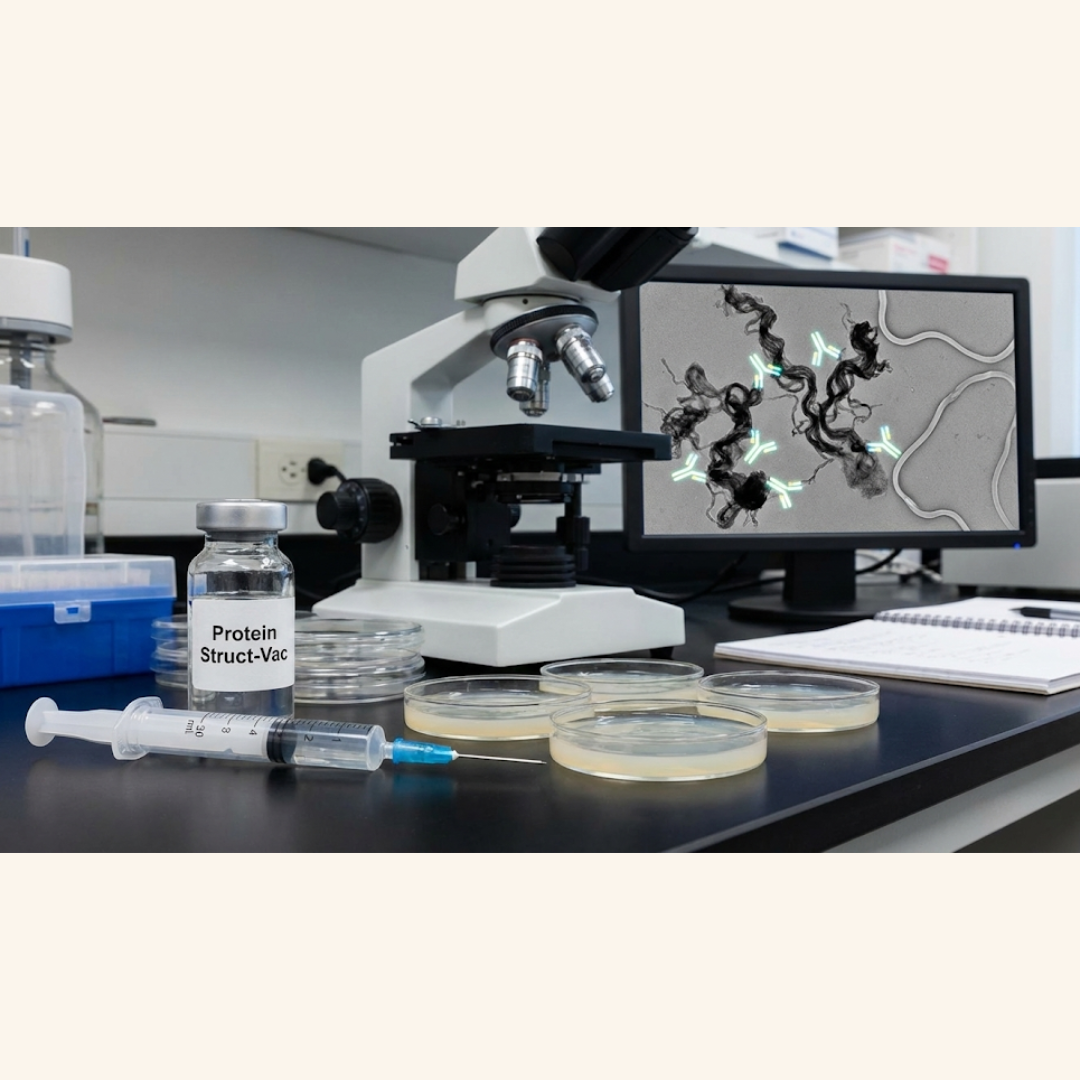
New Vaccine Strategy Targets the Shape of Toxic Proteins
January 12, 2026
One of the biggest hurdles in developing a vaccine for Parkinson’s has been teaching the immune system to tell the difference between friend and foe. The protein alpha-synuclein is found in every healthy brain, but in Parkinson’s, it clumps together into toxic knots. A standard vaccine risks attacking the healthy protein alongside the toxic one, which could cause more harm than good. A fascinating new study published in the journal Brain proposes a solution: teaching the body to recognise the shape of the enemy, not just its name.
The researchers discovered that the toxic clumps have a very specific, twisted structure. To train the immune system to spot this, they built a "dummy" version of the clump using a harmless fungal protein. They moulded this harmless protein to look exactly like the surface of the toxic Parkinson’s fibrils. It acts essentially as a 3D blueprint, showing the immune system exactly what the dangerous structure looks like so it can launch a precision attack without harming the healthy, normal proteins the brain needs.
When this vaccine was tested in mice that are genetically prone to a Parkinson’s-like condition, the results were promising. The mice that received the vaccine produced their own antibodies that successfully locked onto the toxic clumps. More importantly, these mice lived roughly 40 per cent longer than those that were left untreated. The antibodies generated by the mice were also tested on brain tissue from human patients, where they successfully identified the real toxic proteins found in Parkinson’s.
This is a significant step forward because it represents "active immunisation". Instead of injecting laboratory-made antibodies into a patient every few weeks—which is expensive and temporary—this approach teaches the patient's own body to manufacture the defence itself. While we are still at the stage of animal testing and human trials are some way off, this study offers a clever new tactic. By focusing on the geometry of the disease, scientists may have found a way to help the body clear out the clutter before it causes damage.
Comments (0)
Loading comments...