


A natural protein called Klotho may help protect the brain and keep thinking sharp in Parkinson's
May 7, 2026
As research into Parkinson’s progresses, scientists are looking beyond just managing movement to find ways of protecting our cognitive health. A fascinating new study has turned its attention to a protein naturally produced in our bodies called Klotho. Named after the Greek goddess who spins the thread of life, Klotho is often referred to as a "longevity factor" because of its role in healthy ageing. Recent findings suggest that having higher levels of this protein might actually act as a shield, helping people with Parkinson's stay cognitively sharp for longer.
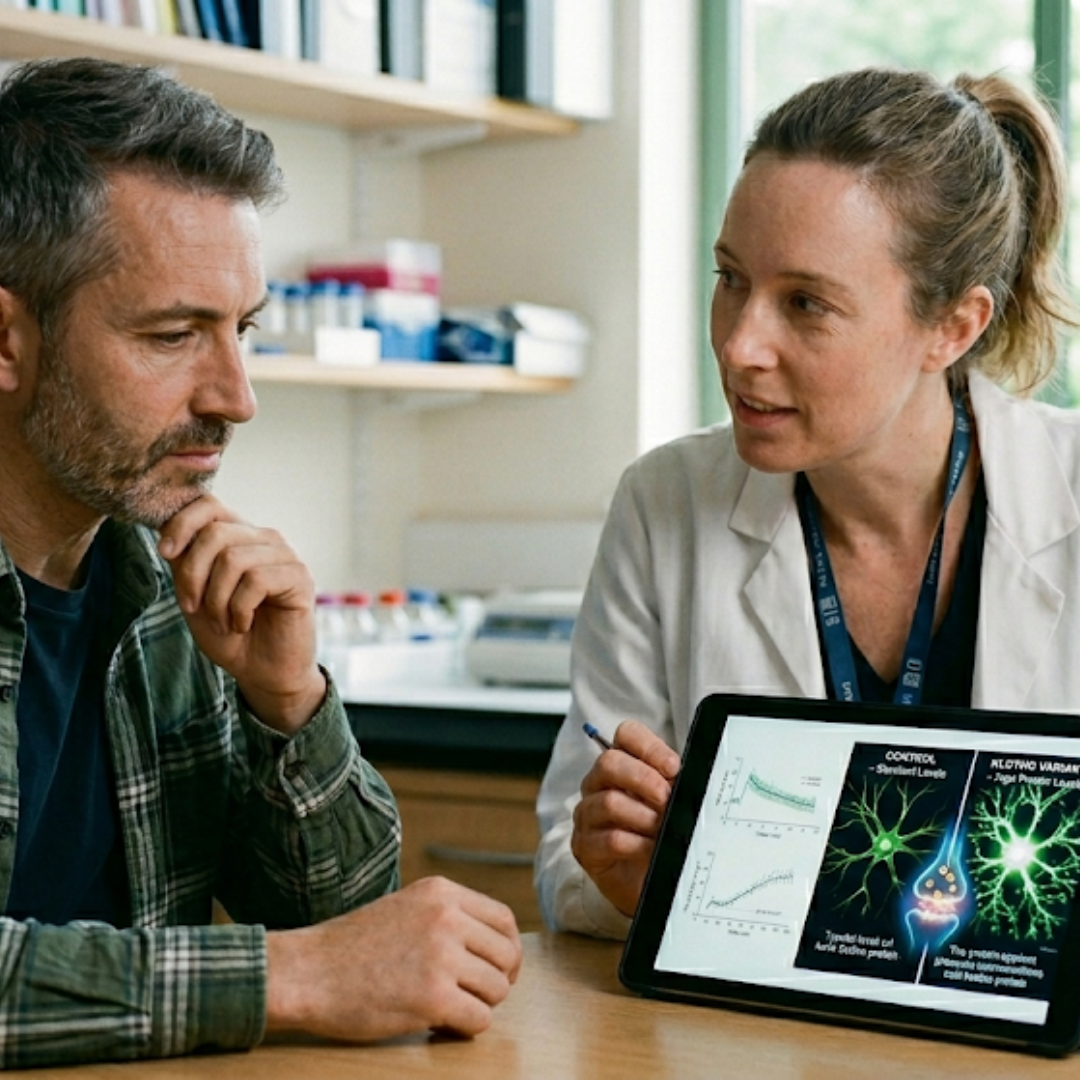
The study looked at data from people with Parkinson's and found a compelling link: those with higher levels of Klotho in their blood performed better on memory and thinking tests. Even more interesting is that some people carry a specific genetic variant that naturally boosts their Klotho levels. These individuals seem to have a built-in advantage, showing much more resilience against the cognitive changes that can sometimes accompany the condition.
To understand why this happens, researchers looked at how Klotho interacts with alpha-synuclein, the protein that tends to misfold and clump together in the brains of people with Parkinson's. In laboratory models, they discovered that Klotho acts like a master protector. It helps the brain maintain healthy connections between neurons—the synapses—even when the harmful alpha-synuclein is present. By keeping these communication lines strong, Klotho prevents the "short-circuits" that lead to memory and thinking difficulties.
The most exciting part of this discovery is that Klotho might not just be a marker of good health, but a potential treatment. When researchers increased Klotho levels in models with advanced symptoms, they observed a significant improvement in cognitive function. The protein appeared to clear away oxidative stress and boost the brain's natural ability to repair itself, effectively building up a "cognitive reserve" that keeps the mind resilient.
This research opens up a whole new avenue for therapy. While we are still in the early stages, the idea of boosting a protein we already produce naturally is a very hopeful prospect. It suggests that in the future, we might be able to offer treatments that don't just mask symptoms, but actively fortify the brain against them. For now, it reinforces the importance of overall healthy ageing and gives the scientific community a clear, promising target to help everyone with Parkinson's maintain their mental clarity and independence.
Comments (0)
Loading comments...