


Stepping Forward: How a leg-boosting device is helping people with Parkinson’s walk again
November 7, 2025
In Swansea and other sites around England and Wales, a major trial is under way that could make a real difference to people living with Parkinson’s disease. The study is called STEPS II, and it uses wearable technology to support walking – giving hope to those whose movement has been slowed by the condition.
One participant, 75-year-old Malcolm from Gower, notices the change. He describes how his left leg used to “drag” and he began to struggle to keep up when walking with friends. After starting the trial about a year ago, he says things are different: he’s walking longer distances, feeling steadier and even sometimes forgetting the device wasn’t with him because his stride feels normal again.
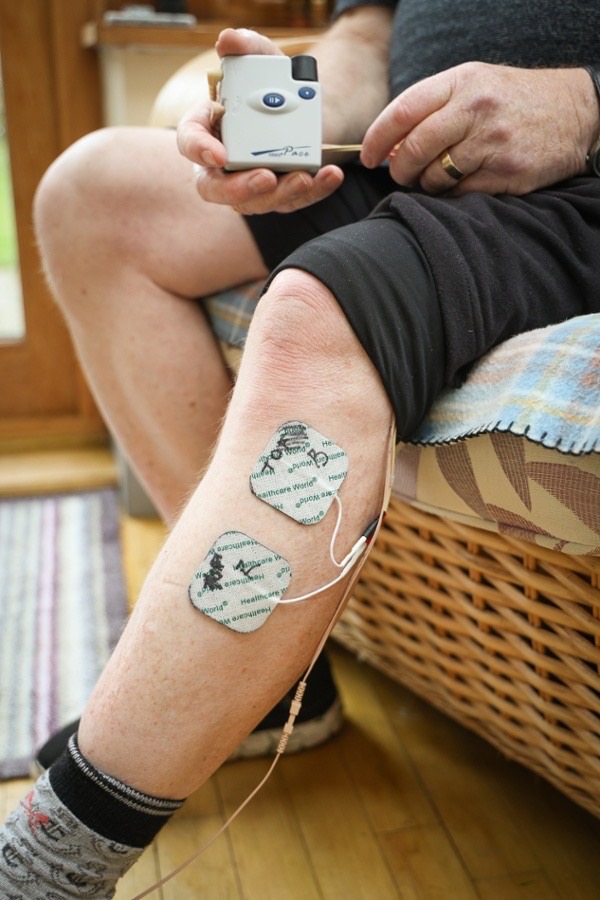
The approach is clever yet simple. A small switch in the heel of the shoe activates pads attached to the leg that give an electrical impulse to the muscles at the right moment. That impulse helps initiate movement in a leg that might otherwise “stick” or fail to respond, tackling one of the classic mobility issues in Parkinson’s.
Ahead of the full results, which are expected after recruitment ends in 2026, early outcomes look promising. In the earlier feasibility study on which STEPS II is built, 64 people with Parkinson’s who used the device alongside usual care experienced better walking speed, fewer falls and improved confidence. In the current trial across eight sites, over 200 participants are involved, 28 of them in Swansea Bay alone.
The stakes are high. For people with Parkinson’s, mobility problems — especially freezing or unsteady gait — aren’t just frustrating; they raise the risk of falls and hospitalisations. According to estimates, about 60 per cent of people with Parkinson’s experience at least one fall a year, and falls cost the health system around £2.3 billion annually. If a device like this can reduce fall risk and boost walking ability, the patient impact and system savings could be substantial.
Of course, this is still a trial. Participants are randomly assigned to wear the stimulation device or continue with their usual care, and researchers visit them multiple times over the 22-week protocol to assess mobility, walking ability and other outcomes. Until the final data is published, it’s too soon to say how widely the technology will be adopted or how large the benefits will be in everyday life.
What this means in practical terms is encouraging. For people with Parkinson’s whose walking is becoming a difficulty, trials like STEPS II show that technology is catching up to need. It may not replace physiotherapy, cueing strategies or movement-based therapies, but it adds another tool to the toolkit — one that can help make walking feel more normal again.
Comments (0)
Loading comments...