


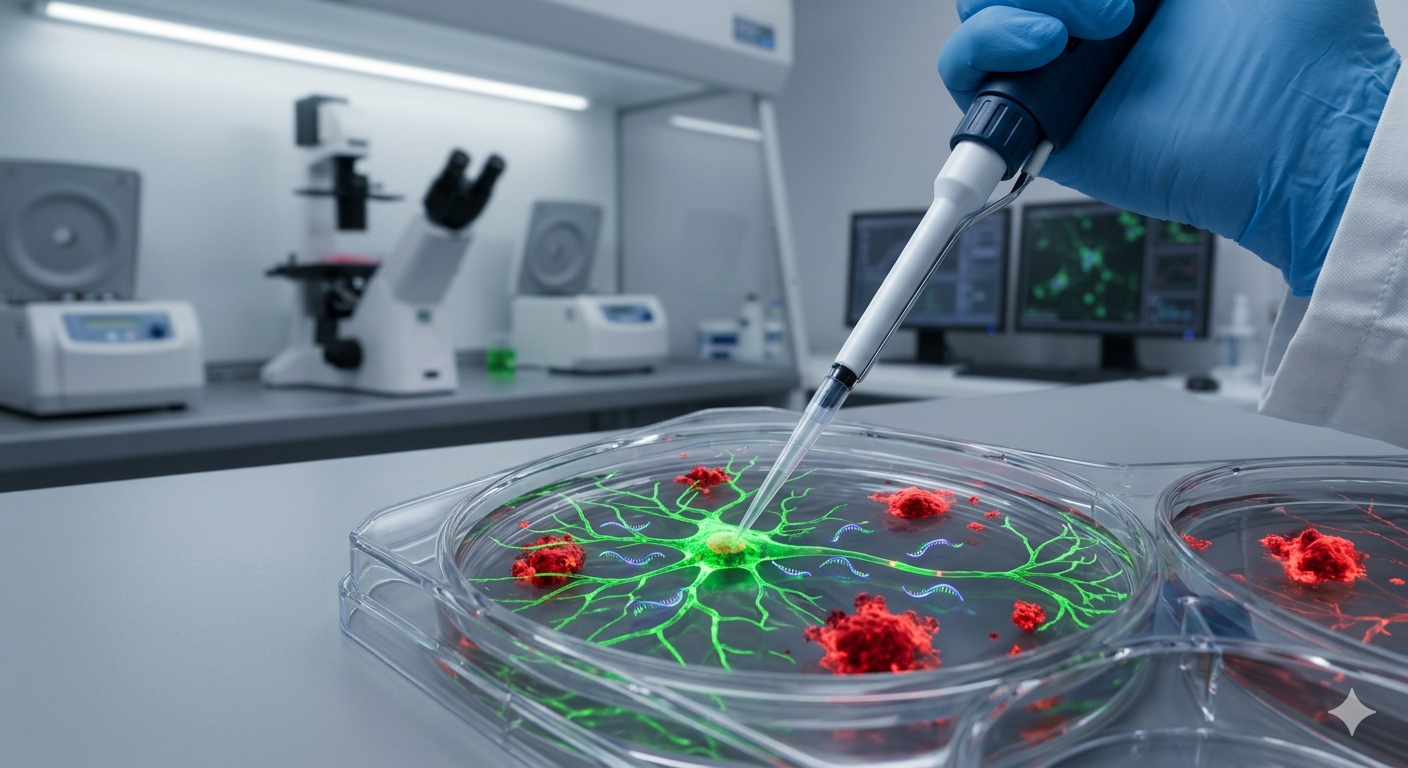
BIIB101 Trial Successfully Lowers Parkinson’s-Linked Alpha-Synuclein
April 9, 2026
The effort to slow down Parkinson’s has reached a significant milestone with the results of a recent early-phase clinical trial conducted by researchers at Northwestern Medicine in collaboration with Biogen and Ionis Pharmaceuticals. The study focused on a pioneering drug called BIIB101, which aims to do what most current treatments cannot: address the biological root cause of the condition by lowering the levels of a protein called alpha-synuclein.
In the brains of people with Parkinson’s, alpha-synuclein misfolds and clumps together, creating toxic environments that damage nerve cells. For decades, treatments have primarily focused on replacing dopamine to manage movement. While these are life-changing, they are essentially "after-the-fact" solutions. This new approach is fundamentally different because it attempts to stop the damage before it starts.
How the Genetic "Volume Knob" Works:
BIIB101 is part of a class of treatments called antisense oligonucleotides (ASOs). To understand how it works in simple terms, think of the brain as a factory and the alpha-synuclein protein as a product being manufactured.
In Parkinson’s, the factory is making too much of this protein, leading to a build-up of "waste" that harms the facility. Previous research tried to clean up the waste after it was already scattered. BIIB101, however, acts like a specific set of instructions delivered to the factory floor. It tells the machinery to turn down the production line, ensuring that less of the protein is created in the first place.
Promising Results from the Early Trial:
This phase 1 trial was designed to test safety and whether the drug could actually reach its target. The researchers recruited people in the early stages of Parkinson’s and delivered the drug via a lumbar puncture to ensure it reached the nervous system.
The findings were highly encouraging. Those who received the higher doses of BIIB101 showed a significant reduction in alpha-synuclein levels within their spinal fluid. This provides concrete evidence that we can now successfully "silence" the production of this specific protein in humans.
A Shift Toward Prevention:
While the study was too short to confirm if movement symptoms improved, the fact that the drug was safe and effectively lowered the protein levels is a major leap forward. It moves the scientific community closer to a future where we treat the biological foundations of the condition rather than just the outward symptoms.
The next phase of research will involve larger groups over longer periods to see if this reduction in protein leads to a slower progression of Parkinson's. If successful, BIIB101 could represent a shift toward precision medicine, where we fine-tune the brain’s own genetic instructions to maintain health and stability for much longer than previously possible.
Comments (0)
Loading comments...