


Depression in Parkinson's: It’s Not Just in Your Mind, It’s in Your Metabolism
December 12, 2025
Depression is often waved away as an understandable emotional reaction to living with Parkinson's. You are diagnosed with a difficult condition, so of course you feel low. But a groundbreaking new study published in Nature npj Parkinson’s Disease challenges this "reactionary" view, providing compelling evidence that depression in Parkinson's is deeply rooted in the body's biochemistry.
The study, led by researchers who analysed the metabolic fingerprints of people with the condition, reveals that those suffering from depression have a distinct biological signature compared to those who do not. It suggests that depression isn't just a mood state; it is a metabolic event.
The Chemical Fingerprint
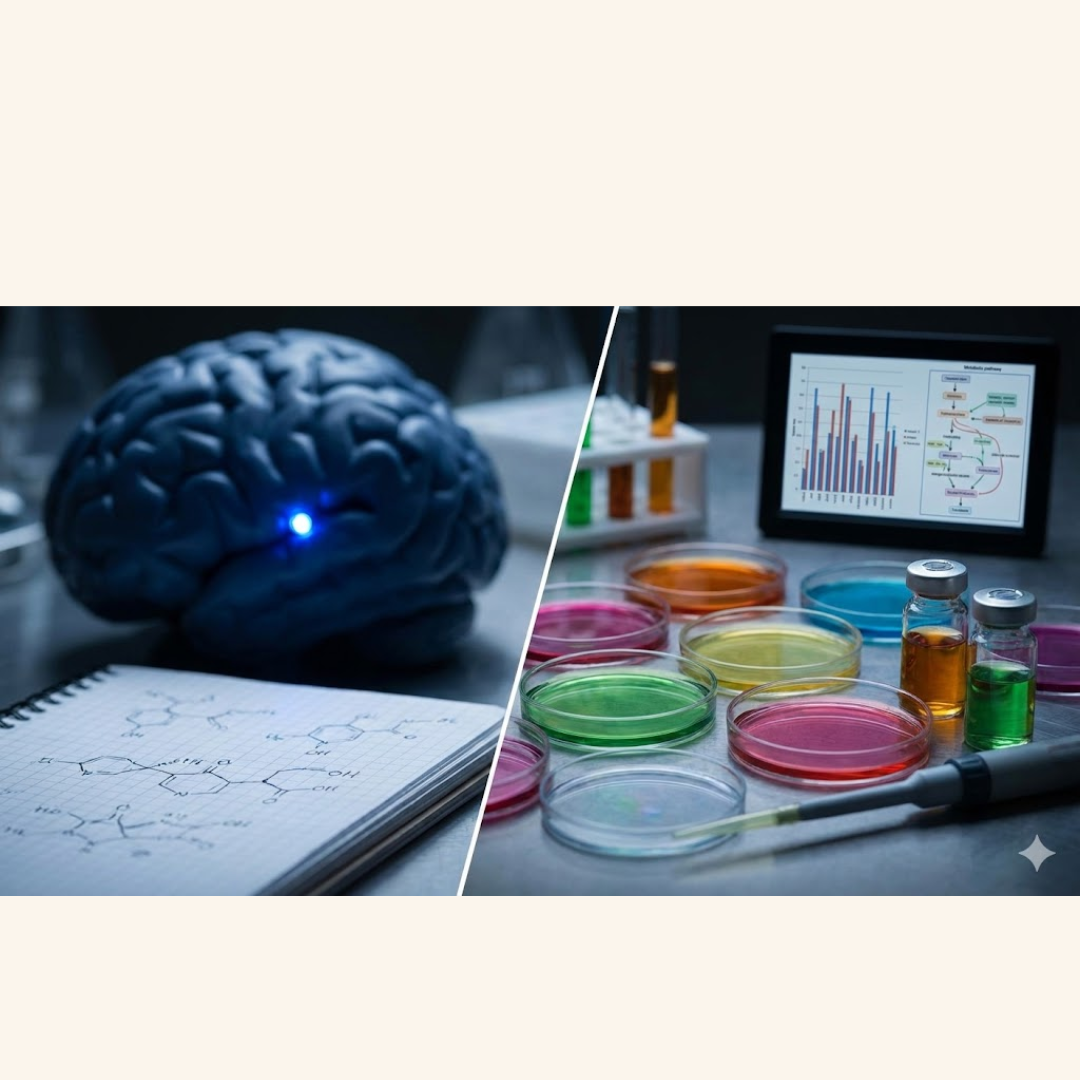
The researchers used a technique called metabolomics, which allows them to take a snapshot of the thousands of tiny chemical signals (metabolites) circulating in the body. They found that in patients with depression, specific pathways were clearly disrupted.
One of the most significant findings was a disruption in tryptophan metabolism. Tryptophan is the chemical building block your body uses to make serotonin, the "happy hormone." The study suggests that in people with Parkinson's and depression, this assembly line is broken or diverted. Instead of making serotonin to regulate mood, the raw materials are being hijacked by inflammatory pathways.
The Energy Crisis
The study also highlighted a breakdown in energy metabolism. The metabolic profiles showed signs that the mitochondria—the tiny power plants inside our cells—were struggling more in the depressed group. This links directly to the overwhelming fatigue and apathy that often accompany depression in Parkinson's. It is not just a lack of motivation; it is a literal lack of cellular energy.
Furthermore, the researchers identified alterations in lipid (fat) metabolism. Your brain is largely made of fat, and these molecules are crucial for cell-to-cell communication. Disruptions here suggest that the physical structure of brain cells and how they signal to each other are fundamentally compromised in those experiencing depression.
Why This Matters
This research is validating. It confirms that the dark clouds of depression are not a character flaw or a failure of resilience. They are as physical as a tremor or a shuffle—a result of the same underlying biology that attacks the motor system.
More importantly, it points to new ways to treat it. If we know that inflammation and specific nutrient pathways are to blame, future treatments could move beyond standard antidepressants. We might look at targeting the gut (where many of these metabolites are made), reducing systemic inflammation, or supporting mitochondrial health to lift the mood from the inside out.
It is a reminder that in Parkinson's, the mental and the physical are not separate worlds. They are two sides of the same coin, and treating one may require fixing the machinery of the other.
For more on the science of mood and metabolism, you can explore topics like the "Kynurenine Pathway" or "Mitochondrial Dysfunction in Depression," which delve deeper into the mechanisms mentioned above.
Comments (0)
Loading comments...