


The "Doorman" of Parkinson’s: Identifying the Complex That Let’s the Disease In
December 26, 2025
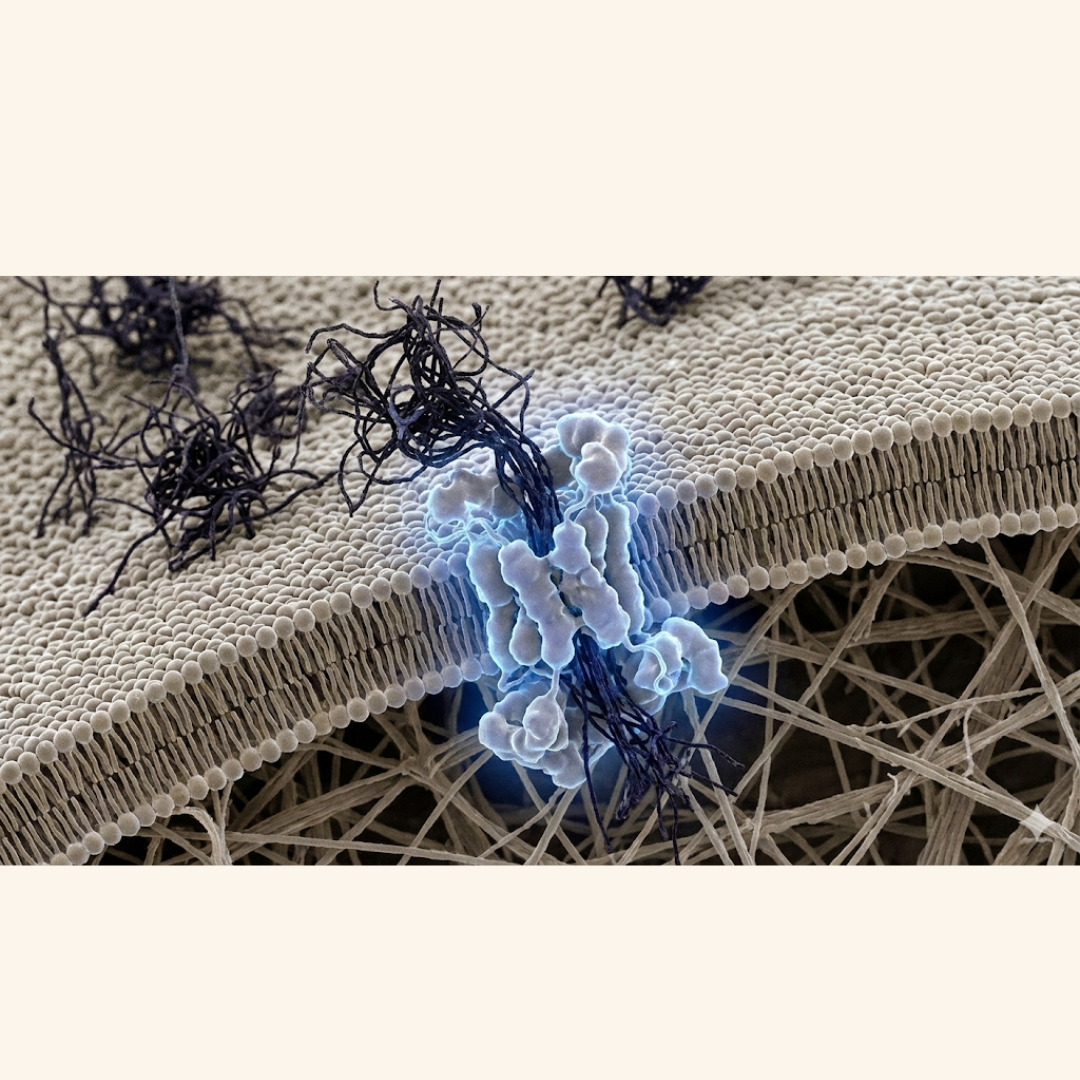
One of the central mysteries of Parkinson’s disease is how the toxic proteins spread. We know that misfolded alpha-synuclein acts like an infection, moving from cell to cell and corrupting healthy neurons. However, until now, we did not fully understand how these toxic clumps managed to break into the cells in the first place. A major new study published in Nature Communications has identified the specific "doorman" responsible for this entry, revealing a molecular complex that could become a vital target for future treatments.
The Unlikely Accomplices: mGluR4 and NPDC1 The research team conducted a comprehensive sweep of the proteins found on the surface of dopamine neurons—the specific brain cells that die in Parkinson’s. They were looking for any receptors that could latch onto alpha-synuclein fibrils.
They identified two specific proteins acting as accomplices: mGluR4 and NPDC1. While mGluR4 is well-known in neuroscience as a receptor involved in signaling, its role in physically transporting toxic waste into the cell was unexpected. The study found that these two proteins do not act alone; they join forces to form a unique complex on the cell surface. It is this specific partnership that creates a high-affinity landing pad for the toxic alpha-synuclein fibrils.
Locking the Door Protects the Brain:
To prove that this complex was the culprit, the researchers performed a series of experiments using mouse models. They injected toxic alpha-synuclein fibrils into the brains of the mice—a procedure that usually causes widespread loss of dopamine neurons.
The results were striking. In mice where the genes for either mGluR4 or NPDC1 had been deleted, the neurons survived. Without the "doorman" to let the toxic proteins inside, the cells remained protected even when the threat was right outside their door. Furthermore, the study showed that the two proteins interact genetically; disrupting the connection between them was enough to stop the neurodegeneration in its tracks.
A New Target for Therapy:
This discovery fundamentally changes how we might approach slowing down the condition. Rather than just trying to clean up the alpha-synuclein after it has spread, this research suggests we could potentially block the mechanism that allows it to enter healthy cells in the first place. By designing drugs that prevent mGluR4 and NPDC1 from forming this complex, or by blocking their ability to bind with the toxic fibrils, scientists may be able to halt the "cell-to-cell" transmission that drives the progression of Parkinson’s.
Comments (0)
Loading comments...