


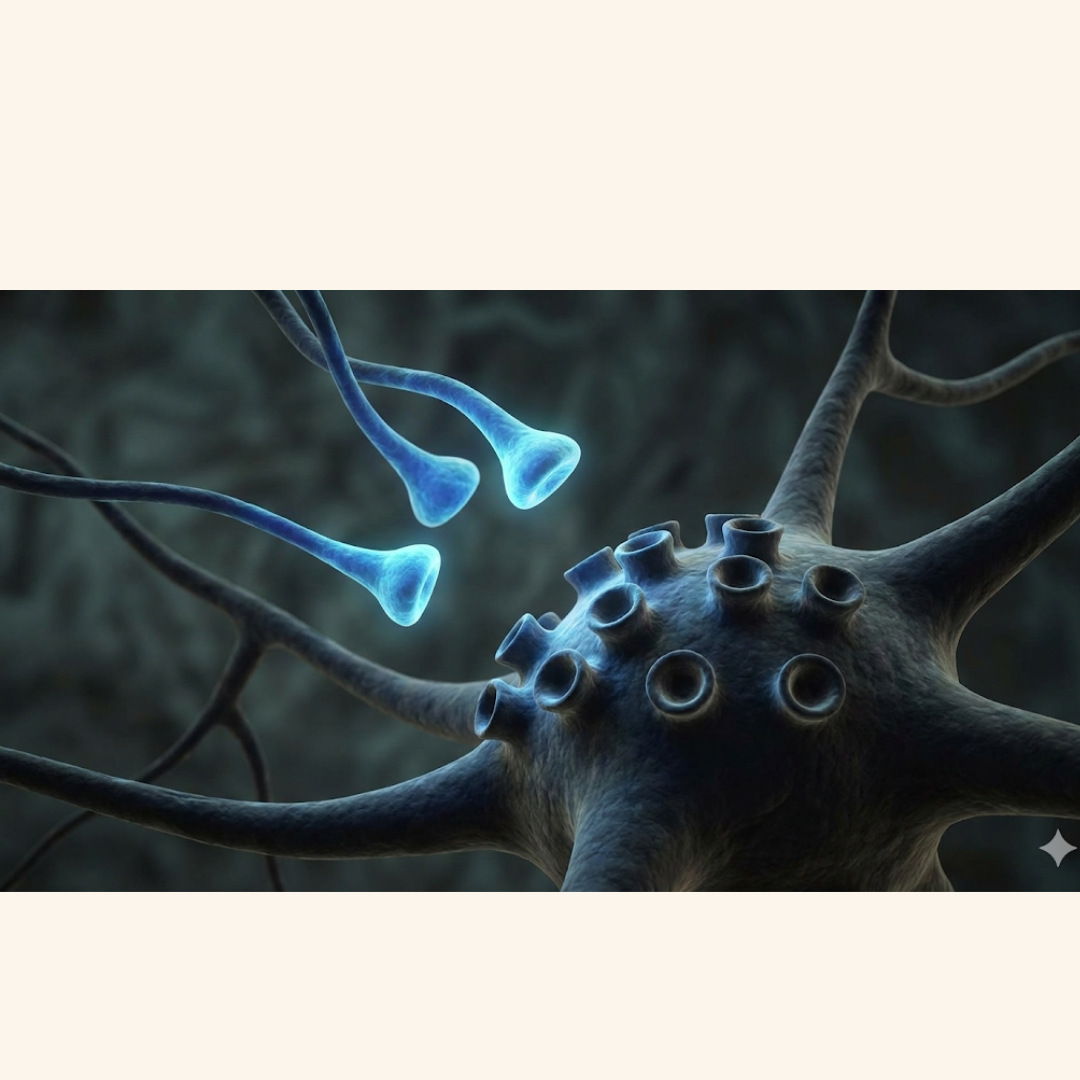
The Lights Are On, But Is Anyone Home? The "Empty Socket" Mystery in Parkinson’s
December 13, 2025
We have long assumed that when Parkinson’s takes hold, the affected parts of the brain simply wither away. The standard narrative is one of wholesale destruction: the dopamine-producing cells die, the connections shrivel, and the lights go out. But a fascinating new imaging study published in Movement Disorders suggests this picture might be too pessimistic. It seems the brain's infrastructure is far more resilient than we gave it credit for.
A Tale of Two Tracers
To understand this breakthrough, you have to appreciate the technology. Usually, researchers look at the brain with just one type of "torch" at a time. In this study, a team from Yale University used a dual-tracer PET scan approach, effectively turning on two different floodlights simultaneously to see how they compared.
The first tracer looked for the usual suspect: the Dopamine Transporter (DAT). This measures the health of the dopamine terminals—essentially the "plugs" that deliver the chemical messenger. As expected in people with the condition, these levels were drastically low in the striatum, the brain's movement control centre.
The second tracer, however, looked for something different: Synaptic Density (SV2A). This measures the sheer number of connections—the "sockets"—available in that same region, regardless of what chemical is being passed across them.
The Great Disconnect
In a healthy brain, these two measurements line up perfectly: you have plenty of dopamine plugs and plenty of sockets. But in the participants with Parkinson's, the researchers found a striking mismatch. While the dopamine levels had crashed, the overall density of synapses in the striatum was surprisingly well-preserved.
Essentially, the "sockets" were still there, waiting on the wall, even though the dopamine "plugs" had been pulled out.
Why This Is Good News
This "uncoupling" challenges the idea that the brain tissue in these regions is just dead. Instead, it suggests a "dying back" phenomenon where the specific dopamine fuel lines recede, but the broader architecture of the brain region remains intact for much longer than we thought.
For researchers, this is a tantalising window of opportunity. It implies that the target area—the striatum—isn't a wasteland. It is still rich in connections and potentially ready to receive input if we can just figure out how to restore the supply. Whether through growth factors, stem cells, or other neuroprotective strategies, the fact that the "house" is still standing gives us a much better chance of fixing the plumbing.
It is another reminder that the brain fights hard to compensate, keeping the lights on and the sockets ready, waiting for the signal to return.
Comments (0)
Loading comments...