


The Future of Care: How "Multimodal" Monitoring is Changing Life with Parkinson’s
April 20, 2026
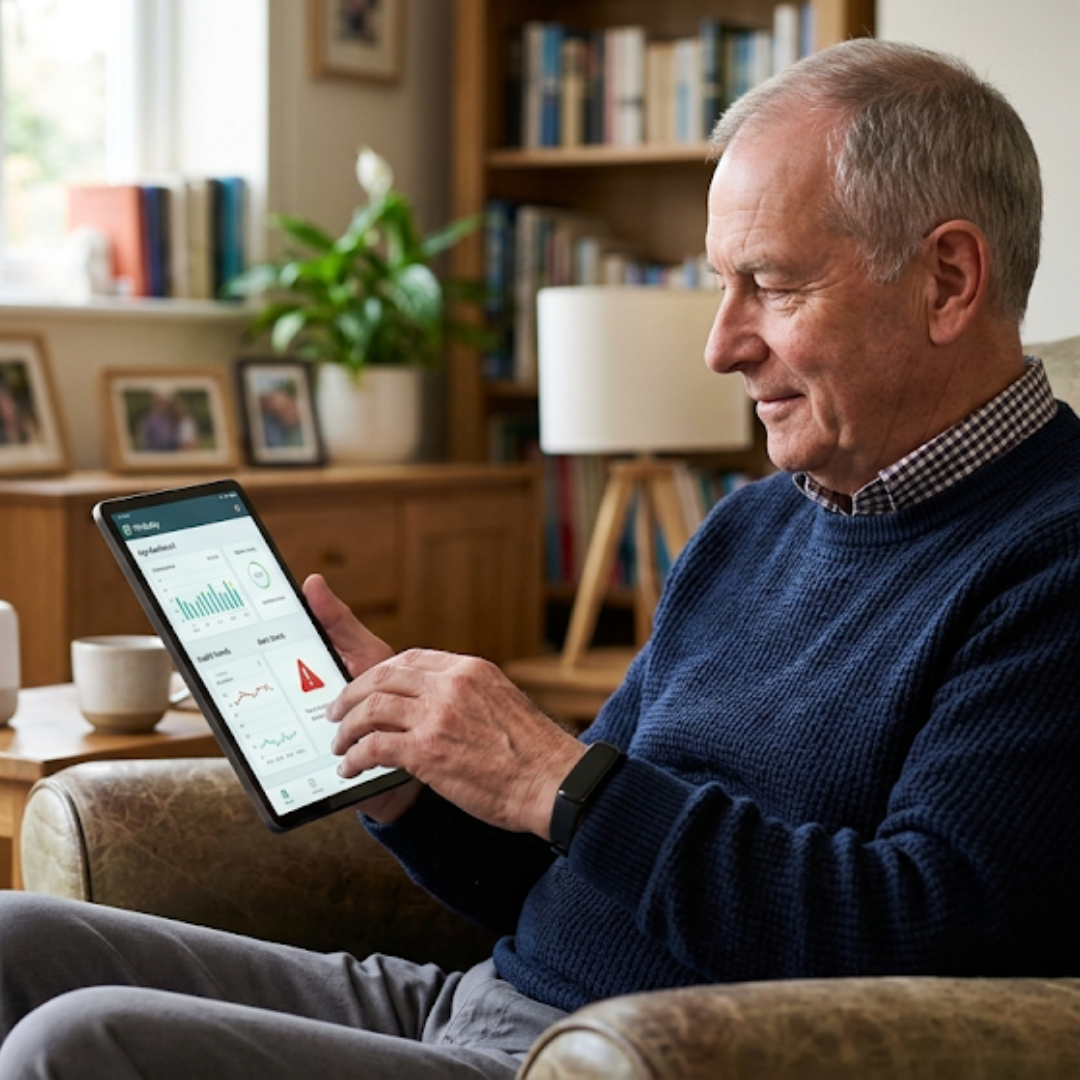
The way doctors monitor Parkinson’s is undergoing a digital revolution. For years, assessments have relied on brief, in-person clinic visits—essentially "snapshots" in time. However, a comprehensive new review published in the Journal of Medical Internet Research highlights a shift toward "multimodal intelligent monitoring," a system that tracks the condition 24/7 in the comfort of your own home.
By combining different types of technology, researchers are creating a "movie" of a person's health, rather than just a single photograph, allowing for much more precise and personalised care.
What is Multimodal Monitoring?
In this context, "multimodal" simply means using several different types of sensors and data sources at once. Instead of relying on just one device, like a smartwatch, intelligent monitoring systems pull information from a variety of "modes":
Wearable Sensors: Devices worn on the wrist, waist, or ankles that track tremors, walking speed, and "OFF" periods.
Ambient Sensors: Technology placed in the home (like smart floor mats or infrared sensors) that can detect falls or changes in sleep patterns without the person needing to wear anything.
Smartphone Interactions: Analysing how someone types, their voice patterns during phone calls, or even their facial expressions via a camera to detect subtle changes in mood or speech.
The Power of Artificial Intelligence
The "intelligent" part of this monitoring comes from Artificial Intelligence (AI). Collecting thousands of data points every day would be overwhelming for any doctor to review. AI acts as a filter, sitting in the background and looking for patterns.
It can detect a slow decline in mobility weeks before a person might notice it themselves, or spot the exact moment a medication starts to lose its effectiveness. This allows for "proactive" medicine—where a consultant could adjust a prescription based on real-world data before a significant problem arises.
Overcoming the "Translational Challenge"
Despite the exciting potential, the review also identifies several hurdles that need to be cleared before this becomes standard in every GP surgery or neurology clinic. Scientists call these "translational challenges"—the difficulty of moving technology from a research lab into real life.
One major challenge is Data Overload. Clinicians are already busy, and they need this data presented in a simple, "at-a-glance" dashboard rather than a mountain of raw numbers. There are also important questions regarding Privacy and Ethics, ensuring that the data collected in a person's home is kept secure and used only to improve their care.
Finally, the technology must be User-Friendly. For people living with the condition, devices need to be comfortable, easy to charge, and simple to operate, regardless of any challenges with manual dexterity.
Why This Matters for You and PD Buddy
The goal of multimodal monitoring is to give you back control. By providing a clearer picture of how Parkinson’s behaves in your specific environment—not just in a hospital hallway—doctors can move away from "one-size-fits-all" treatments.
We are continuing to improve PD Buddy to ensure it becomes a useful tool in this new landscape. By integrating these intelligent monitoring features into a user-friendly platform, PD Buddy aims to turn complex data into clear, actionable insights. This ongoing development ensures that you have a proactive partner in your pocket, helping to reduce "OFF" periods and ensuring your treatment is as unique as your digital signature.
Comments (0)
Loading comments...