


The Night Shift: How Melatonin Builds a Better Brain
December 22, 2025
Most of us think of melatonin as nothing more than a natural sleeping pill—something to reach for when we are battling jet lag or a stressful week. We view it as the body’s "off" switch. However, a fascinating new study suggests we have been selling this hormone short. It turns out that while melatonin is lulling you to sleep, it is also clocking in for a vital night shift as a construction worker, actively driving the growth of new brain cells.
The research sheds light on a mechanism that has long puzzled scientists: the link between deep sleep and memory formation. We know that a good night's rest helps cement memories, but the biological "how" remained a bit foggy. This study clears the mist, revealing that melatonin does not just signal the brain to rest; it flips a specific switch that tells neurons to grow and repair.
The Power of the Wnt Pathway
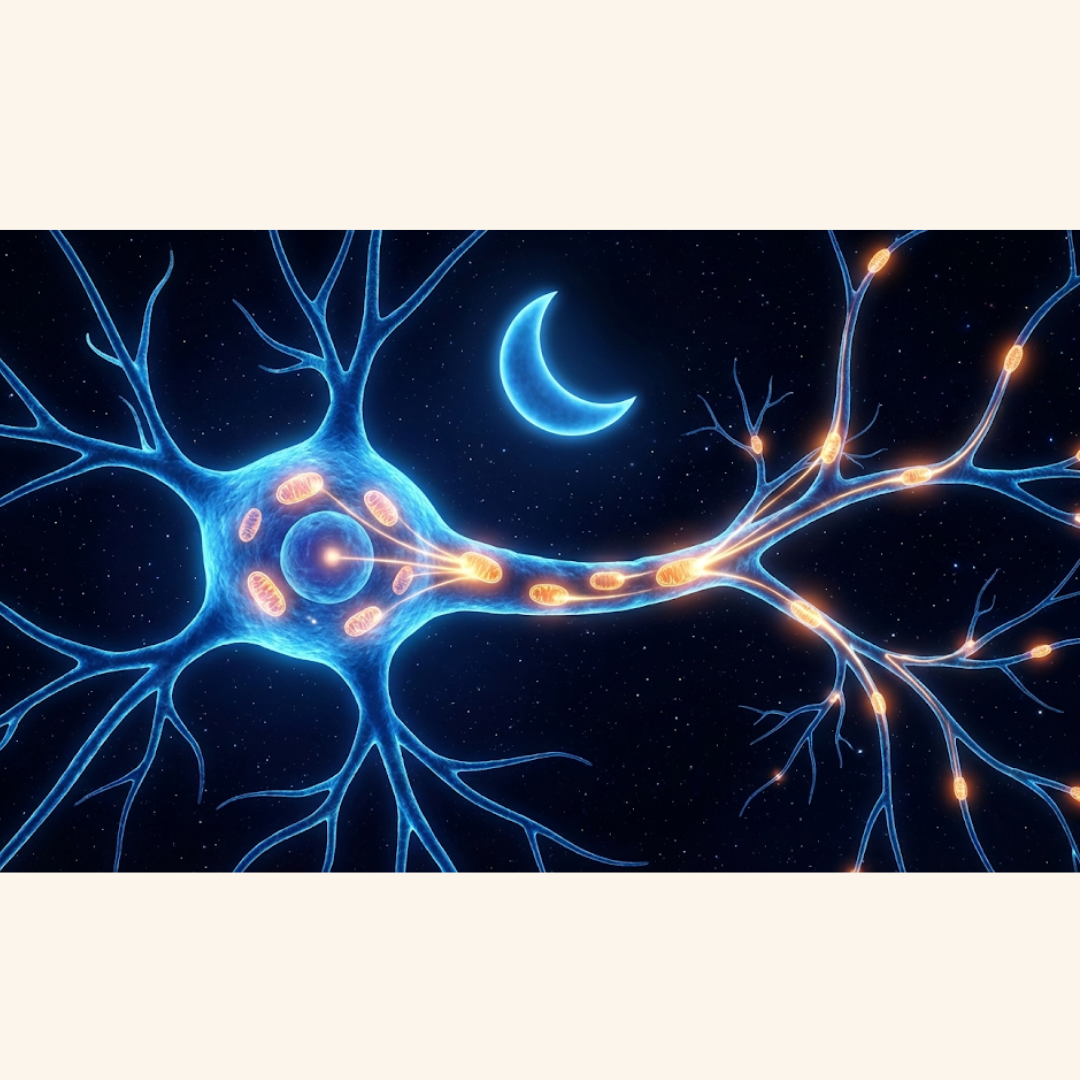
To understand this, we have to look at a cellular signaling route known as the Wnt pathway. In the world of biology, Wnt is a big deal—it is essentially the master architect responsible for structural growth and development. The researchers discovered that melatonin activates a specific receptor (the MT1 receptor) on the surface of brain cells. This action kickstarts the mitochondria—the tiny power plants inside every cell.
Usually, we think of mitochondria just as energy providers, but here they play a more sophisticated role. When stimulated by melatonin, they prevent the release of stress signals (specifically a protein called cytochrome c) that would normally tell the cell to shut down or die. By blocking this stress, melatonin effectively clears the runway for the Wnt pathway to turn on. Once active, Wnt sends a command to the neurons to sprout new axons—the wiring that connects brain cells and allows them to communicate.
Repairing the Machinery
This is particularly relevant for conditions like Parkinson's, where both mitochondrial failure and the loss of neural connections are central problems. The study suggests that melatonin is acting as a dual-purpose mechanic. It is protecting the batteries (mitochondria) from leaking and, simultaneously, encouraging the engine (the neuron) to rebuild its transmission lines.
The implications extend far beyond just getting a better night's sleep. It suggests that the cognitive fog and memory issues often associated with neurodegenerative conditions might be linked to a lack of this nightly repair work. If our melatonin levels drop as we age—or if our sleep is fragmented—we aren't just tired; we are missing out on our daily dose of neurogenesis. This research elevates melatonin from a simple sleep aid to a potential key player in maintaining the structural integrity of the brain.
Comments (0)
Loading comments...