


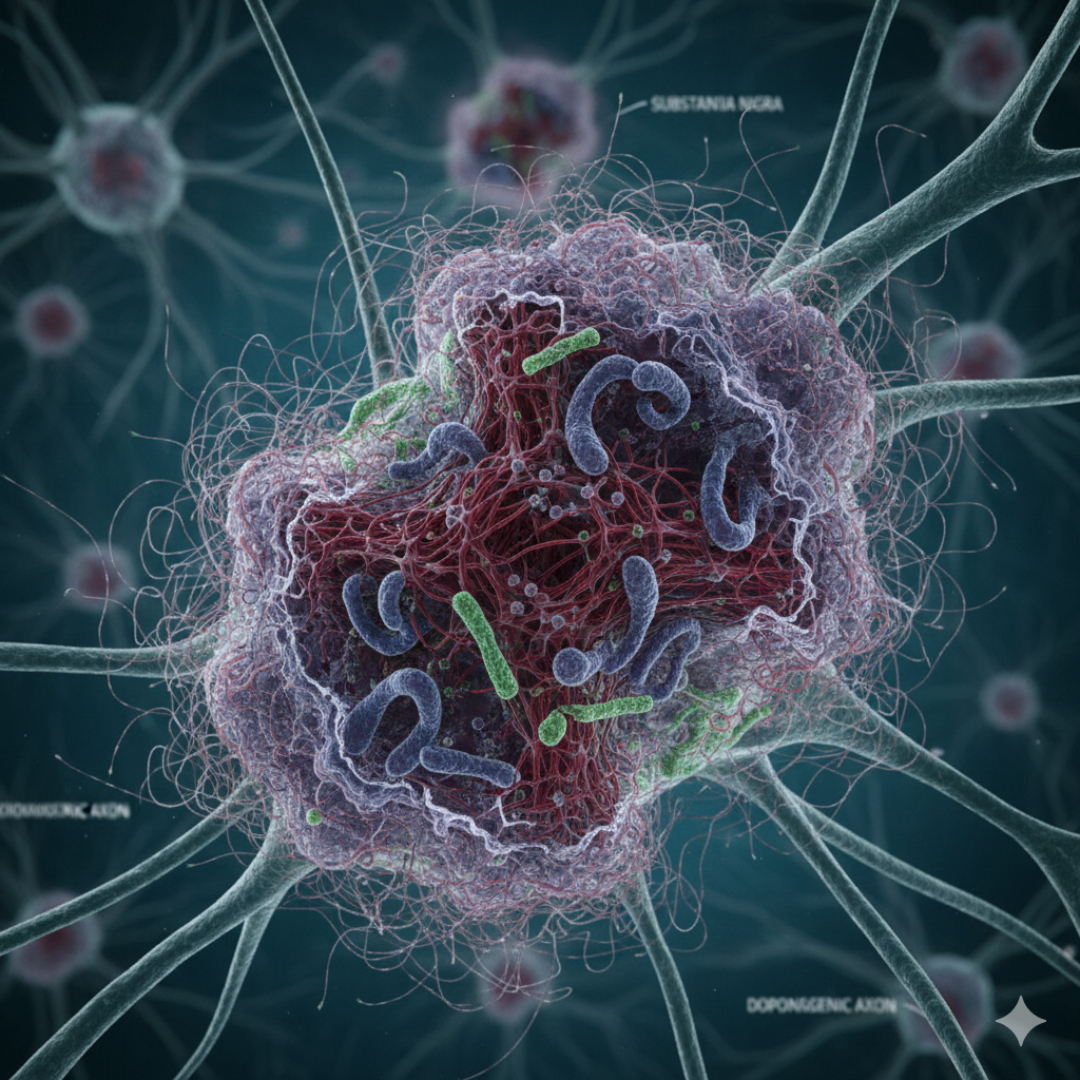
New Imaging Reveals the Complex Internal Structure of Lewy Bodies
March 2, 2026
A recent study published on bioRxiv has provided a much closer look at Lewy bodies, the protein clumps that are the hallmark of Parkinson's. Using advanced "ultrastructural" imaging—which allows scientists to see the tiny details inside a single cell—researchers have found that these clumps are far more diverse and organised than previously thought. This discovery is important because it shows that Lewy bodies are not just random "trash heaps" of protein, but complex structures that involve many different parts of the cell's machinery.
Sleep Patterns as a Window into Progression
One of the most significant takeaways from modern research is that we can use these biological changes to follow the condition's progression. By understanding how Lewy bodies form and change over time, doctors may be able to develop better ways to track the condition. For instance, similar subtle changes in brain waves and sleep patterns are now being used to follow the condition's path. These patterns act as a silent record, showing how the brain is being affected long before traditional symptoms become severe.
A Diverse Mix of Cellular Parts
For a long time, it was believed that Lewy bodies were mainly made of a single misfolded protein called alpha-synuclein. However, this new high-resolution imaging shows a much more crowded and varied environment.
Organelle Trapping: The study found that Lewy bodies "trap" various cell parts, such as mitochondria (the cell's power plants) and the endoplasmic reticulum (the cell's manufacturing center).
Membrane Fragments: Rather than just being solid protein, these clumps are filled with tiny fragments of cellular membranes and broken-down "waste" sacs.
Structural Layers: Some Lewy bodies show a clear "core" and "halo" structure, suggesting they grow in stages, almost like the rings of a tree.
Why the Internal Structure Matters
Understanding this "subcellular organisation" is a major step forward. It suggests that the damage in Parkinson's isn't just caused by one protein going wrong, but by a wider collapse of the cell’s ability to move and recycle its internal components.
Crowding: The sheer density of these clumps likely physically gets in the way of the cell's normal functions.
Energy Loss: Because mitochondria are often caught inside these structures, the cell may struggle to produce the energy it needs to survive.
Chemical Imbalance: The presence of different types of fats and proteins inside the Lewy bodies suggests that many different chemical pathways are being disrupted at once.
Mapping the Future of Treatment
This research changes how scientists think about "clearing" these toxins. If a Lewy body is a complex mixture of many different things, a treatment might need to do more than just target one protein; it might need to help the cell clear out all this trapped "cellular clutter."
By mapping the diversity of these structures, researchers hope to identify which specific types of Lewy bodies are the most harmful. This could lead to new therapies that protect neurons by preventing these complex clogs from forming in the first place. As we get better at seeing these tiny details, we get closer to understanding how to stop the condition from moving forward.
Comments (0)
Loading comments...