


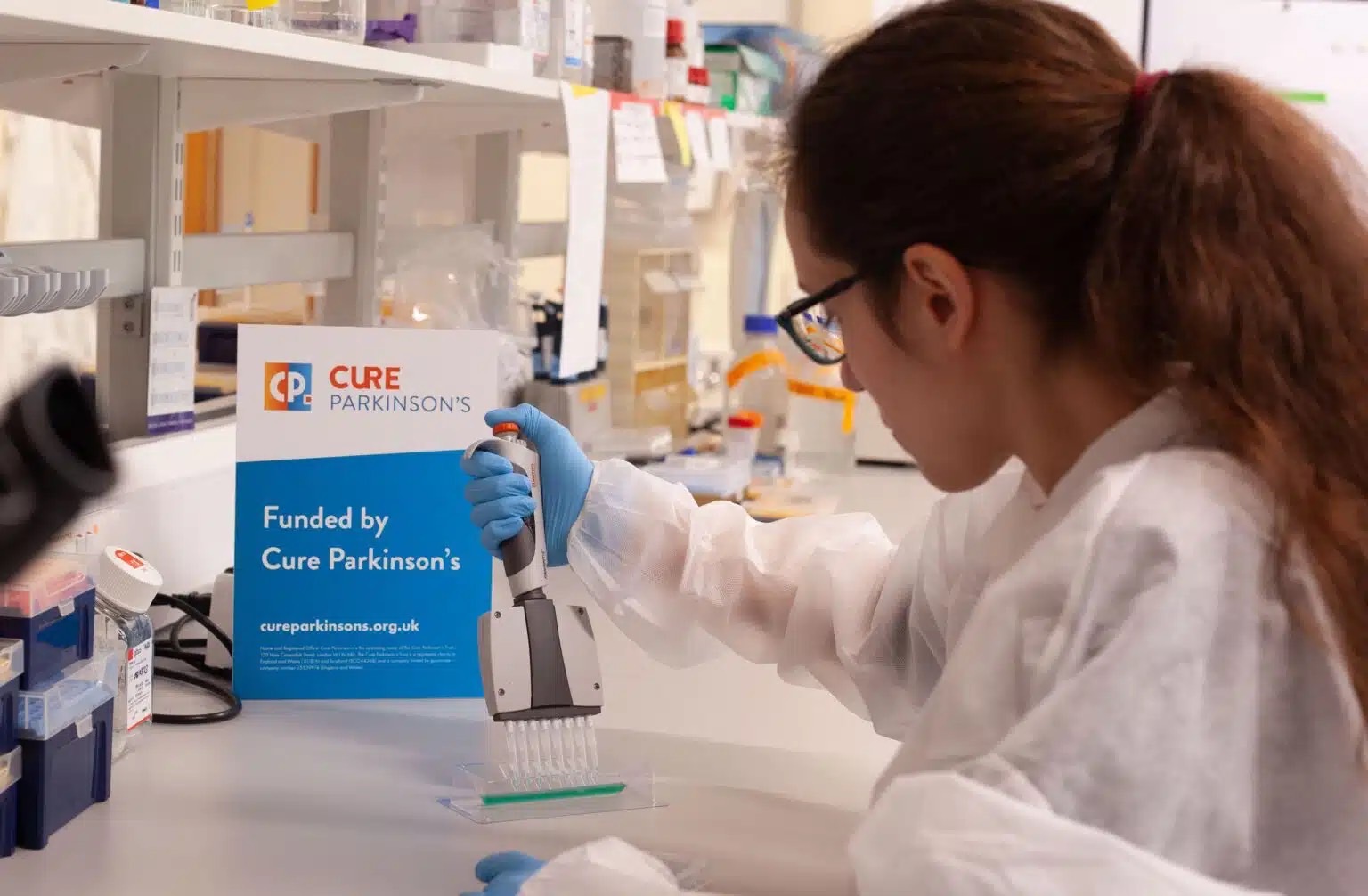
Cure Parkinson’s Impact Report 2025: Accelerating the Cure
January 23, 2026
Overview: A Year of Urgent Momentum
At Cure Parkinson’s, our mission remains singular and unyielding: we are here to cure Parkinson’s. In this report, covering the period from 1 April 2024 to 31 March 2025, we detail a year of unprecedented growth in our research investment and strategic scope. Guided by our updated Research Strategy published in November 2025, we have significantly scaled our operations to move closer to a world free from Parkinson’s.
This year, we committed £8.4 million to new research projects—an increase of more than £5 million compared to the previous year. This surge in investment reflects our urgency to identify, fund, and facilitate treatments that can slow, stop, or reverse the condition.
Research Funding: The Pipeline in Numbers
Our portfolio is robust, diverse, and aggressively targeted at disease modification. As of March 2025, we are actively funding 33 research projects investigating 36 individual therapeutic candidates, with a combined active funding commitment of over £18.7 million.
We initiated nine new projects this year, balancing our investment across the drug development pipeline:
45% Preclinical: Late-stage translational research, including a massive drug screening project testing over 100 therapies previously evaluated by our International Linked Clinical Trials (iLCT) committee.
33% Clinical: Direct testing in people with Parkinson’s, including a Phase 1 and a Phase 2 trial involving 71 participants.
22% ‘Other’: Vital infrastructure projects, such as leveraging epidemiological databases to model outcomes for disease-modifying drugs.
Crucially, nearly 40% of our projects focus on neuroprotection—therapies designed to prevent neuron death—while others target mitochondrial health, inflammation, and alpha-synuclein accumulation.
The Engine Room: International Linked Clinical Trials (iLCT)
Our iLCT programme, run in partnership with Van Andel Institute, continues to be the cornerstone of our global search for a cure. Since its launch in 2012, this programme has catalysed more than £100 million in external funding.
This year, we convened the 13th iLCT meeting in Grand Rapids, Michigan, where our committee of experts evaluated 17 dossiers of potential treatments and prioritised 5 compounds for immediate clinical testing.
The impact of iLCT is measurable and significant:
19 active clinical trials are currently testing iLCT-evaluated drugs, involving 3,766 participants.
These trials represent 31% of all disease-modifying therapies currently in clinical testing globally.
Since inception, 67% of all therapeutics we fund have been evaluated by this committee.
Phase 3 Milestones: The Case of Ambroxol We are seeing the tangible fruits of our long-term strategy. In early 2025, the first patient was recruited to ASPro-PD, our funded Phase 3 trial of ambroxol. This trial, led by Professor Anthony Schapira at UCL, will involve 330 participants and is the culmination of a journey we began in 2014 when ambroxol was first prioritised by the iLCT committee. We also continue to support Exenatide-PD3, another major Phase 3 trial derived from our pipeline.
Strategic Innovation: The EJS ACT-PD Platform
A primary driver of our increased expenditure this year was our landmark investment in the Edmond J. Safra Accelerating Clinical Trials for Parkinson’s Disease (EJS ACT-PD).
This is a Multi-Arm Multi-Stage (MAMS) clinical trial platform, a revolutionary approach designed to test multiple treatments simultaneously against a single control group. This model drastically improves efficiency, allowing us to identify effective treatments—and discard ineffective ones—faster than ever before. To support this, we have partnered with France Parkinson to coordinate a MAMS consortium, ensuring international data sharing and best practice.
Global Collaboration and Partnerships
Parkinson’s is a global challenge requiring a global response. We now fund research in 41 institutions across 12 countries, including our first funded project in Germany this year.
We have strengthened our alliances by:
Partnering with Alzheimer’s Research UK (ARUK): Recognising the shared biological pathways between Parkinson’s and dementia, this partnership aims to accelerate the identification of drugs that may benefit both conditions.
Collaborating with France Parkinson: To advance the MAMS platform initiative.
Convening Experts: We supported seven international collaborative meetings this year, fostering knowledge exchange among the world’s leading scientists.
Engagement: Involving the Community
We believe that people living with Parkinson’s must be at the heart of research—not just as participants, but as architects. This year, our engagement activities included:
Research Update Meetings: Two major meetings (Autumn 2024 and Spring 2025) attracted over 630 attendees combined, connecting patients directly with researchers.
Webinars: Four specialist webinars on topics ranging from gene therapy to inflammation reached over 1,000 people.
Focus Groups: We ran sessions on critical topics such as lumbar punctures and the repurposing of anti-gout medication, ensuring trial designs align with patient needs.
Our Research Committee Internship Programme continues to train the next generation of scientists. This year, two early-career researchers joined our committee for 12 months, gaining "behind the scenes" experience in grant assessment to become better future investigators.
Financial Summary
Our financial commitment reflects our ambition. Since our inception in 2005, we have invested over £25.5 million into 86 individual research projects.
Total committed to iLCT-related projects: £19 million (74% of our total funding).
Scientific Output: Our funded research has generated 294 scientific publications, cited over 17,500 times by the global research community, underscoring the scientific rigour and influence of our work.
We are funding the science that matters, with the urgency this condition demands. We are here for the cure.
Comments (0)
Loading comments...