


New AI-Boosted MRI Method Enables Detailed "Chemical" Imaging of Parkinson’s
December 23, 2025
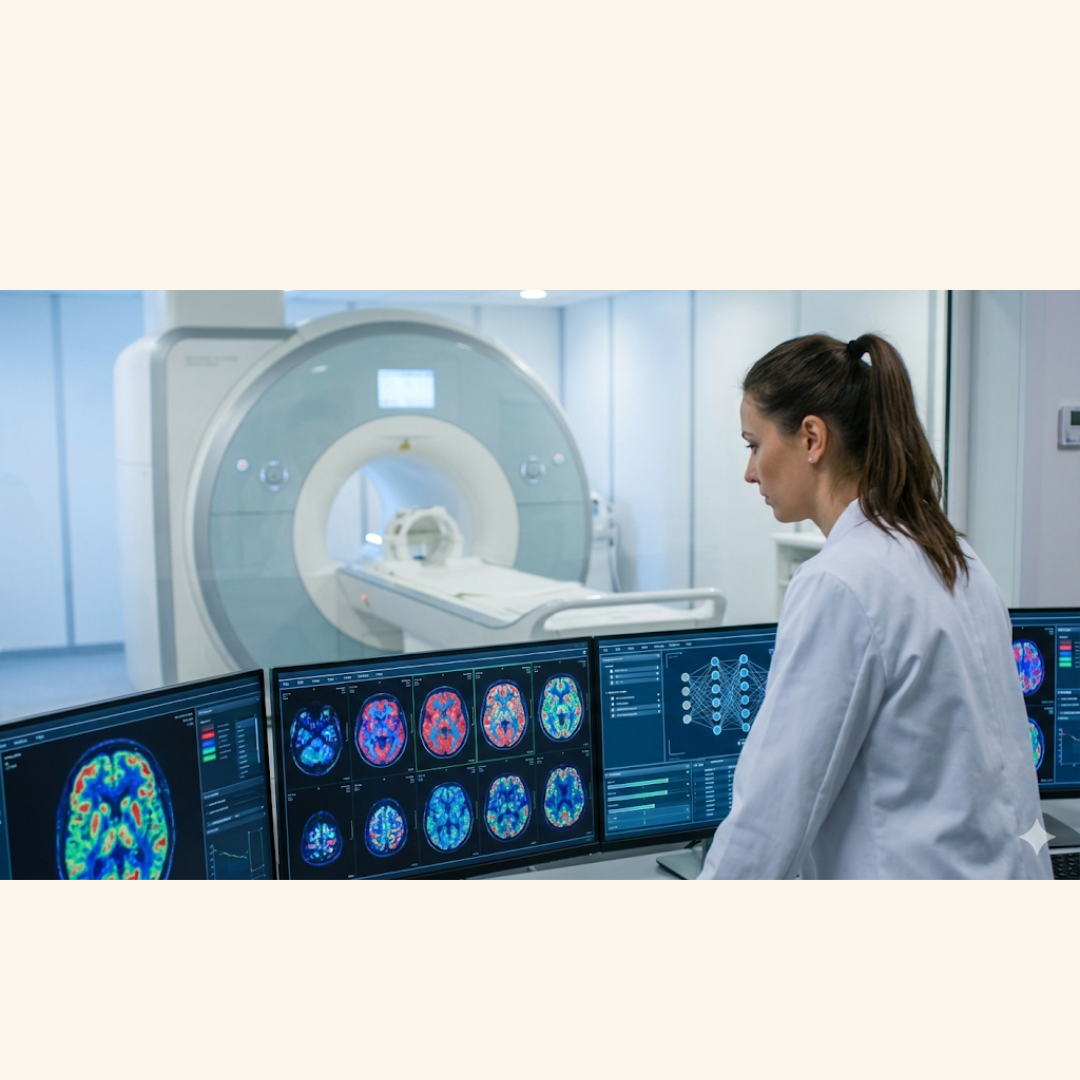
Researchers at Tel Aviv University have developed a new imaging technique that combines artificial intelligence with magnetic resonance imaging (MRI) to visualise the specific chemical changes associated with Parkinson’s. Published recently in npj Parkinson’s Disease, the study presents a method called "quantitative multi-metabolite imaging," which allows scientists to see the biological fingerprints of the condition without the need for invasive procedures or radioactive tracers.
The Limitations of Current Imaging:
For years, doctors and researchers have faced a technological trade-off. Standard MRI scans are excellent for showing the physical structure of the brain—like a map of the roads—but they struggle to show the traffic flowing on them, such as the levels of specific chemicals or neurotransmitters. To see these chemicals, clinicians typically have to rely on PET scans, which require injecting radioactive substances and offer relatively low image resolution.
How the New Technology Works:
The team, led by Hagar Shmuely and colleagues, aimed to bridge this gap. They utilised a specific type of MRI scanning known as "saturation transfer," which is sensitive to molecules like proteins and glutamate. Historically, this method has been too slow or too "noisy" to be clinically useful on its own.
To solve this, the researchers integrated a deep-learning artificial intelligence model directly into the image reconstruction process. The AI acts effectively as a filter and amplifier, taking the raw, noisy data from a rapid scan and processing it into clear, high-resolution maps of brain chemistry.
Visualising the "Fingerprint" of the Condition In tests conducted on models of Parkinson's, this AI-boosted method successfully identified and quantified several key biomarkers simultaneously. Specifically, it allowed the team to map the levels of glutamate—a key neurotransmitter—along with specific protein signatures (known as "semisolid macromolecules" and "amide protons") that change when brain cells degenerate.
Crucially, when the team compared these MRI images to traditional tissue samples examined under a microscope, the results were nearly identical. This confirms that the scanner was accurately detecting the microscopic biological changes occurring deep within the brain.
Implications for the Future:
This development represents a significant step forward for non-invasive diagnostics. By enabling a standard MRI machine to detect complex chemical changes that usually require radiation or biopsy, this technology could eventually allow clinicians to monitor the progression of Parkinson’s and the effectiveness of new treatments with far greater precision and safety.
Comments (0)
Loading comments...