


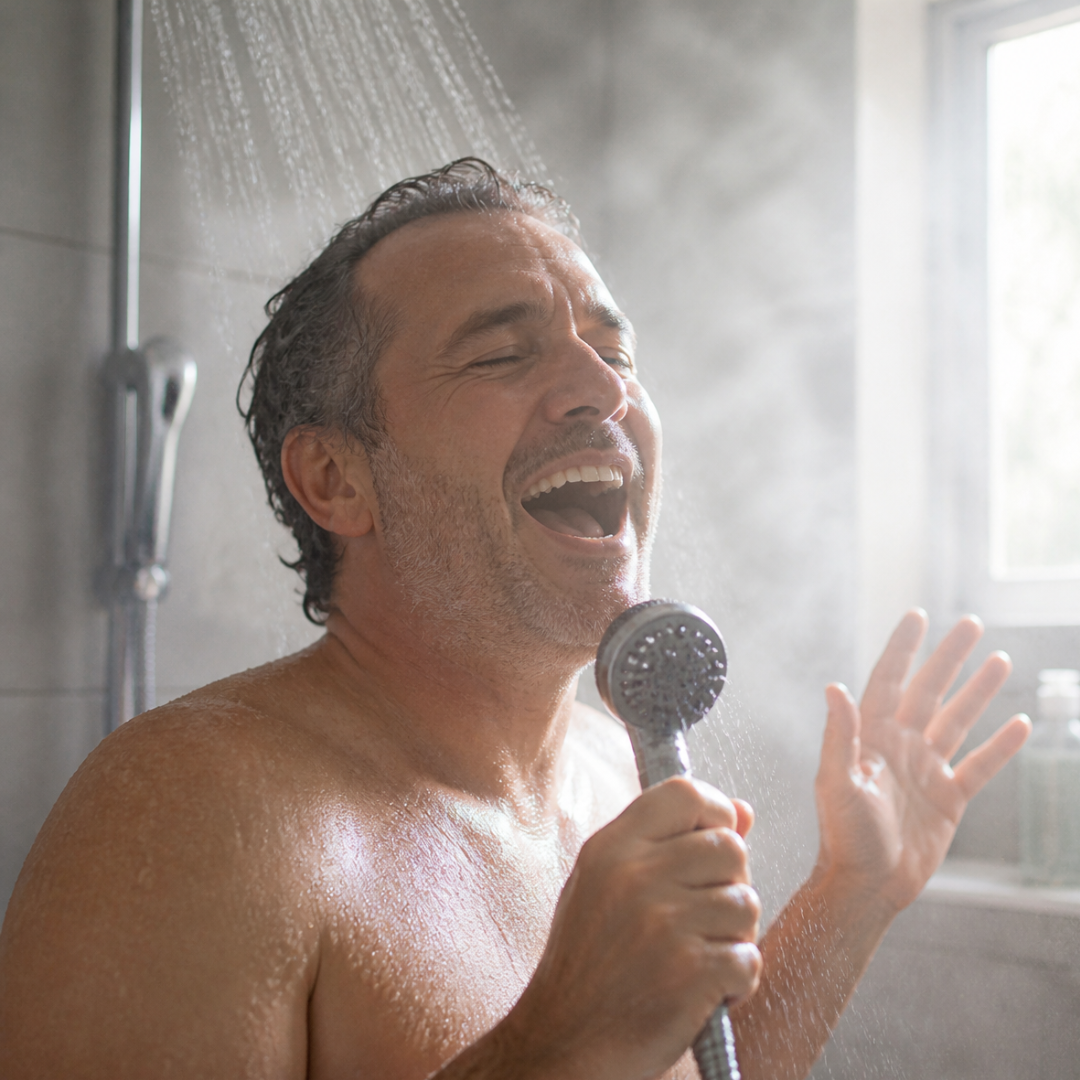
Studies shows singing improves voice, breathing, walking, and mood in people with Parkinson's
November 12, 2026
 Beatrice
Researchers from London, Naples, Verona, and San Francisco recently analysed 26 studies involving over 1,000 people with Parkinson's to see what happens when you add singing to your routine. Published in the Journal of Neurology in November 2026, their work confirms that belting out a tune is far more than a fun hobby. It is a proper physical workout that reaches stubborn symptoms daily tablets often miss.
Medication is brilliant for many things, but it frequently leaves changes in voice, breathing, swallowing, and balance behind. Singing steps into this gap because it asks the brain and body to do everything at once. You have to control your breath, sit up straight, coordinate your mouth and throat muscles, and listen to your pitch, all while your brain releases a lovely hit of reward chemicals.
Unsurprisingly, your voice gets the most immediate upgrade. Across 13 studies, regular singers learned to project louder, hold notes longer, and reach deeper pitches. Even simple warm ups, like humming or blowing through a straw to ease vocal strain, made voices clearer after a single half hour session. Interestingly, singing on its own made people louder when reading aloud, though not always in casual everyday chat. When researchers combined traditional speech therapy with singing, however, people got the ultimate boost in their natural speaking volume.
A strong voice needs strong lungs, which can be tricky when chest stiffness gets in the way. Five studies found that singing acts like weight training for your diaphragm. Just eight weeks of group singing helped people breathe in and out with significantly more power, whether they attended in person or via video call. When pitted against a standard medical breathing device, people unsurprisingly preferred singing because it strengthened their lungs without feeling like a chore.
The benefits even reach down to your feet. Seven studies showed that singing eases stiffness, tremor, and slowness while straightening up posture. It also acts as an internal metronome for walking. In one clever experiment, people walked with much steadier steps when they sang a familiar rhythm like Row, Row, Row Your Boat at their own pace. Generating the beat yourself worked much better than walking along to a music recording, proving your own voice is a remarkably reliable cue for your legs.
The evidence on swallowing is a little more modest, with only three small studies looking into it. While electrical sensors proved that singing wakes up the throat muscles that protect your airway, X ray tests did not show dramatic leaps forward. Still, in a six week trial for people in more advanced stages, singing stopped swallowing abilities from declining, while the group who did not sing got worse. It also took away much of the anxiety around mealtimes.
Above all, singing changes how people feel. Sixteen studies confirmed that group singing melts away stress, anxiety, and low mood, even dropping levels of the stress hormone cortisol after a single hour. Weekly rehearsals rebuilt confidence and shook off the social stigma of living with a neurological condition. Partners and family members felt the lift too, with caregivers who joined weekly choirs reporting much lower stress and depression alongside their loved ones.
The researchers note that the science still has room to grow, as many trials were quite small and every choir ran a slightly different programme. Singing is certainly not a replacement for your medication, physiotherapist, or speech therapist. Think of it instead as a brilliant, scientifically backed extra tool that exercises your lungs, steadies your walk, powers up your voice, and guarantees a genuinely good time.
Comments (0)
Loading comments...