


New Algorithm Finally Fixes How We Measure Parkinson’s
January 24, 2026
A new study published this week in npj Parkinson’s Disease has tackled one of the biggest headaches in neurology: how to measure a condition that changes from hour to hour. Researchers from Tel Aviv Sourasky Medical Center and Columbia University have developed a mathematical method that finally separates the true progression of the condition from the daily background "noise."
For patients and families, the concept of "noise" is actually very familiar, even if the word sounds technical. Think of it like weighing yourself on a bathroom scale. If you step on the scale after a heavy meal and three glasses of water, the number goes up. If you step on it the next morning, the number goes down. That daily fluctuation is "noise." It doesn't mean you genuinely gained or lost body fat; it is just temporary interference hiding your true weight.
Parkinson’s is incredibly "noisy." You might have a terrible tremor on Tuesday because you slept badly or felt stressed, but then have a fantastic day on Wednesday because your medication timing was perfect. If a doctor assesses you on Tuesday, they might think the condition has progressed. If they see you on Wednesday, they might think you are cured. Neither is true. Those temporary ups and downs are the "noise" that confuses clinical trials.
This variability is a nightmare for scientists testing new drugs. It creates a fog that makes it hard to see if a therapy is actually slowing the disease or if the patients just happened to have a "good month."
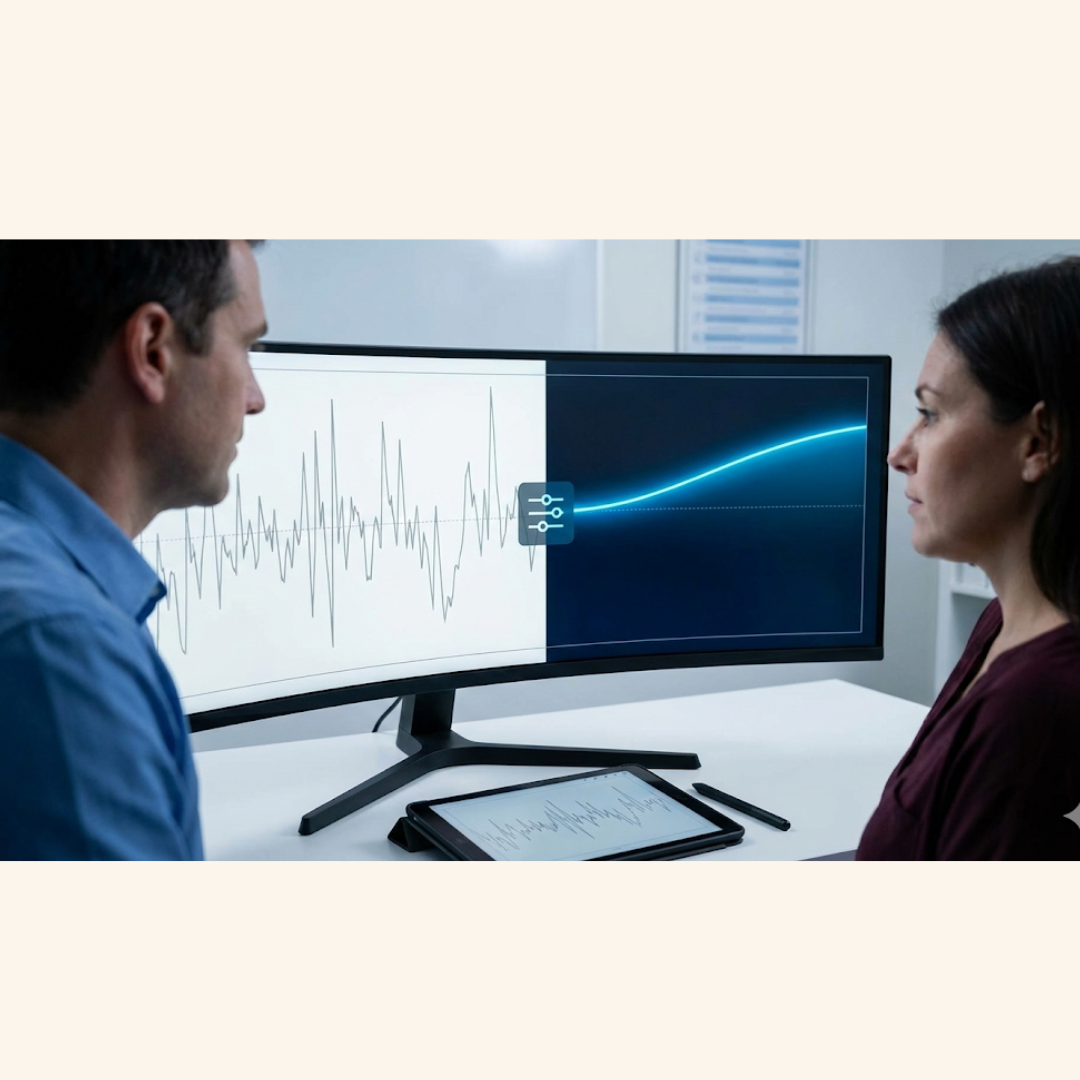
The new study solves this by applying a sophisticated algorithm to the standard rating scales (MDS-UPDRS). The computer model acts like a filter. It looks at the messy, zigzagging line of a patient’s symptoms and mathematically smooths it out, stripping away the temporary fluctuations caused by medication, fatigue, or mood. What is left is a clean, accurate line showing exactly how the disease itself is changing over time.
The implications for the future of research are significant. By removing the fog, scientists can see the "signal"—the true effect of a drug—much more clearly. This means clinical trials could potentially be smaller, faster, and cheaper, because researchers won't need hundreds of participants just to average out the differences between a bad night’s sleep and genuine disease progression. It turns a blunt measuring tape into a laser measure.
Comments (0)
Loading comments...