


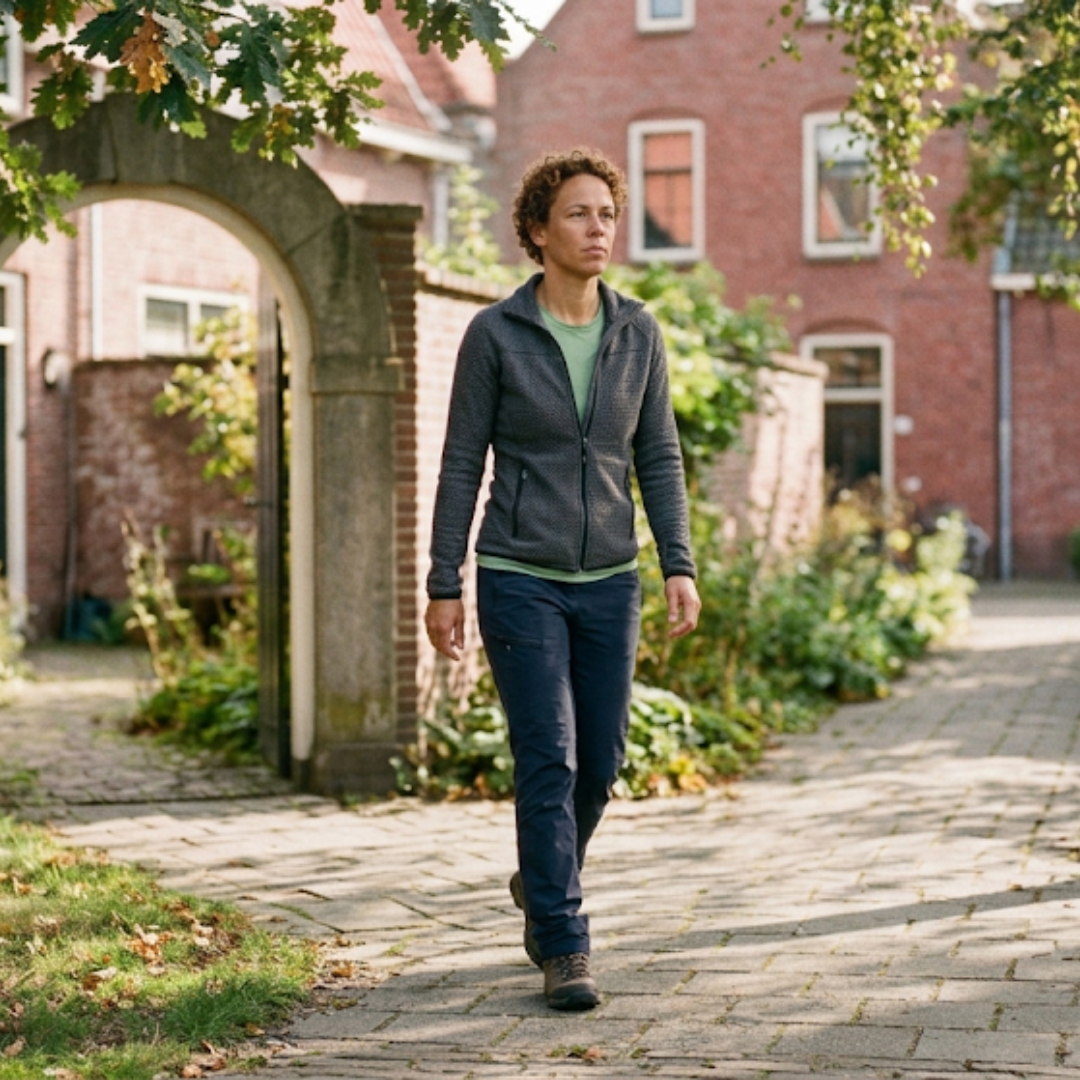
Dutch trial shows mental calming techniques require steady practice to ease anxiety linked freezing in Parkinson's
September 22, 2026
 Beatrice
A brief four session course of psychological training does not immediately eliminate anxiety related freezing of gait, but learning to identify personal triggers and regulate mental states provides valuable, lasting support over time. That is the central conclusion of a randomised controlled trial published in September 2026 by researchers Gijs Vissers, Anouk Tosserams, and Jorik Nonnekes in the Netherlands.
The trial evaluated forty one people with Parkinson's whose freezing episodes become worse under emotional stress or worry. Participants took part in a tailored programme called Managing the Mental State, consisting of two home sessions and two online sessions. While timing participants walking through challenging areas in their homes showed no immediate statistical difference right after four weeks compared to a waiting group, longer term tracking showed that real gains in confidence and gradual reductions in freezing emerged with continued use.
The study demonstrates that breaking the cycle between anxiety and freezing requires steady habit building rather than a rapid fix. For individuals looking to apply these principles at home, several core techniques used in the trial can be practised independently.
The first step is trigger awareness. Freezing episodes rarely happen entirely at random. Keeping track of specific pressure points, such as doorway thresholds, crowded spaces, running late, or sudden worries about falling, helps pinpoint exactly when anxiety begins to interfere with movement.
The second technique is controlled breathing to settle the nervous system. When anxiety rises, breathing becomes shallow and muscles tighten, which directly increases the likelihood of a freeze. Practising slow, deliberate belly breathing as soon as tension surfaces helps dial down the physical surge of adrenaline before trying to step forward.
The third strategy is attention refocusing. During a freeze, the mind often locks onto panicked thoughts about being stuck or falling. The programme taught participants to actively divert their focus away from anxious thoughts and redirect it outward onto concrete movement cues, such as focusing on stepping over a specific line on the floor, shifting weight methodically from one heel to the other, or counting out a steady rhythm.
Ultimately, the trial shows that the brain needs time and repetition to rewire how it responds under pressure. Practising calming routines and attentional cues during calm moments allows these tools to become reliable automatic habits when a stressful freezing situation arises.
Comments (0)
Loading comments...