


Ancient Ayurvedic Remedy 'Smritisagara Rasa' Shows Promise in New Parkinson’s Lab Study
January 22, 2026
For centuries, practitioners of Ayurveda have prescribed a complex herbo-mineral formulation called Smritisagara Rasa to treat conditions of the nervous system. Now, modern science has finally stepped in to validate this ancient wisdom. A new study published this month in Advances in Biomarker Sciences and Technology reveals that this traditional remedy significantly protects brain cells and restores movement in laboratory models of the condition.
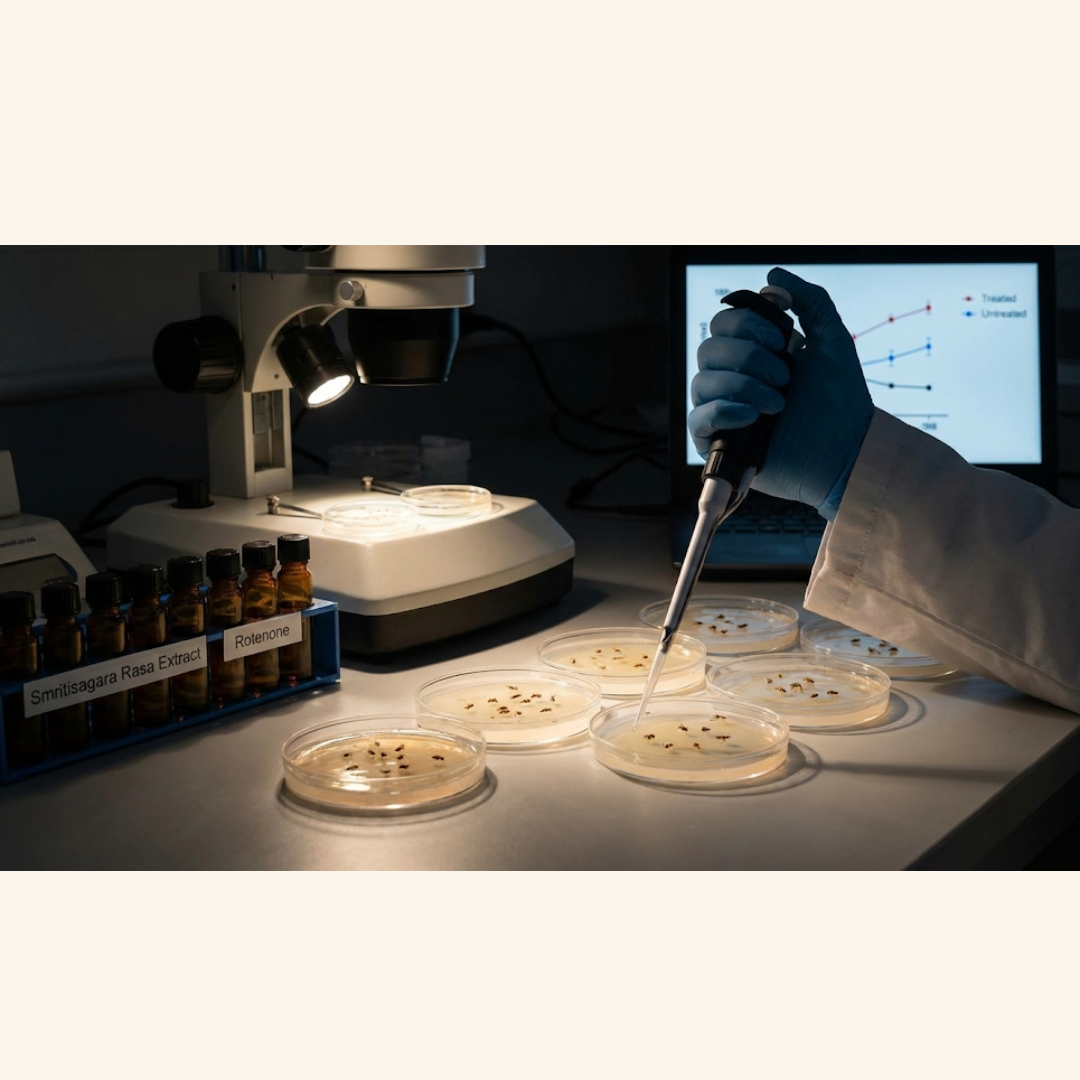
Researchers led by Gopinath G. and colleagues set out to bridge the gap between historical practice and biological evidence. They tested the methanol extract of Smritisagara Rasa on Drosophila (fruit flies) that had been exposed to Rotenone—a toxin commonly used to mimic the cellular damage seen in Parkinson's. While fruit flies might seem like an unlikely patient, their genetic makeup and nervous systems offer a surprisingly accurate window into how human brain cells react to stress and degeneration.
The results were striking. The flies treated with the Ayurvedic extract showed a clear improvement in "neurobehavior," meaning their movement and coordination were significantly better than the untreated group. Crucially, the formulation didn't just mask the symptoms; it appeared to fight the underlying cellular "rust." The study found that the extract reduced neurochemical stress indicators, effectively shielding the neurons from the toxic assault that usually leads to cell death.
This research offers a fascinating glimpse into how "old" medicine can guide "new" science. By acting as a powerful antioxidant, Smritisagara Rasa appears to neutralize the oxidative stress that drives the progression of the condition. While this specific study is pre-clinical, it provides the first robust biological explanation for why this formulation has remained in use for so long.
It serves as a reminder that the next breakthrough in managing brain health might not come from a synthetic chemical created in a lab, but from rediscovering and refining the molecules we have had on the shelf for hundreds of years. The team is now calling for further investigation to translate these findings from the Petri dish to potential human therapies.
Comments (0)
Loading comments...