


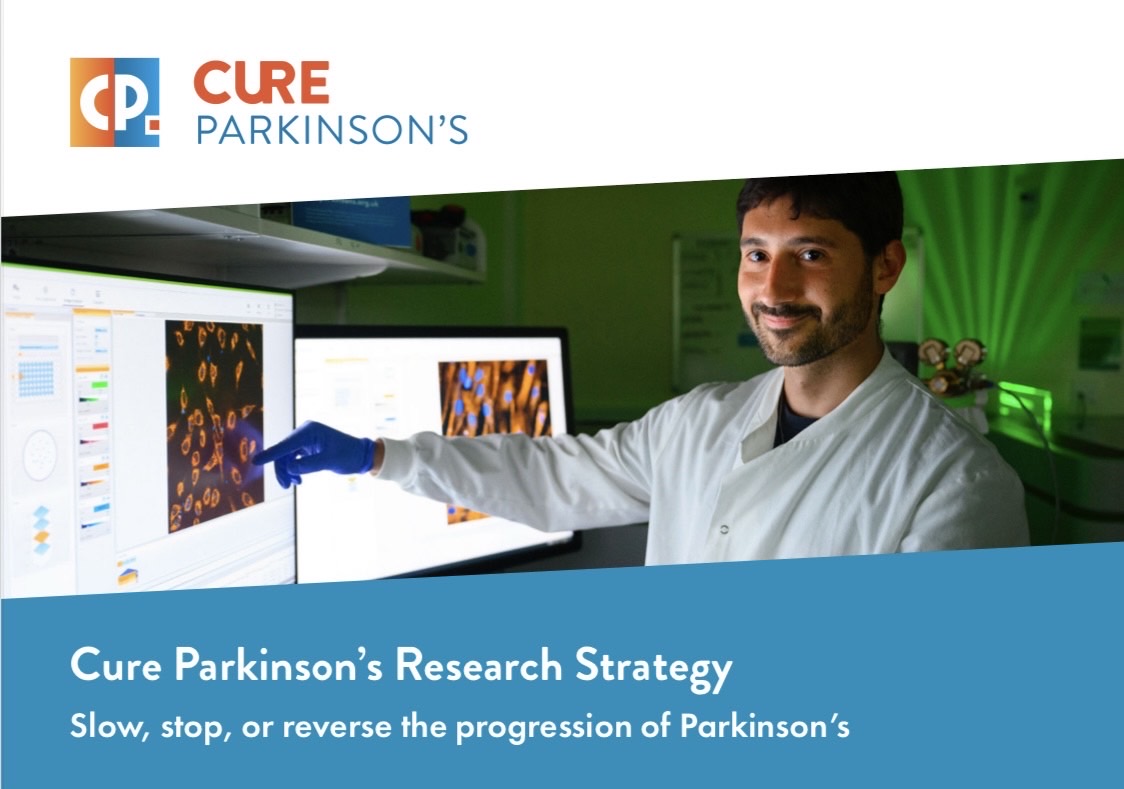
Mapping the Future of Parkinson’s Research: The Cure Parkinson’s Strategy for 2025–2030
November 11, 2025
In November 2025, Cure Parkinson’s published a refreshed research strategy that lays out a bold and urgent roadmap for advancing treatments for Parkinson’s disease. The document makes clear that the organisation is no longer interested in funding incremental tweaks alone — the focus is firmly on therapies that can slow, stop or reverse the disease’s progression, with a clear eye on translation into the clinic.
Four Key Objectives
The strategy outlines four central objectives that will guide funding, partnerships and research priorities over the coming years:
Growing the treatment-selection programme: Cure Parkinson’s will expand its screening and prioritisation of existing and novel therapies through its long-running International Linked Clinical Trials (iLCT) initiative, which reviews therapies globally and picks those with the strongest rationale for advancing.
Accelerating clinical testing of new therapies: Recognising that traditional trial models are slow and costly, the charity supports “multi-arm, multi-stage” clinical platforms (such as the EJS ACT-PD trial) that test multiple treatment candidates simultaneously. This approach is designed to reduce time, risk and cost of evaluating disease-modifying therapies.
Promoting combination therapies: Given the complexity and heterogeneity of Parkinson’s, the strategy emphasises that single-drug interventions may not suffice. Instead, research into combinations of therapies — each targeting different biological pathways — is encouraged and supported via dedicated funding calls (for example a £2 million call for combination therapy projects).
Personalising disease modification: Recognising that Parkinson’s presents differently in each person, the strategy highlights the importance of sub‐typing the condition via genetics, biomarkers and clinical characteristics, and then matching people to therapies they’re most likely to benefit from. This precision medicine approach aims to improve trial design, success rates and, ultimately, patient outcomes.
Underlying Enabling Tools & Infrastructure
The strategy isn’t just about funding drugs — it emphasises building the infrastructure and tools that make trials smarter and faster. This includes:
Developing and validating biomarkers that tell us early whether a therapy is engaging the target and how fast the disease is progressing.
Supporting digital health tools that capture real-world symptoms, mobility and daily functioning outside the clinic.
Investing in diverse and representative preclinical models (cells, animals) that reflect the many ways Parkinson’s can show up.
Promoting data sharing, open repositories of research data and collaborative models that span academia, industry and patient communities.
Why This Matters
Parkinson’s is no longer viewed as a single disease with one simple pathway; the new strategy reflects that complexity. Because there are many biological drivers (protein mis-folding, inflammation, mitochondrial dysfunction, lysosomal failure, immune activation, etc.), the approach needs to be multi-faceted. By aligning funding, trial design and pipeline development around these realities, Cure Parkinson’s strategy signals a shift from “just managing symptoms” to actively changing the course of the disease.
Key Challenges and Ambitions
The document acknowledges that despite decades of research, we still lack approved therapies that truly modify Parkinson’s progression. Trial failures, lack of biomarkers and heterogeneity in patient response all contribute to the slow pace of progress. The strategy seeks to overcome these by raising the bar: projects must have a credible path to the clinic, measurable milestones, and work that is built for translation. It also underscores the urgency of speed — therapies that are likely to reach people within about five years receive priority.
A Snapshot of Funding & Focus Areas
The £2 million funding call for combination therapies: open to preclinical and clinical work, emphasising collaborations and therapies ready for translation.
Platforms like EJS ACT-PD: large-scale trials and novel trial designs supported to test drugs faster and more broadly.
Cure Parkinson's
Expanding the scope of iLCT: more conditions considered (for example dementia and Parkinson’s overlap), more cross-condition knowledge sharing, more diverse therapeutic pipelines.
Looking Ahead
Between now and 2030, Cure Parkinson’s ambition is clear: the research ecosystem must move from promise to proof; from lab-based findings to trials with real people and measurable disease impact. The strategy emphasises collaboration, patient involvement, data and tools, smarter trials and therapies that target the deep biology of Parkinson’s rather than just its symptoms.
Comments (0)
Loading comments...