


Sound cues improve hand movement speed and boost vital brain activity in people with early Parkinson's
June 20, 2026
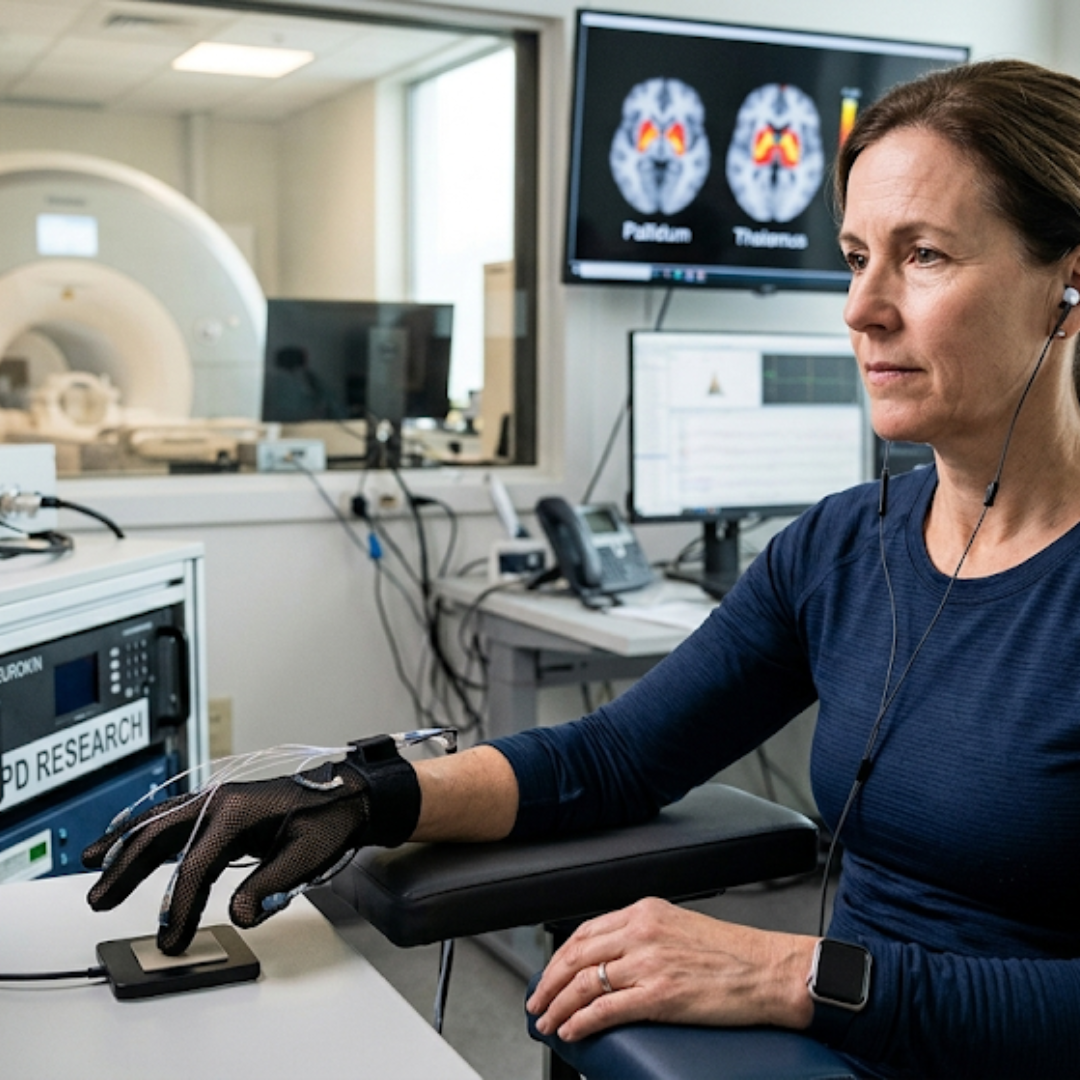
A new study has revealed that external rhythm helps people with early Parkinson's overcome movement slowdowns by stimulating underactive brain pathways. Researchers used advanced functional brain imaging alongside a specialised high tech optical fibre glove to monitor fine motor hand movements in real time.
The study focused on a finger tapping task to see how movement changed with and without support. When participants tapped their fingers at their own pace without any sound assistance they experienced a noticeable drop in movement size and speed over time. This progressive shrinkage and slowing down of a physical action is a common trait that significantly improved as soon as a steady external auditory beat was introduced.
The brain scans revealed precisely why this rhythmic support works so well. Without the audio cues people with the condition showed significantly lower activity in key internal brain regions responsible for automatic movement control namely the pallidum and the thalamus. When the internal clock system struggles to keep time the brain has to work much harder to plan every single individual movement.
The introduction of a steady external sound pattern completely changed the neural landscape. The rhythm effectively acts as an external clock boosting activity within the pallidum and connecting it to a wide network of sensory and motor regions across the brain. It also stimulated the premotor cortex and the supplementary motor area which are regions heavily involved in planning actions.
By outsourcing the timing mechanism to external sound waves the brain can bypass its own damaged internal clock. This allows it to execute smoother and more coordinated physical actions without draining its processing power. The researchers found a direct link showing that the stronger the brain response in these core regions the greater the physical improvement in hand movement. These findings provide strong scientific validation for using rhythmic training and sound based tools to help manage daily physical tasks and maintain fine motor skills.
Comments (0)
Loading comments...