


Sweat Equity: Cardiovascular Exercise Boosts Brain’s Ability to Learn New Skills
December 25, 2025
We typically view exercise and learning as two separate activities. You go to the gym to build muscle, and you practice a skill to build coordination. However, a fascinating new pilot trial published in Nature suggests that for people with Parkinson’s, combining the two might be the key to unlocking the brain’s potential.
The study, led by researchers investigating neuroplasticity, set out to answer a specific question: can a bout of intense cardiovascular exercise act as a "primer" that prepares the brain to learn a new motor skill more effectively?
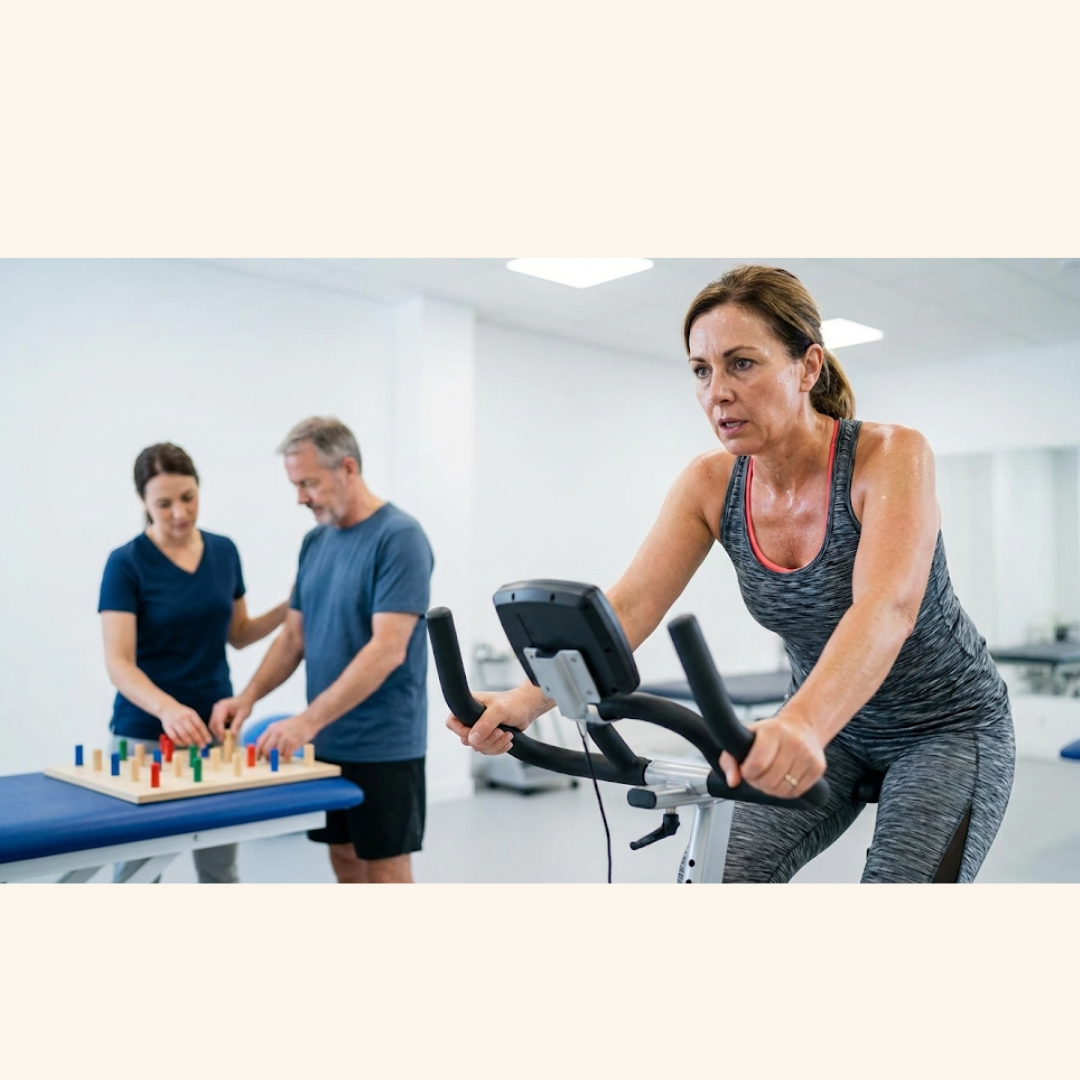
The "Priming" Experiment The research team recruited individuals with Parkinson’s and split them into two distinct groups to test this theory. The first group performed a session of high-intensity cardiovascular exercise—essentially working up a good sweat—before attempting a new motor task. The second group simply rested before tackling the same challenge.
The task itself involved a complex motor skill, the kind that requires practice and repetition to master. The researchers were not just interested in how well the participants performed on the first day, but how well the skill "stuck" over time. They measured performance across multiple sessions to see if the exercise had any lasting impact on how the brain encoded the new movement.
Exercise as a Fertilizer for Learning The results revealed a clear advantage for the active group. The participants who engaged in cardiovascular exercise before practicing showed significantly better motor learning compared to those who rested. The intense physical activity appeared to create a fertile environment in the brain, making it more receptive to acquiring and retaining new patterns of movement.
While the resting group did improve, their progress was slower and less robust. The exercise group effectively got more "value" out of their practice time. It seems that the physiological boost from the cardio—likely involving increased blood flow and the release of neurochemicals that support brain plasticity—primed their neural networks to wire in the new skill more efficiently.
Rethinking Rehabilitation This finding has immediate, practical implications for how we approach therapy and rehabilitation. It suggests that the traditional model of doing physiotherapy in isolation might be missing a trick. If a person with Parkinson’s spends twenty minutes on a stationary bike before their therapy session, they might get significantly better results than if they walked in cold.
It transforms exercise from a tool for general fitness into a targeted medical intervention. By using cardiovascular activity to open the brain’s "learning window," clinicians and individuals can potentially maximise the benefits of every practice session, making the hard work of rehabilitation go that much further.
Comments (0)
Loading comments...