


Engineers build a flexible fibre sensor to track tremors and improve treatments for people with Parkinson's
August 4, 2026
 Beatrice
A new wearable sensor could solve one of the most frustrating puzzles in neurology: telling Parkinson's tremors apart from essential tremors to get people on the right treatment faster.
Getting the right medication depends entirely on knowing which type of tremor a person actually has. Essential tremor typically shows up when hands are actively doing something, like holding a cup or writing a note, whereas Parkinson's tremor usually happens when muscles are completely relaxed. Because both conditions can look almost identical during a short clinic visit, doctors sometimes struggle to make a definitive diagnosis right away. Giving Parkinson's medication to someone with essential tremor, or vice versa, means months of wasted time, unpleasant side effects, and no real relief.
This is where a fresh piece of engineering steps in to change things. Published in the journal Advanced Science in August 2026, the research was carried out by an international team of biomedical engineers and materials scientists working across specialist university laboratories in Asia and North America.
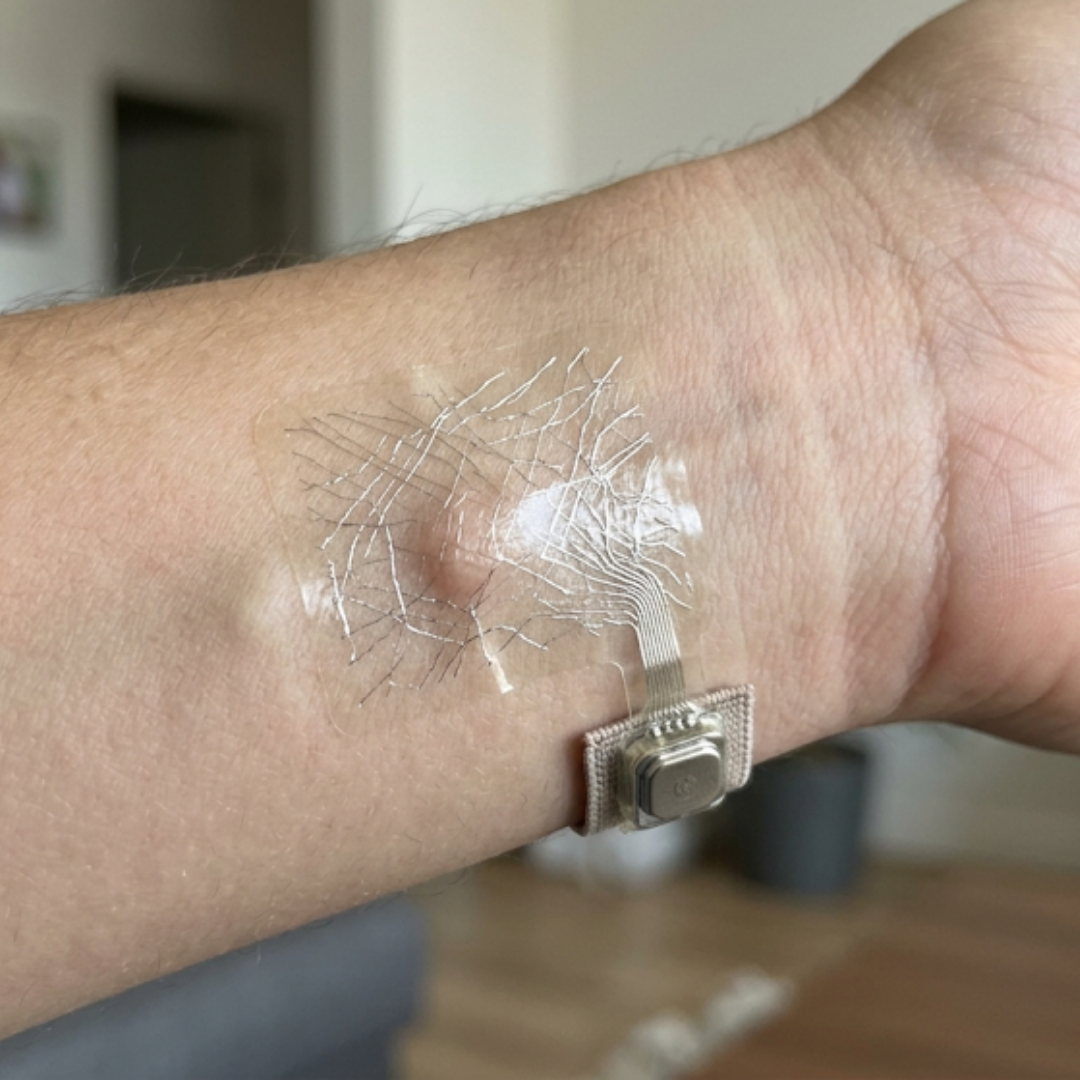
The team developed a soft, flexible strain sensor that sticks to the skin like a light plaster or weaves directly into clothing. Instead of relying on rigid, bulky smartwatches that only capture big wrist movements, this sensor uses ultra fine conductive fibres designed with microscopic cracks. When a muscle twitches or a joint vibrates, these tiny micro cracks open and close slightly, changing how electricity flows through the fibre. It can measure even the faintest flutter with incredible precision, over and over, without wearing out or losing accuracy.
By placing these lightweight sensors across multiple spots, such as the fingers, wrists, and arms, doctors get a full picture of movement across the entire body in real time. The system records how fast the tremor shakes, how wide the movements are, and whether the shaking happens during activity or rest.
Having continuous, detailed data transforms daily treatment. Instead of relying on a ten minute physical checkup every few months, care teams can see exactly how tremors behave throughout an ordinary day at home. They can watch how shaking responds to a new prescription, catch subtle changes before a person even notices them, and adjust drug timings so the therapy works continuously when it is needed most.
Looking ahead, the engineering team plans to refine the wireless transmitter so the sensors can communicate directly with a smartphone app. The next major phase will involve larger clinical trials with people living with Parkinson's and essential tremor in home environments, gathering the long term data needed to win regulatory approval for everyday clinical use.
Comments (0)
Loading comments...