


The Dark Secrets of Ultra-Processed Food and What It Means for People with Parkinson's
January 30, 2025
Ever wondered why you can’t resist that bag of crisps or why one biscuit turns into ten? I watched a very interesting documentary and took some notes to share with PD Buddies. Highly recommended to watch on BBC iPlayer, but if you don’t have access to BBC, here’s my summary of this fascinating documentary.
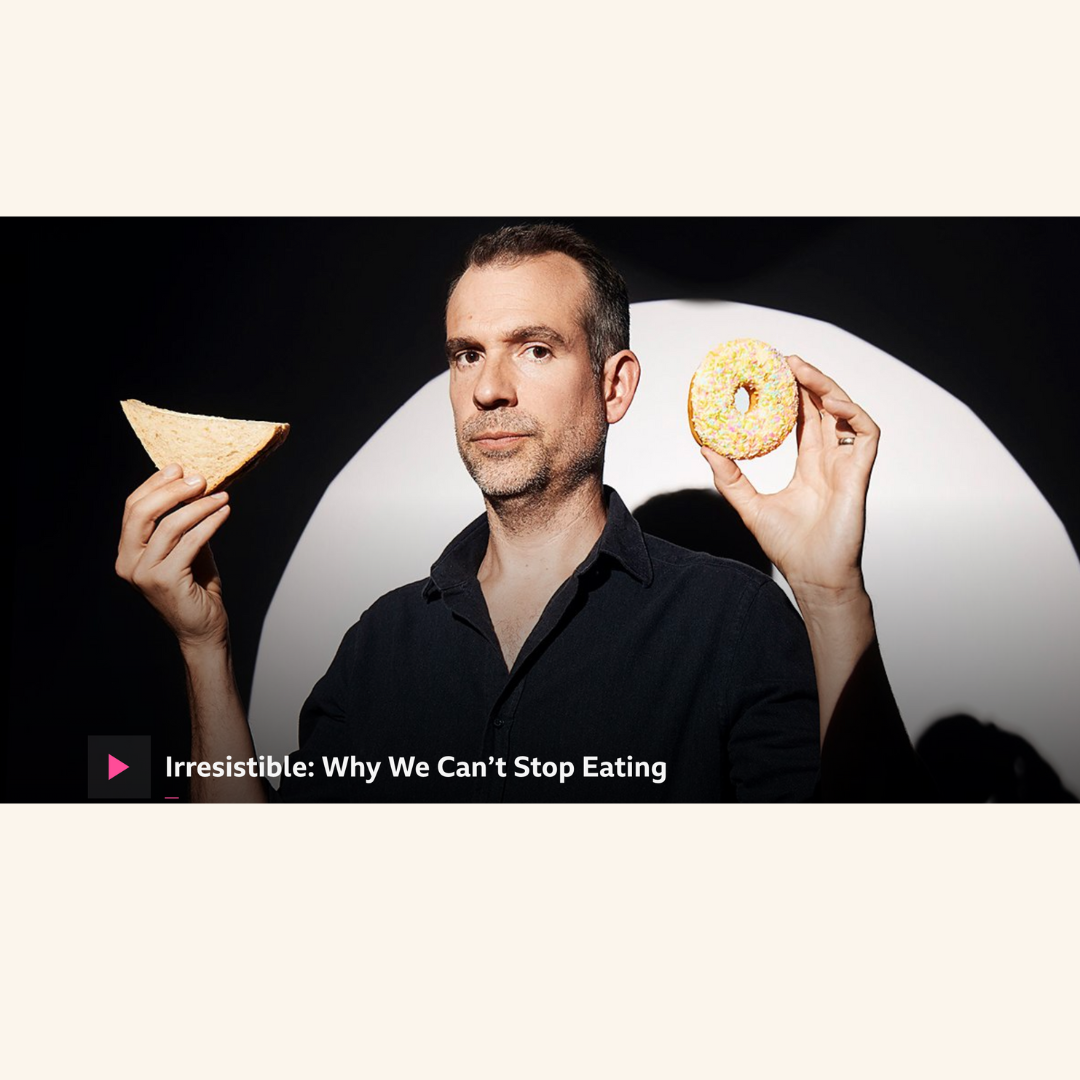
The BBC documentary "Irresistible: Why We Can’t Stop Eating" dives deep into the science and industry tricks behind ultra-processed food (UPF). Hosted by Dr. Chris van Tulleken, this eye-opening documentary exposes how food companies use cutting-edge technology, psychological research, and marketing tactics to keep us hooked on foods that are often cheap, convenient, and addictive—but terrible for our health.
What Happened in the Mid-1970s? The Start of the Obesity Epidemic
Something drastic changed in the mid-1970s that set off an obesity crisis across all groups in the U.S. Before 1975, obesity rates were relatively stable across different races, ages, and socioeconomic backgrounds. But since then, the number of people struggling with obesity has skyrocketed. So, what happened?
This was the turning point for the food industry. During this time, ultra-processed foods became more widely available, cheaper, and heavily marketed. Several key factors contributed to this shift:
- The Rise of Ultra-Processed Food Instead of fresh, home-cooked meals, people started consuming ready-made, packaged, and fast food at an unprecedented rate. Food companies learned that replacing real ingredients with cheaper, processed alternatives was not only cost-effective but also highly addictive for consumers.
- Government Dietary Guidelines & the Low-Fat Craze – In the late 1970s, the U.S. government introduced low-fat dietary guidelines, telling people to avoid fat to improve heart health. Food companies responded by replacing fat with sugar and highly processed starches to keep their products tasty. This led to a huge increase in sugar consumption, which scientists now link to metabolic diseases, insulin resistance, and weight gain.
- Explosion of Fast Food & Convenience Culture – During this period, fast-food chains expanded rapidly, making cheap, calorie-dense, highly processed meals more accessible. Microwave dinners, instant noodles, and processed snacks also became household staples as people’s lifestyles got busier and they looked for quick meal solutions.
- Aggressive Marketing & Food Science Innovations – The food industry invested millions in research to engineer foods that were not just tasty but irresistible. Using brain scans, they fine-tuned flavors, textures, and additives to make food more addictive. They also launched massive marketing campaigns, often targeting children, to create lifelong brand loyalty.
The Science of Addiction: How Food Hooks Us
Food companies don’t just create products—they engineer experiences to make their food impossible to resist. Every bite, crunch, and sip is carefully designed to trigger our brain’s reward system, much like addictive substances.
The Bliss Point: The Perfect Sugar High
One of the biggest tricks in the food industry is hitting the "bliss point"—the perfect combination of sugar, fat, and salt that maximises pleasure without making us feel full too quickly. In the 1970s, Campbell’s Soup and its competitors discovered that out of 40 different pasta sauces, the ones with the highest sugar content were the most popular. This realisation set the foundation for the entire industry, leading to the sugar-packed processed foods we see today.
Brain Scans & The Science of Overeating
Major food companies, including Unilever, have used neuroimaging (brain scans) to see how people’s brains react to different foods. The results? Soft, creamy, and easily chewable foods—like ice cream, crisps, and ultra-processed bread—trigger higher dopamine responses in the brain, making us crave more.
The less we chew, the more we eat. Soft foods bypass the brain’s natural "fullness" signals, tricking us into consuming huge amounts of empty calories. Unlike crunchy vegetables or fibrous foods that require effort to eat, soft ultra-processed foods allow us to eat more, faster—exactly what food companies want.
The Business of Selling More Food
For the food industry, it’s not just about making food taste good—it’s about making us eat more and eat more often.
Snackification: Changing How & When We Eat
Food companies have worked hard to reshape our eating habits, moving from three main meals a day to constant snacking. They call it "stomach share"—how much of our daily food intake they can claim.
Most snack foods, even those marketed as "healthy" (like veggie straws or granola bars), are low in nutrients but high in calories. They are designed for speed and convenience, making it easy for people to eat mindlessly throughout the day.
Sonic Branding: The Power of Sound
The industry even designs the sounds of food to make them more appealing. From the "pop" of a Pringles can to the fizz of a soda, these sounds trigger anticipation and excitement. Studies show that a louder crunch makes food feel fresher, even when it’s ultra-processed junk.
Cheap Ingredients, High Profits
Apart from getting us to eat more, food companies cut costs by replacing real ingredients with cheaper alternatives.
Modified starches make snacks crispier and yoghurts creamier, but they digest faster than natural starches, spiking blood sugar and promoting fat storage. Artificial fruit substitutes are used in jams, juices, and desserts because real fruit is expensive and spoils quickly. A homemade lemon cake needs five ingredients; a store-bought one has over 40—all designed to extend shelf life and maximise profits.
Ultra-Processed Food & Health: What the Science Says
A growing body of research links UPFs to obesity, diabetes, and metabolic disorders.
The Brazilian Study: How UPFs Took Over
Researchers in Brazil wanted to understand why their population was becoming sicker and more obese. They found that while sales of cooking oils, sugar, and salt had dropped, the consumption of ready-made meals, snacks, and processed foods had skyrocketed. This led to the creation of the term "ultra-processed food"—industrial formulations designed for taste, convenience, and addiction.
The Maryland Experiment: 500 Extra Calories a Day
The National Health Institute in Maryland conducted a study where participants ate for a month either an ultra-processed diet or a minimally processed one. The results? People on the UPF diet consumed an extra 500 calories per day on average, proving that highly processed foods lead to overeating and weight gain.
Ultra-Processed Food: As Addictive as Drugs?
Some scientists believe that ultra-processed food triggers the same brain pathways as addictive substances like alcohol and drugs. Studies using the Food Addiction Scale show that many people struggle with compulsive eating behaviours, similar to substance addiction.
The Tobacco-Food Connection
Decades ago, tobacco companies realised their future wasn’t in cigarettes—it was in food. They began buying food brands and using their expertise in flavour engineering and marketing to make processed foods just as addictive as cigarettes.
RJ Reynolds, the tobacco giant, wrote in a 1962 memo that they were "not in the cigarette business, but in the flavour business." Hawaiian Punch which was their first acquisition, originally an adult drink, was rebranded for children—turning them into lifelong consumers. Do you remember the Camel cigarette commercials with cartoon-like camels that were already appealing to children? The idea was that when they grew up, they would be subconsciously attached to the brand.
The PepsiCo Experiment: Can Diet Foods Make Us Gain Weight?
One of the biggest paradoxes in the food industry is the idea that "diet" foods and drinks help with weight loss—but research suggests the opposite might be true. PepsiCo conducted experiments to understand how calorie-free sweeteners affect the brain and body. Their findings revealed a surprising and concerning effect: consuming diet products could actually lead to increased hunger and weight gain rather than helping with weight management.
Here’s why: our brains have evolved to associate sweetness with energy intake. When we eat something sweet, our body prepares for a surge of calories by releasing insulin and activating metabolic processes. However, when we consume artificially sweetened products—like diet sodas or sugar-free snacks—the brain gets the signal that sugar is coming, but no real energy arrives. This confuses the body and disrupts natural hunger cues, leading to increased cravings for real, calorie-dense foods.
The result? People consuming diet products may end up eating more overall because their body is still searching for the missing calories. Instead of satisfying hunger, these artificially sweetened foods trick the brain into wanting more, creating a cycle of overeating that can ultimately lead to weight gain.
Is Change Possible?
The food industry fights hard against regulation, funding research to downplay the dangers of UPFs—just like the tobacco industry once did. Some scientists have even been paid thousands of pounds for brief meetings, with contracts forbidding them from speaking negatively about the companies.
However, some countries are fighting back:
Several Latin American countries have introduced taxes on UPFs and cigarette-style warning labels on packaging.
However, in the UK and US, UPFs make up 56-73% of the national diet, leading to an urgent need for policy change.
Final Thoughts: Are We Trapped in an Engineered Food Addiction?
Ultra-processed foods dominate our diets, but they weren’t always part of our eating habits. They were designed, marketed, and engineered to maximise consumption and corporate profit—often at the expense of public health.
What Does This Mean for People with Parkinson’s?
For people with Parkinson’s disease, diet plays a crucial role in managing symptoms and overall well-being. Ultra-processed foods with their high sugar content, artificial additives, and lack of essential nutrients, can contribute to inflammation, gut health issues, and metabolic problems—all of which can worsen Parkinson’s symptoms. Research suggests that a whole-food, nutrient-rich diet can support brain health and possibly slow disease progression.
Additionally, many UPFs contain highly processed starches that lead to blood sugar spikes, which can cause fatigue, energy crashes, and difficulties in medication absorption. Parkinson’s medications, such as levodopa, need to be carefully timed with meals for optimal effectiveness. A diet filled with natural, fiber-rich foods can help regulate digestion and improve medication absorption, while ultra-processed foods may interfere with the body's ability to use these treatments effectively.
Since Parkinson’s can also impact dopamine levels, which are linked to the brain’s reward system, people with PD may be even more susceptible to the addictive nature of UPFs. These foods trigger the same dopamine-driven cravings as substances like alcohol and drugs, making it even harder to resist them.
For those living with Parkinson’s, being aware of these industry tricks and making mindful food choices can lead to better symptom management, improved energy levels, and overall better health. Reducing ultra-processed foods and focusing on fresh, nutrient-dense meals can help maintain brain function, mobility, and quality of life.
So, the next time you reach for that perfectly crispy, hyper-palatable snack, ask yourself: Is this really food? Or just a product designed to keep me eating more?
Comments (0)
Loading comments...