


New Study Explores Horseback Riding as Promising Therapy for Parkinson’s Disease
June 11, 2025
 LeahJS
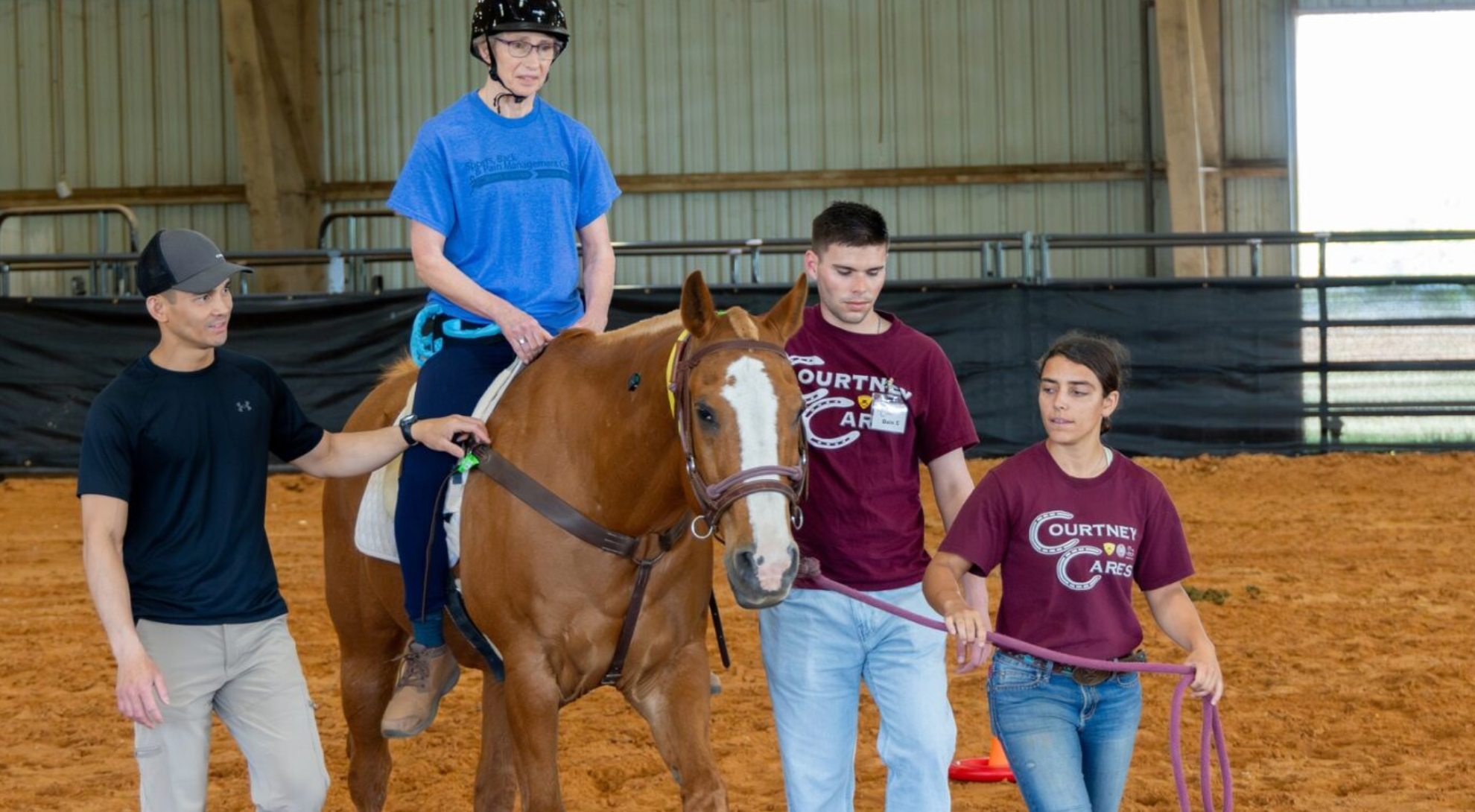
Suzanne Gallagher, who once spent her summers horseback riding at Girl Scout camps and in Houston’s Hermann Park, recently returned to the saddle — this time as part of a unique therapeutic experience. Now living with Parkinson’s disease, Gallagher is participating in a new study that could help redefine treatment.
Exploring Horseback Riding as Therapy for Parkinson’s
The study is led by Dr. Deanna Kennedy, associate professor in the Department of Kinesiology and Sport Management at Texas A&M University. It explores equine-assisted therapy — pairing individuals with horses through riding and physical interaction — as a potential way to ease symptoms of Parkinson’s disease.
Dr. Kennedy notes that this approach has shown success in improving gait, balance, and coordination in people with cerebral palsy. “If these therapeutic effects are so powerful in that population,” she said, “what could they mean for those living with Parkinson’s disease?”
A Collaborative Effort Across Disciplines
The pilot study involves a wide-ranging team from Texas A&M, including researchers, physical therapists, and students from Kinesiology, Engineering, Veterinary Medicine, Biomedical Sciences, and the Institute for Equine Sciences. The Courtney Grimshaw Equine Therapeutic Program — known as Courtney Cares — also plays a key role by providing the horses and therapeutic support.
Real People, Real Impact
Irene Erion, another study participant, joined after realizing she could no longer smell fresh bread — a lesser-known early symptom of Parkinson’s. “Now I get to be part of the group that might find a way to make things better,” she said.
Cindy Conte, leader of the Robert Conte Foundation for Parkinson’s Disease and a long-time collaborator with Dr. Kennedy, praised the project: “To think that Texas A&M is on the cutting edge of introducing a new form of therapy… it’s a great thing, an exciting thing.”
Looking Ahead: A Hopeful Future
Although this pilot study is just the beginning, Dr. Kennedy hopes it will pave the way for larger-scale research, including a proposed six-week program. The goal is to better understand how effective equine-assisted therapy can be for managing Parkinson’s symptoms long-term.
For Gallagher, the return to riding wasn’t just therapeutic — it was joyful. “I didn’t think I could even do [horseback riding] anymore because my balance has really become worse over the years,” she said. “But they thought I could do it just fine, and it was a great time — a lot of fun.”
Photo Credit: Texas A&M University College of Education and Human Development
Comments (0)
Loading comments...