


Researchers discover extensive DNA damage and natural self defence in brainstem cells in Parkinson's
October 15, 2026
 Beatrice
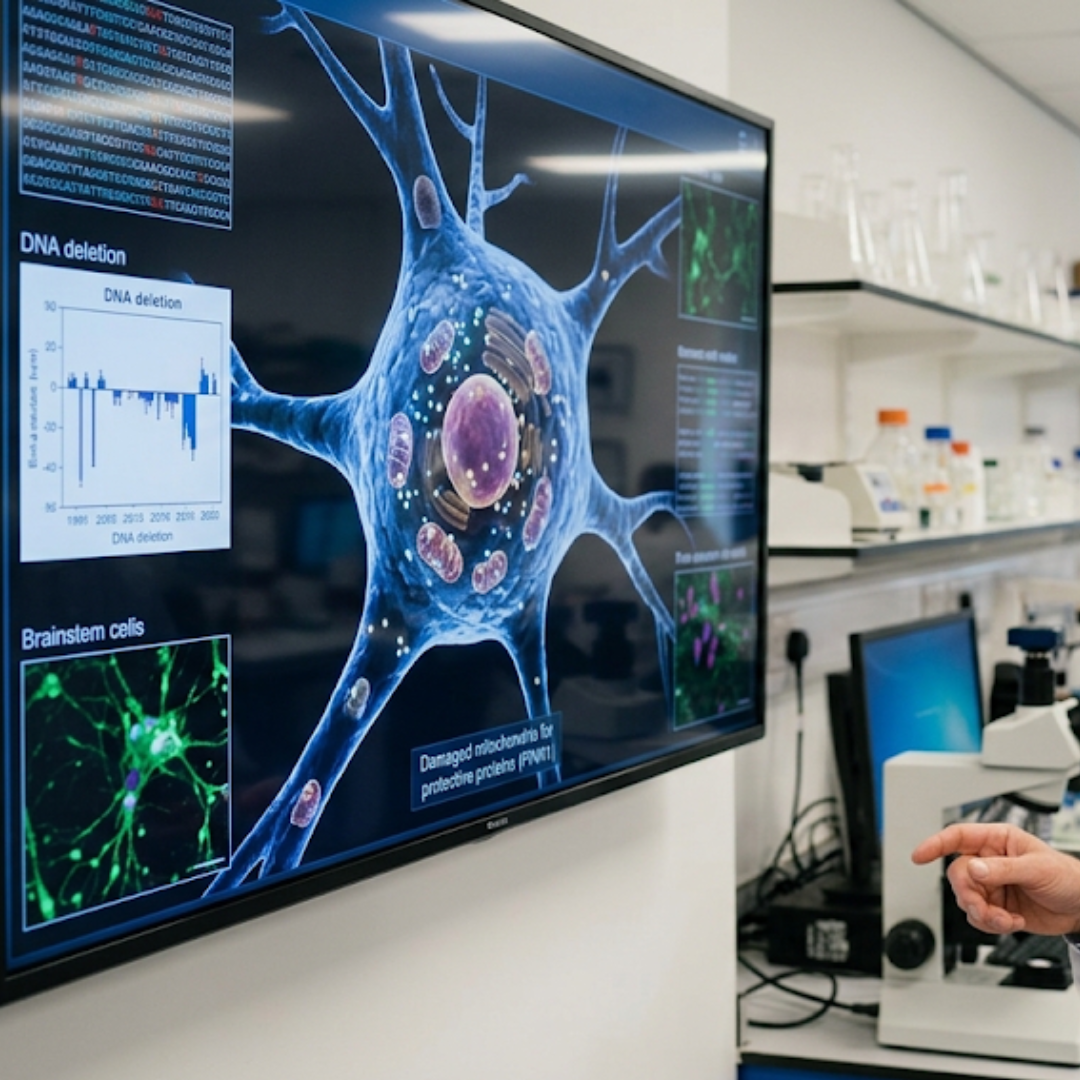
A new study by scientists at the University of Birmingham and Newcastle University has revealed that Parkinson's causes extensive genetic damage to the power units inside specific brain cells, while also showing how those same cells fight back to survive.
The researchers looked at cholinergic neurons, which sit in the brainstem and produce a chemical messenger called acetylcholine. These cells are essential for regulating balance, walking stability, sleep, and clear thinking. When these neurons decline, people face challenges such as unsteady gait, falls, and disrupted sleep, which standard treatments often fail to address.
Using advanced single cell genetic sequencing, the team examined individual brainstem neurons from donated post mortem tissue, comparing people who lived with Parkinson's against those who did not. They focused on mitochondria, the tiny internal batteries responsible for generating the fuel that nerve cells need to function and communicate.
The analysis found substantial damage to the mitochondrial DNA in these brainstem cells. Large pieces of genetic code were completely missing, particularly in a critical region known as the major arc, which contains the blueprint for cellular energy production. Without this information, mitochondria become inefficient, leaving the cell struggling to generate enough power to meet its daily demands.
The study also showed that these cells do not simply give up when their energy supply is threatened. In response to the DNA damage, the neurons significantly increased their production of a protective protein called PINK1.
In healthy biology, PINK1 works as a cellular recycling director. It detects failing or worn out mitochondria and marks them for removal so they do not harm the rest of the cell. In the study, cells that carried severe DNA damage produced unusually high amounts of PINK1 to clear out broken power units and protect whatever healthy energy production remained.
Importantly, people who had lived with Parkinson's for the longest duration showed the highest levels of PINK1 in these neurons. This suggests that the body's natural quality control system actively helps vulnerable brainstem cells endure over many years, even under intense energy strain.
These findings shift the scientific conversation from simply observing cell loss to understanding cellular resilience. Susceptibility in Parkinson's appears to depend on both the extent of mitochondrial damage and the strength of the cell's own repair systems. By pinpointing exactly how brainstem cells defend their own energy supplies, researchers now have a clear target to design future treatments that support and boost these natural protective mechanisms.
Comments (0)
Loading comments...