


Exploring a New, Easy-to-Use Therapy for Parkinson’s Tremor
August 19, 2025
 mister green
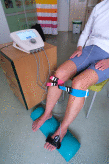
Researchers in the Czech Republic recently explored a noninvasive device-based treatment for Parkinson’s symptoms. The small, early-stage study—led by Petra Bártová and colleagues—looked into how peroneal electrical transcutaneous NeuroModulation (peroneal eTNM®) might help when used alongside standard medications  .
What They Did
• Who took part? Twelve Parkinson’s patients (eight men), average age about 59, already managing their condition with usual medications .
• What was the treatment? Participants used the peroneal eTNM® device at home—daily 30-minute sessions over six weeks—then stopped using it and were followed for another six weeks .
• What was measured? Safety was the main focus (i.e., any side effects), and secondarily, whether there were any signs of improvement in quality of life or tremor symptoms.
What They Found
• Safe and doable at home. No treatment-related side effects were reported, which is encouraging for a home-based therapy.
• Signs of symptom improvement. On quality-of-life questionnaires (EQ‑5D‑5L), there were positive trends. Half the participants were considered “clinical responders”—meaning they showed meaningful improvements. Tremor-related scores (Section III of the UPDRS scale) showed encouraging trends, too.
The Bigger Picture
This was a feasibility pilot—a small, initial step, not a conclusive test. But it suggests that this gentle, leg-nerve stimulation may safely add value for some people with Parkinson’s tremor. The authors stress that larger and more rigorous studies are needed to confirm real effectiveness and determine where exactly this method fits in Parkinson’s care.
Why This Matters
1. Noninvasive & home-friendly. Treatments that don’t require surgery or frequent clinic visits can make everyday life easier for those with Parkinson’s.
2. Tremor relief is a big deal. Tremors can be among the most visible and frustrating symptoms—any new tool that helps reduce them even modestly could be life-changing for patients.
3. Early stages of a new approach. This is just the beginning—but promising signs like this often lead to more attention, better-designed trials, and eventually practical options for patients and doctors.
Comments (0)
Loading comments...