


Three Fronts Against Parkinson’s: Seeing the Damage, Stopping It Forming, and Rebalancing the Brain
October 2, 2025
Parkinson’s is not one single problem. It is a chain reaction. Proteins in brain cells start to misbehave. Signals in the movement circuits fall out of rhythm. People notice tremor, stiffness, slowness and trouble with balance. The good news is that science is now attacking the disease on three fronts at once: making the hidden damage visible, stopping it from building up, and tuning brain circuits more precisely.
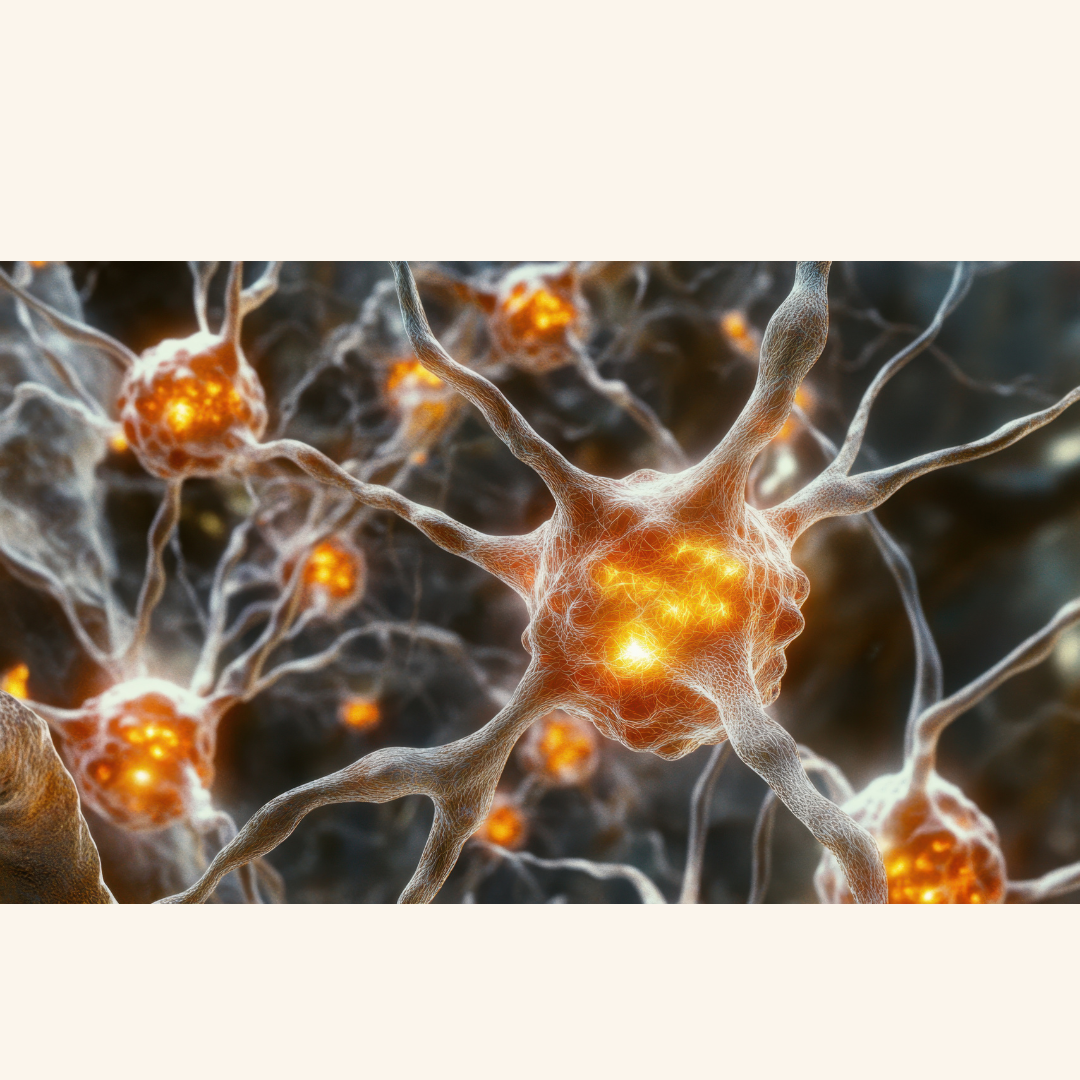
First, the “invisible” damage. For years we focused on the big protein clumps called Lewy bodies. These are like the wreckage left after a storm. They tell us where the damage has been, not where it is brewing. New imaging work shines a light on much smaller protein clusters called oligomers. These tiny clusters of alpha-synuclein are thought to be the real troublemakers. They appear earlier, spread more widely, and can disrupt brain cells long before large clumps show up. Being able to map these clusters in fine detail gives researchers a clearer picture of where the disease is active. It also opens the door to earlier and more targeted treatment.
Second, stopping the damage from forming. A fresh approach uses short, carefully designed peptides to stabilise alpha-synuclein in a safer shape. Think of it as a gentle brace that helps the protein hold its healthy form, rather than collapsing into sticky lumps. In lab systems that mimic the brain’s fatty membranes, these helix-constrained peptides reduce the protein’s urge to clump. This is important because many toxic events begin at the cell membrane, where misfolded alpha-synuclein can punch holes, disturb energy use, and trigger inflammation. If you can keep the protein folded correctly at that surface, you may be able to slow or even prevent the chain reaction that harms neurons. It is early days, but the idea is elegant: do not just mop up clumps later, stop the misfolding at the start.
Third, rebalancing the movement circuits. Deep brain stimulation has helped many people with Parkinson’s, but it is a blunt tool. Traditional settings push electricity into a whole region. That settles some symptoms while the current is on, yet it cannot tell helpful signals from harmful ones. New work breaks that pattern. By using short bursts of stimulation timed to the brain’s own wiring, surgeons can nudge one set of neurons while quieting another. Early operating room results suggest shorter stimulation times, fewer side effects, and brain activity that shifts toward a healthier rhythm. The aim is not just to mask symptoms for a while, but to guide the circuit back into balance so relief lasts longer.
Taken together, these advances point to a future that is more personal and more precise. Imaging can show where the smallest protein clusters are causing trouble. Peptides can hold alpha-synuclein in a safe shape to reduce that trouble at its source. Smart stimulation can then retune the affected circuits so the brain works more smoothly. There are hurdles ahead. Imaging methods need to move from post-mortem tissue to living people. Peptides must prove safe, stable, and effective in the body. Brain stimulation needs trials that define who benefits most and how best to programme the pulses. But the direction of travel is clear.
For people with Parkinson’s, this shift matters. Instead of one-size-fits-all care, we are moving toward a toolkit that targets the right problem at the right time. See the early damage. Stop it forming. Tune the circuits back to form. It is a long game, but it is finally starting to look winnable.
Comments (0)
Loading comments...