


Non-Invasive Neurostimulation: A New Horizon for Parkinson’s Care
February 17, 2026
Research is moving rapidly in the field of Parkinson’s. Beyond pharmacological and surgical treatments, new non-invasive approaches are sparking growing interest. In this fascinating find by Mr. Green, we explore a webinar presented on February 12, 2026, by Dr. Cyril Schneider, PhD. Dr. Schneider is a professor at Laval University and a clinical neuroscience researcher at the CHU de Québec, dedicated to movement disorders and personalised neurostimulation.
What is Non-Invasive Neurostimulation?
Neurostimulation involves using magnetic or electrical pulses to influence the nervous system. Unlike Deep Brain Stimulation (DBS), which requires surgery to implant electrodes, these methods are completely non-invasive—meaning nothing passes the skin barrier, and there is no surgery or pain involved.
Dr. Schneider categorises these approaches into two main types:
Transcranial Magnetic Stimulation (TMS/rTMS): Uses a magnetic coil held against the head to influence brain activity. It is highly precise and can either excite or inhibit specific brain regions.
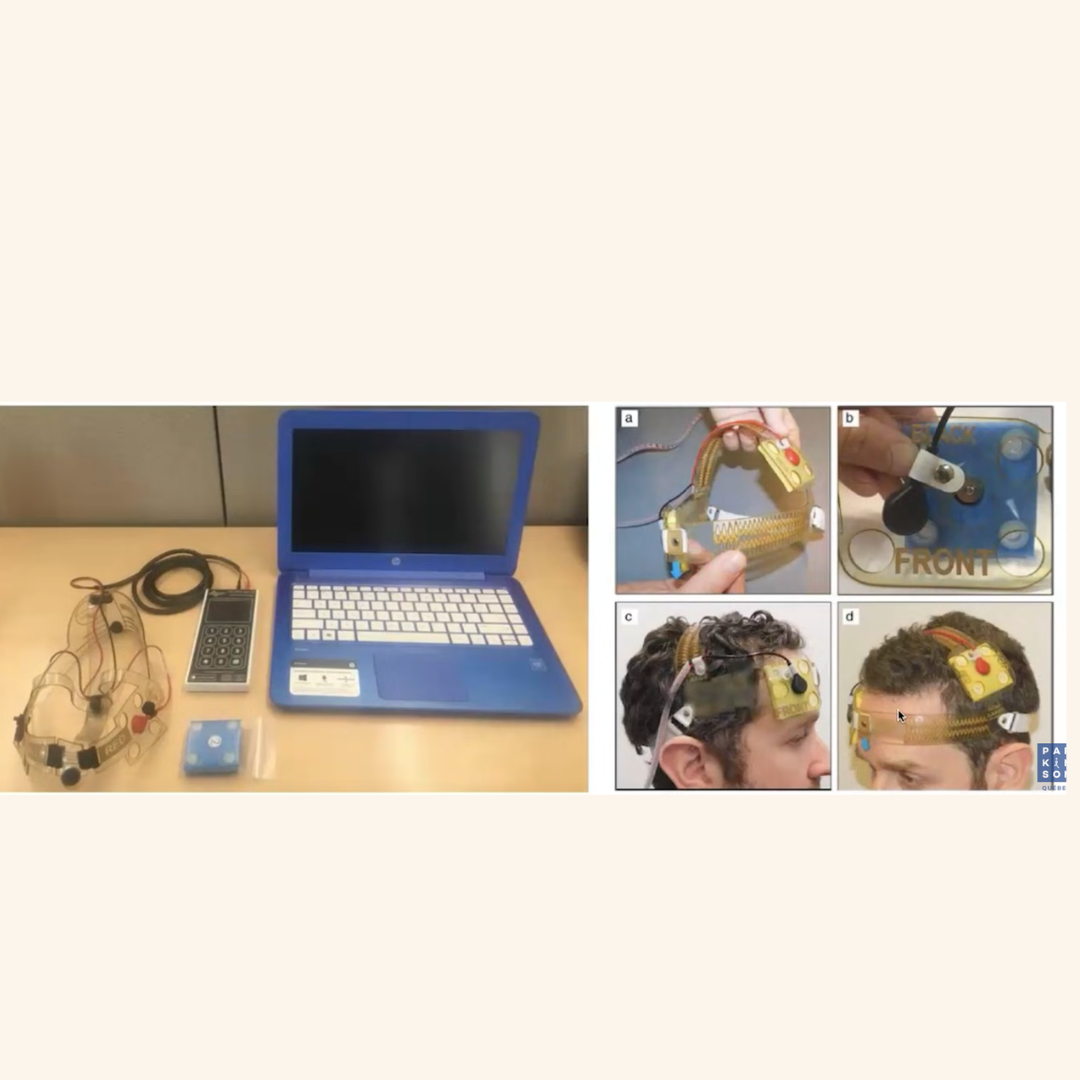
Electrical Stimulation (tDCS/tACS): Uses small electrodes on the scalp to deliver low-intensity currents. This can help "resynchronise" the brain’s natural oscillations, which are often disrupted in those with the condition.
The "Biological Mirror": Stimulating the Muscles
One of the most unique aspects of Dr. Schneider’s work is Peripheral Magnetic Stimulation. This involves stimulating the muscles and nerves in the limbs rather than the brain directly.
In Parkinson's, the link between the brain and the body is often "desynchronised." The brain struggles to send commands, but it also struggles to perceive the body’s position—a sense known as proprioception. By stimulating the muscles (such as the legs, abdomen, or back), researchers can "feed" the brain the sensory information it lacks. This helps re-establish the connection, improving balance and making movement initiation much easier.
Results from the Lab: Real Impact on Daily Life
During the webinar, Dr. Schneider shared compelling case studies of people who experienced significant improvements:
Case Study 1: A 50-year-old woman who declined standard medication saw a massive reduction in rigidity and tremors after a protocol combining brain and muscle stimulation. She regained the ability to eat with a fork independently.
Case Study 2: A 75-year-old man who previously required assistance to walk was shown one week after his final stimulation session. He was able to walk across the room without help, demonstrating a better arm swing and the ability to turn around smoothly.
These improvements aren't just about motor symptoms; they translate to participation in social life and a better overall quality of life.
Breaking the "Vicious Cycle"
Dr. Schneider explains that the condition often creates a "vicious cycle." When movement becomes difficult, people move less. The less they move, the less sensory information the brain receives, which makes the brain even less efficient at controlling movement.
Non-invasive neurostimulation acts as a "boost" to break this cycle. It forces the brain to adapt—a process called neuroplasticity. While exercise is essential and should never be replaced, neurostimulation can accelerate the brain's ability to learn and adapt, making those physical exercises more effective.
Is it for Everyone?
While promising, Dr. Schneider notes that these treatments are still in the research phase and not yet "standard care." Current criteria for research participation include:
Exclusions for Brain Stimulation: Metal implants in the brain (like clips from an aneurysm), pacemakers, or uncontrolled epilepsy.
Exclusions for Muscle Stimulation: The list is much shorter, primarily avoiding metal plates in the stimulated area or active cancer sites.
Dr. Schneider emphasizes a personalised approach. Because everyone's brain and symptom severity differ, "one size does not fit all." Research is currently focused on finding why some people respond better to electrical stimulation while others respond better to magnetic.
The Future of Neuro-Care
Looking ahead, the goal is to make these technologies more accessible. While magnetic stimulation requires large, expensive equipment found only in labs, electrical stimulation is becoming more portable. Future developments may include at-home headsets paired with "tele-rehabilitation," where a physiotherapist guides the user through exercises while they receive stimulation.
By treating neurostimulation as a lifelong, proactive tool to maintain the brain's potential for adaptation, clinicians hope to significantly slow the functional decline associated with the condition.
Comments (0)
Loading comments...