


The Symmetry Secret: Why Parkinson’s Often Starts on One Side
April 14, 2026
For many people, the first sign of Parkinson’s isn't a general feeling of being unwell, but a very specific "glitch" on just one side of the body—perhaps a slight tremor in the right hand or a stiffness in the left leg. Scientists have long wondered why a condition that affects the whole brain begins so unevenly.
A new study, recently shared on the biology preprint server bioRxiv, titled "Sensorimotor basal ganglia circuit asymmetry explains lateralized motor dysfunction in early Parkinson’s disease," offers a fascinating explanation. It suggests that the answer lies in a natural "imbalance" already present in our brain circuits long before any symptoms appear.
The Basal Ganglia: The Brain’s Movement Hub
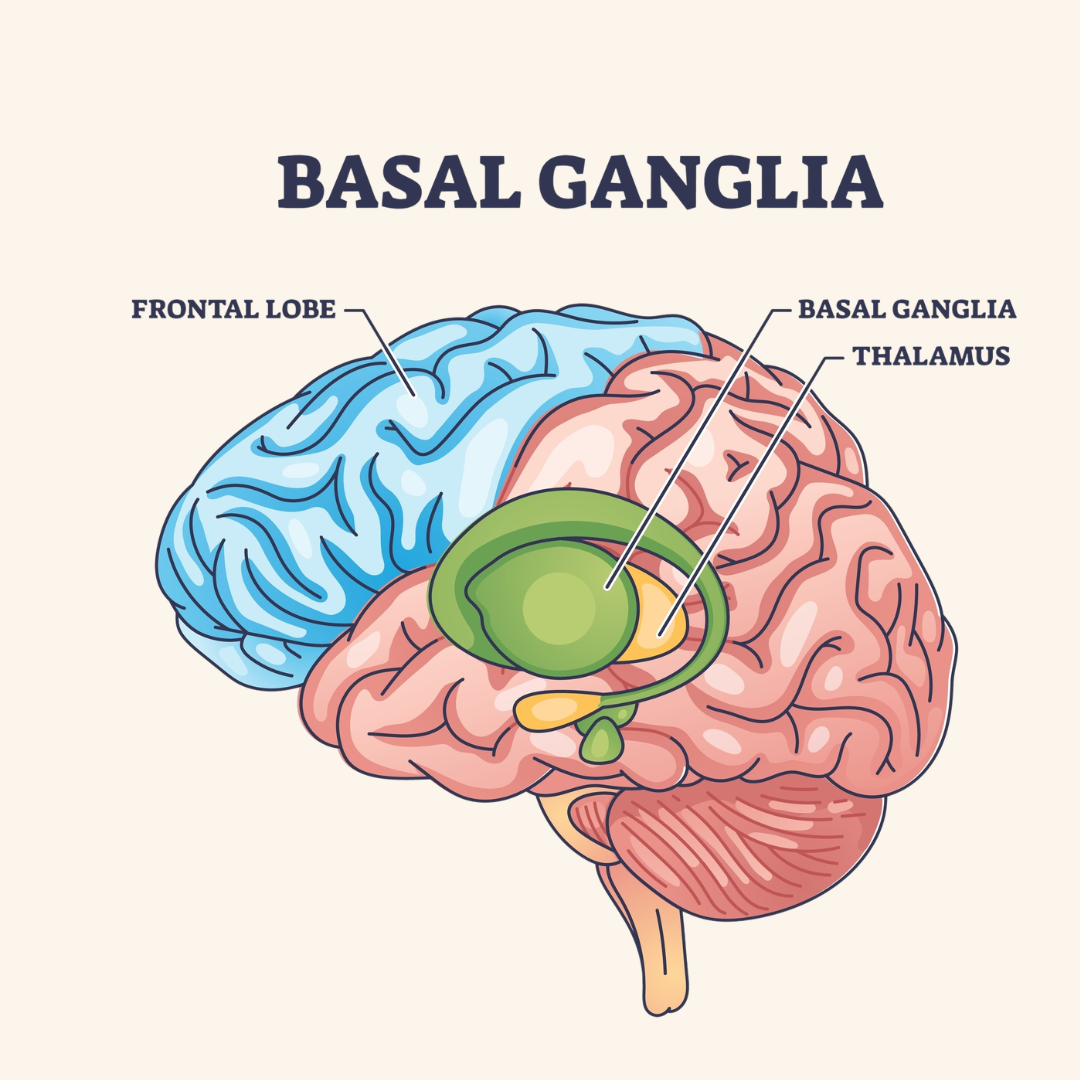
To understand this discovery, we have to look at the basal ganglia. This is a group of structures deep in the brain that acts like a control room for movement. It receives signals from the "sensorimotor cortex" (the part of the brain that plans movement) and processes them to ensure our actions are smooth and coordinated.
We have two of these "control rooms"—one in the left hemisphere of the brain and one in the right. Crucially, the left side of the brain controls the right side of the body, and vice versa.
A Natural Asymmetry
The researchers discovered that in most humans, these two control rooms are not identical twins. There is a natural asymmetry in how the sensorimotor cortex connects to the basal ganglia.
In many people, one side of this circuit is naturally "stronger" or has more dense connections than the other. The study found that this baseline difference determines which side of the body will show symptoms first. When the dopamine-producing cells begin to decline, the "weaker" or less resilient circuit is the first to struggle, leading to the lateralised (one-sided) symptoms typical of early Parkinson’s.
The "Threshold" Effect
The study suggests that our brains can compensate for a certain amount of cell loss. However, because one side of the basal ganglia circuit may be structurally different from the other, it hits its "breaking point" or threshold sooner.
Think of it like two bridges carrying traffic. If both bridges start to deteriorate at the same rate, but one was built with slightly fewer support beams, that "weaker" bridge will show cracks and require weight restrictions much earlier than the other. In Parkinson’s, the "cracks" are the tremors or stiffness we see on one side of the body.
Why This Matters
Understanding this asymmetry is more than just solving a biological puzzle; it has real implications for how Parkinson's is monitored and managed:
Earlier Detection: By identifying a person's natural brain asymmetry through advanced imaging, clinicians might be able to predict which side of the body is most "at risk" and monitor it more closely.
Targeted Therapy: This research supports the idea that treatments, including future gene therapies or deep brain stimulation, might need to be "unbalanced" or specifically tailored to the more affected side of the brain to be most effective.
Validation for People with Parkinson's: It explains why the "other side" often remains strong for years. It isn't a mystery; it’s a reflection of the resilient architecture of the brain's second control room.
A New Perspective on Progression
This research reminds us that Parkinson's doesn't happen in a vacuum—it interacts with the unique, existing "map" of our individual brains. By mapping these natural asymmetries, scientists are moving closer to a world where we don't just treat the condition, but we treat the specific way it unfolds in each person.
Comments (0)
Loading comments...