


Yale University scientists have discovered the secret doorways that allow Parkinson’s to advance through the brain
May 11, 2026
Researchers at the Yale School of Medicine have discovered that toxic proteins in the brain act like an uninvited guest who knows exactly which doors are left unlocked. This study identifies two specific "locks" on the surface of our brain cells that allow Parkinson's to march from one neuron to the next, causing symptoms to progress. By finding these entry points, the Yale team might finally have a way to bolt the door shut and keep healthy cells safe.
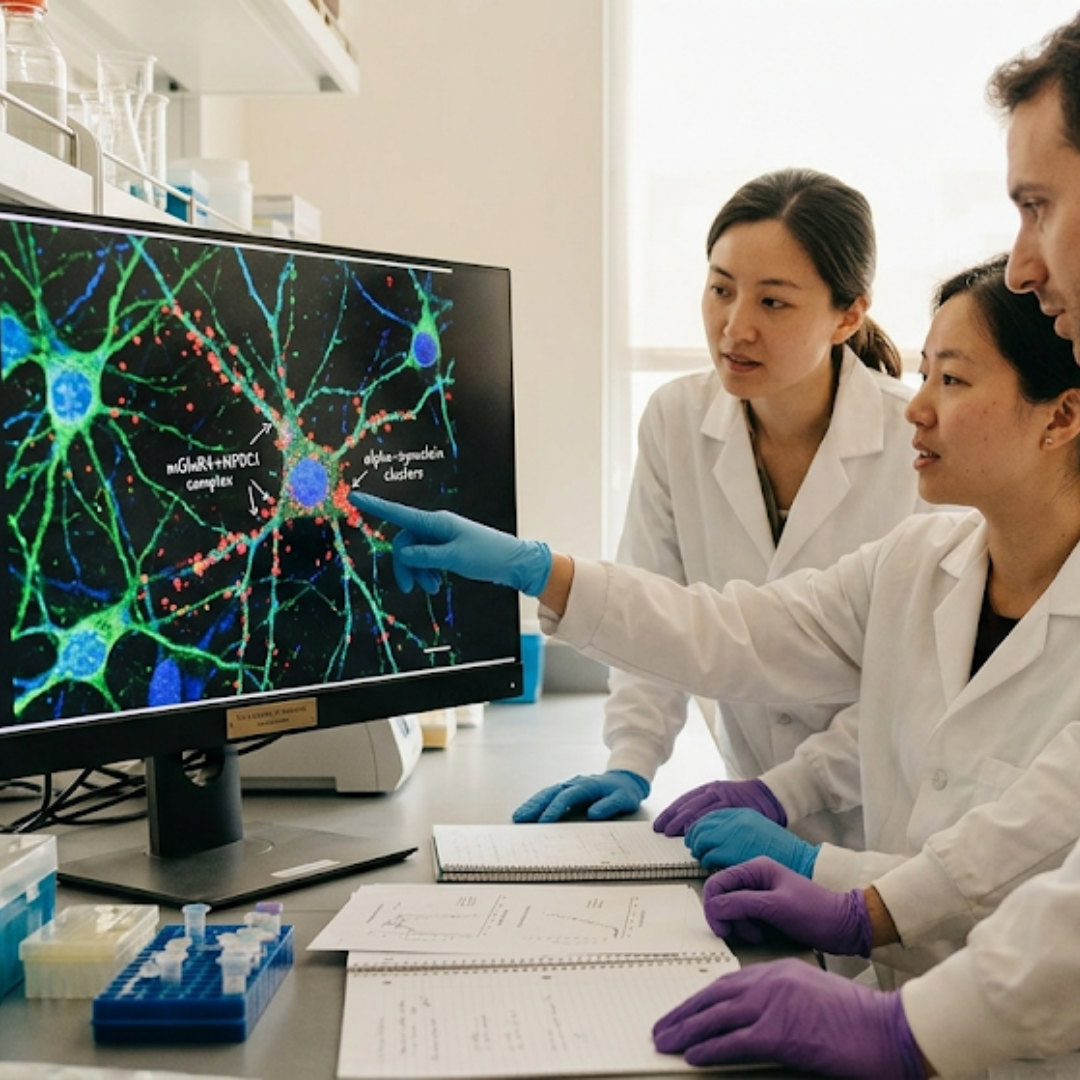
Inside the brain, a protein called alpha-synuclein is supposed to behave itself, but in Parkinson's, it misfolds into toxic clumps. These clumps are remarkably social in the worst way possible; when one cell dies, they spill out and try to break into the neighbours. For years, we haven't known how they managed to get inside. It turns out they aren't just forcing their way in—the Yale scientists found they are being let in by two specific surface proteins called mGluR4 and NPDC1.
What makes this discovery so relevant is that these two proteins are found right where they can do the most damage: on the dopamine-producing cells in the substantia nigra. This is the area of the brain responsible for smooth movement. When the researchers blocked these proteins in the lab, the toxic clumps were left stranded outside, unable to infect the healthy cells. The result was a dramatic slowdown in the loss of neurons and a significant reduction in the progression of Parkinson's.
For anyone living with the condition, this is a shift in the way we think about treatment. Most current medications work like a sticking plaster, replacing the dopamine that has already been lost to help manage tremors or stiffness. This new research points towards a "firewall" strategy. If we can develop a drug that sits on these mGluR4 and NPDC1 proteins, we could potentially stop the toxic spread in its tracks. Instead of just managing the effects, we would be slowing down the clock on Parkinson's itself.
The next step for the Yale team is to find out if there are even more of these "gatekeeper" proteins and to start designing treatments that can block them safely. It is a sophisticated game of biological cat-and-mouse, but identifying the exact doorway the toxic proteins use is a massive leap toward keeping our brain cells healthy and functioning for much longer.
Comments (0)
Loading comments...