


Building a Buffer: Why "Motor Reserve" Is the New Buzzword in Parkinson’s
December 28, 2025
We often talk about the brain as if it were a delicate machine that simply breaks down when parts wear out. But a major new study published in Neurology suggests that the brain is far more adaptable than we give it credit for. The research introduces a concept that could change how we view the early stages of Parkinson’s: Motor Reserve.
Think of it like a savings account. Two people might have the exact same level of dopamine loss, yet one moves relatively well while the other struggles significantly. The difference? The first person has a deeper "reserve"—a hidden capacity to compensate for the damage. This study set out to find out how we build that account and, crucially, what it pays out in the long run.
The Resilience Factor The researchers looked at 566 people who had just been diagnosed with Parkinson’s and were not yet on medication (drug-naïve). By comparing their brain scans—specifically looking at dopamine transporter levels—against their actual physical symptoms, the team could calculate their "motor reserve." essentially measuring how well their brain was coping compared to what would be expected for that level of cell loss.
The findings were striking. Those who had a high motor reserve in the early years didn't just feel better at the time; they had a significantly better prognosis years down the line. A strong initial reserve acted as a predictor for slower progression and better long-term mobility.
Exercise is the Currency So, how do you fill up this account? The study found a clear, non-negotiable answer: Physical Activity.
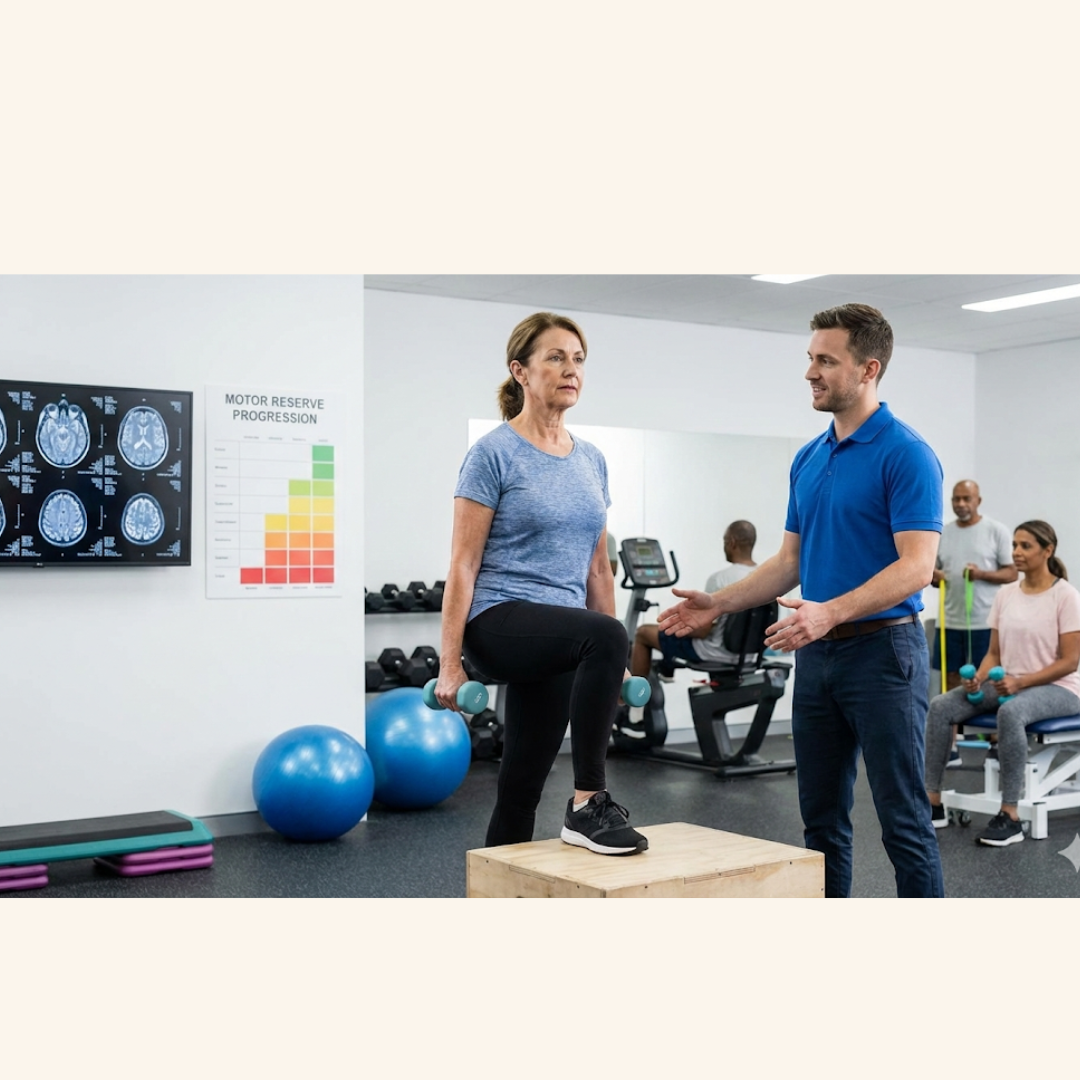
Participants who exercised regularly didn't just improve their fitness; they actively boosted their motor reserve. The analysis showed that physical activity was the primary driver that allowed the brain to build this resilience. It suggests that exercise does more than just strengthen muscles; it effectively "trains" the brain to rewire itself and work around the dopamine deficits.
The Early Window The most critical takeaway from this research is the importance of timing. The study highlighted that maintaining this reserve in the early years after diagnosis is vital. It acts as a protective buffer that pays dividends for years.
It shifts the narrative from "preserving what is left" to "building something new." By engaging in regular physical activity early on, people with Parkinson’s aren't just fighting symptoms—they are constructing a neurological safety net that could define their journey with the condition.
Comments (0)
Loading comments...