


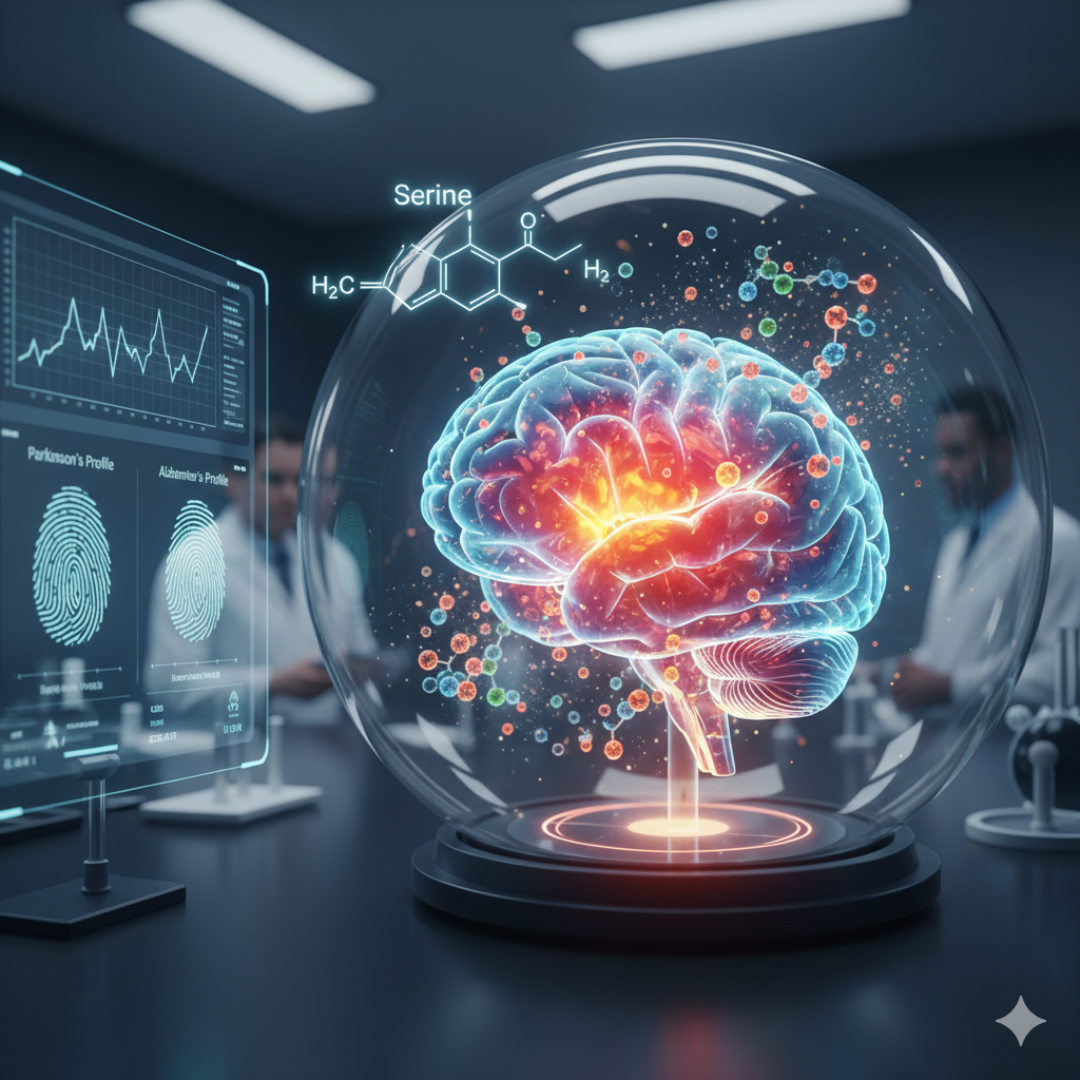
Researchers in Manchester and Auckland Identify Unique Chemical Signatures in Brains Affected by Parkinson's
March 5, 2026
A new study published in npj Parkinson’s Disease on 4th March 2026 has given us a closer look at what is happening inside the brain on a chemical level. Researchers used advanced technology—a special type of high-speed liquid scanner—to study brain tissue. They wanted to see if the "building blocks" of our brain cells, called amino acids, are different in people who had the condition compared to those with Alzheimer’s or healthy brains.
Why Amino Acids Matter
Think of amino acids like the individual bricks used to build a house. In our brains, these bricks are used to create proteins and neurotransmitters, which are the chemical messengers that allow different parts of the brain to talk to each other. When these bricks are out of place, the entire "conversation" in the brain can become garbled.
The study found that in the condition, specific amino acids are "dysregulated," meaning there is either too much or too little of them in certain areas. One key finding was a significant increase in an amino acid called serine in the parts of the brain that control movement. Interestingly, this change was very specific to Parkinson's and looked quite different from the chemical patterns seen in Alzheimer’s.
A New Way to Tell the Difference
One of the biggest challenges for doctors is telling different brain conditions apart in their early stages, as some symptoms can overlap. This research discovered that each condition leaves its own unique "chemical fingerprint."
In Parkinson's: The chemical changes were mostly found in the deep areas of the brain that manage dopamine and movement.
In Alzheimer’s: The changes were more widespread across the "thinking" parts of the brain (the cortex) and involved a different set of amino acids entirely.
What This Means for Your Health
This research is exciting because it moves us away from just looking at symptoms like tremors and toward understanding the actual "fuel" and "bricks" the brain uses to function. By learning how these amino acids go out of balance, scientists hope to develop new tools:
Earlier Tests: We might one day have a simple test that looks for these chemical fingerprints long before physical symptoms appear.
Better Nutrition: If we know exactly which amino acids are missing, we might be able to use specific foods or supplements to help "refill" the brain’s supplies.
Personalised Care: Knowing your specific chemical profile could help doctors choose the right treatment for you.
This study reminds us that the brain is a complex chemical factory. By keeping that factory well-supplied with the right nutrients and identifying when the machinery starts to struggle, we can take a much more active and informed role in supporting our brain health.
Comments (0)
Loading comments...