


Why specific dopamine nerve fibres swell in early onset Parkinson's
November 11, 2026
 Beatrice
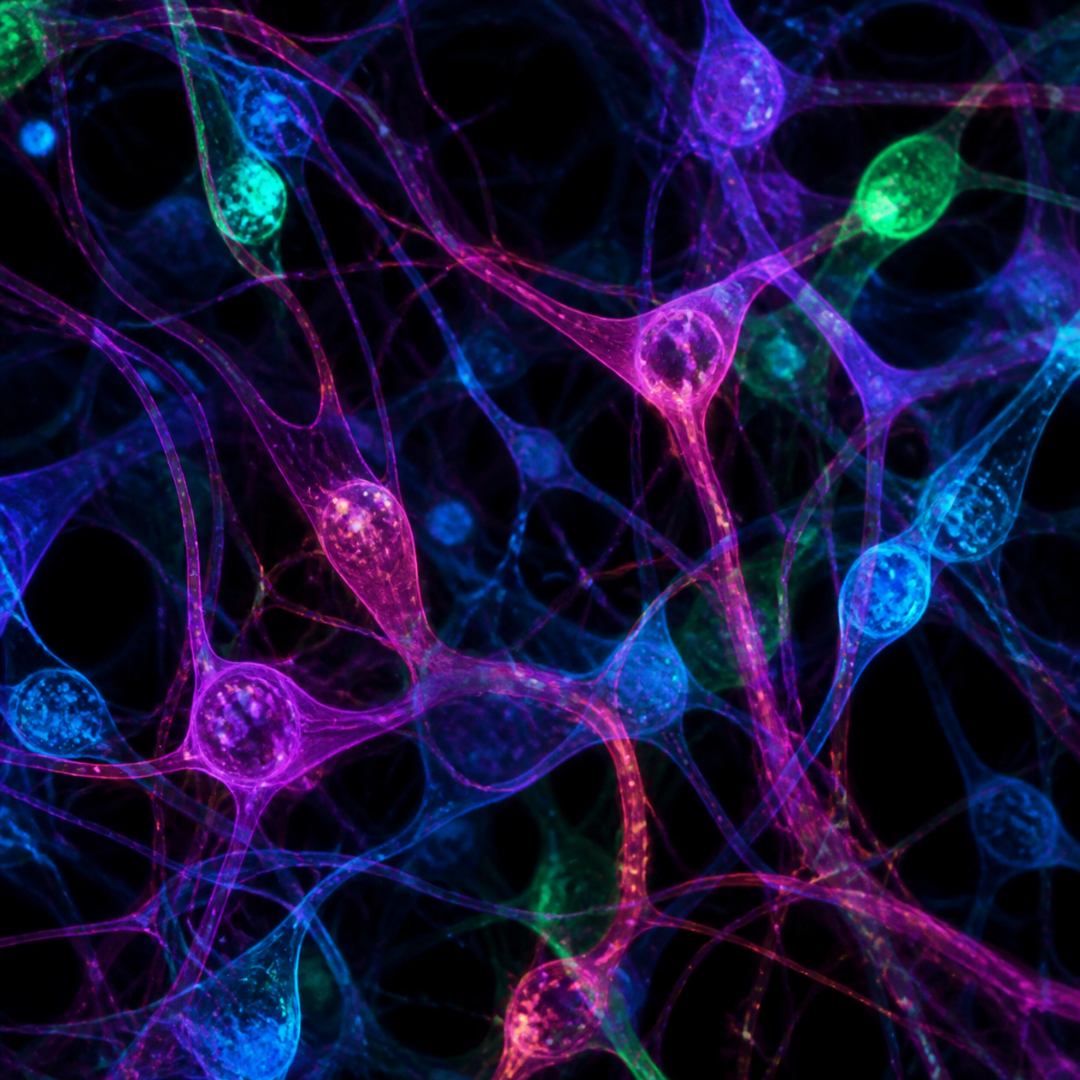
A research team at Northwestern University published a study revealing how a rare genetic mutation causes specific dopamine nerve fibres to swell and lose their ability to send chemical messages. By examining the SYNJ1 gene, which is linked to an early onset inherited form of the condition, the scientists uncovered a vital clue about why certain brain cells are so uniquely fragile while their neighbours remain unharmed.
Although mutations in the SYNJ1 gene are rare, studying inherited forms of Parkinson's acts as a clear window into what happens in the brain on a broader scale. To see how this genetic change affects nerve cells in real time, the investigators used advanced three dimensional imaging to look closely at mice carrying the mutation. They focused their attention on axons, which are the long, slender cables that nerve cells use to send dopamine and communicate with other parts of the brain.
Every time a nerve cell releases a burst of dopamine at the end of its axon, it uses a tiny bubble made of cell membrane to package and deliver the chemical. In a healthy brain, that membrane is quickly tidied up, recycled, and reused for the next message. In the mice with the SYNJ1 mutation, this essential recycling system had completely broken down. Instead of being cleared away, the used membrane piled up inside the nerve fibres in massive layers that looked like the rings of an onion. This buildup caused the axons to swell up and significantly reduced the amount of dopamine they could release.
Crucially, this cellular traffic jam did not happen everywhere in the brain. Even though the genetic fault was present across wider nerve networks, the dramatic swelling and drop in dopamine release happened almost exclusively in a region called the dorsolateral striatum. This exact area is well known to researchers as the primary weak spot in Parkinson's, whereas dopamine cells supplying other regions of the brain continued to release their chemical signals normally.
The secret to why this specific group of nerve cells struggles so much comes down to their sheer size and workload. In humans, a single dopamine neuron reaching into this vulnerable area has an extraordinary, branching structure with roughly one million individual release sites along its length. Keeping a million tiny communication hubs running and recycling membranes nonstop requires a massive, uninterrupted supply of energy.
Professor Surmeier and his colleagues suspect that this extreme workload pushes the cells to their absolute limit, pointing toward a deeper problem with how these nerve endings generate power. Inside every cell are tiny power plants called mitochondria, and when they struggle to keep up with demand, the cell's maintenance systems begin to fail.
To watch this energy crisis unfold firsthand, the Northwestern team is now building microscopic light sensors that can be placed directly inside the tiny nerve terminals where dopamine is released. Professor Surmeier compares this new technology to sending a miniature space probe to Mars. By peering right inside these remote nerve endings to see how their power supply falters, scientists hope to design targeted treatments that support and rescue struggling brain cells long before they are lost.
Comments (0)
Loading comments...