


The Brain’s "Battery Tester": A New Way to See Parkinson's
December 15, 2025
For years, we have known that Parkinson’s is not just about misfolded proteins or dying neurons; it is fundamentally an energy crisis. The brain cells responsible for movement are incredibly power-hungry, and in this condition, their internal batteries—the mitochondria—seem to fail. Until now, measuring this energy failure in a living patient was nearly impossible without invasive procedures or low-resolution scans.
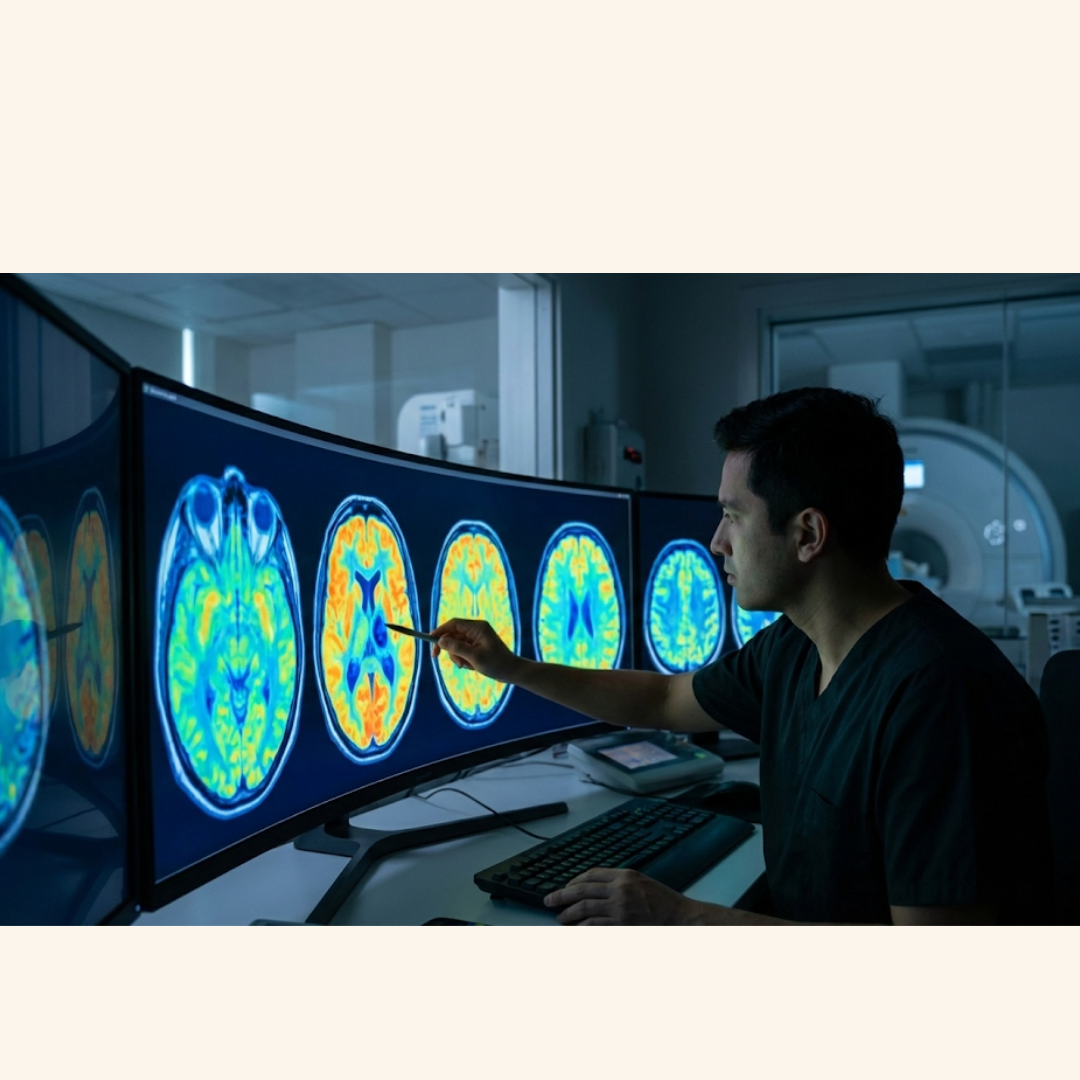
But a breakthrough study published in Nature npj Parkinson’s Disease has changed the game. A team of researchers has successfully tested a new MRI technique that acts like a "battery tester" for the brain, revealing exactly where the power is draining away.
Visualising the Fuel
The technique is called "Creatine-weighted imaging." Creatine is a molecule that acts as a rapid backup battery for our cells. When a neuron needs a sudden burst of energy, it taps into its creatine reserves. Therefore, measuring creatine levels gives scientists a direct window into the metabolic health of the brain.
Using a sophisticated method known as GuanCEST (don't worry about the acronym; think of it as a chemical MRI), the researchers were able to create high-resolution maps of creatine distribution in people living with the condition.
The Power Drain in the Control Room
The findings were striking. In the participants with Parkinson's, the imaging revealed significantly lower levels of creatine in the caudate nucleus, a critical part of the brain's "control room" for voluntary movement.
This wasn't just a random finding. The study showed a clear correlation: the lower the creatine signal in certain brain areas, the more severe the motor symptoms. It effectively provided a visual map of the energy crisis matching the clinical reality.
Why This Matters
This is more than just a cool picture. For decades, trials of energy-boosting supplements like oral creatine have yielded mixed and often disappointing results. Part of the problem was that we were flying blind—we had no way of knowing if the supplement was actually reaching the specific brain areas that needed it.
With this new imaging technology, we can potentially:
Track Progression: Use the "energy map" to see if the condition is advancing before physical symptoms worsen.
Personalise Treatment: Identify which individuals have a specific "energy deficit" profile and might actually respond to metabolic therapies.
Test New Drugs: Quickly see if a new drug is successfully restoring energy levels in the brain without waiting years for clinical symptoms to change.
It validates the long-held suspicion that Parkinson’s is a metabolic condition as much as a neurological one. And now that we can finally "see" the batteries running low, we are one step closer to figuring out how to recharge them.
Comments (0)
Loading comments...