


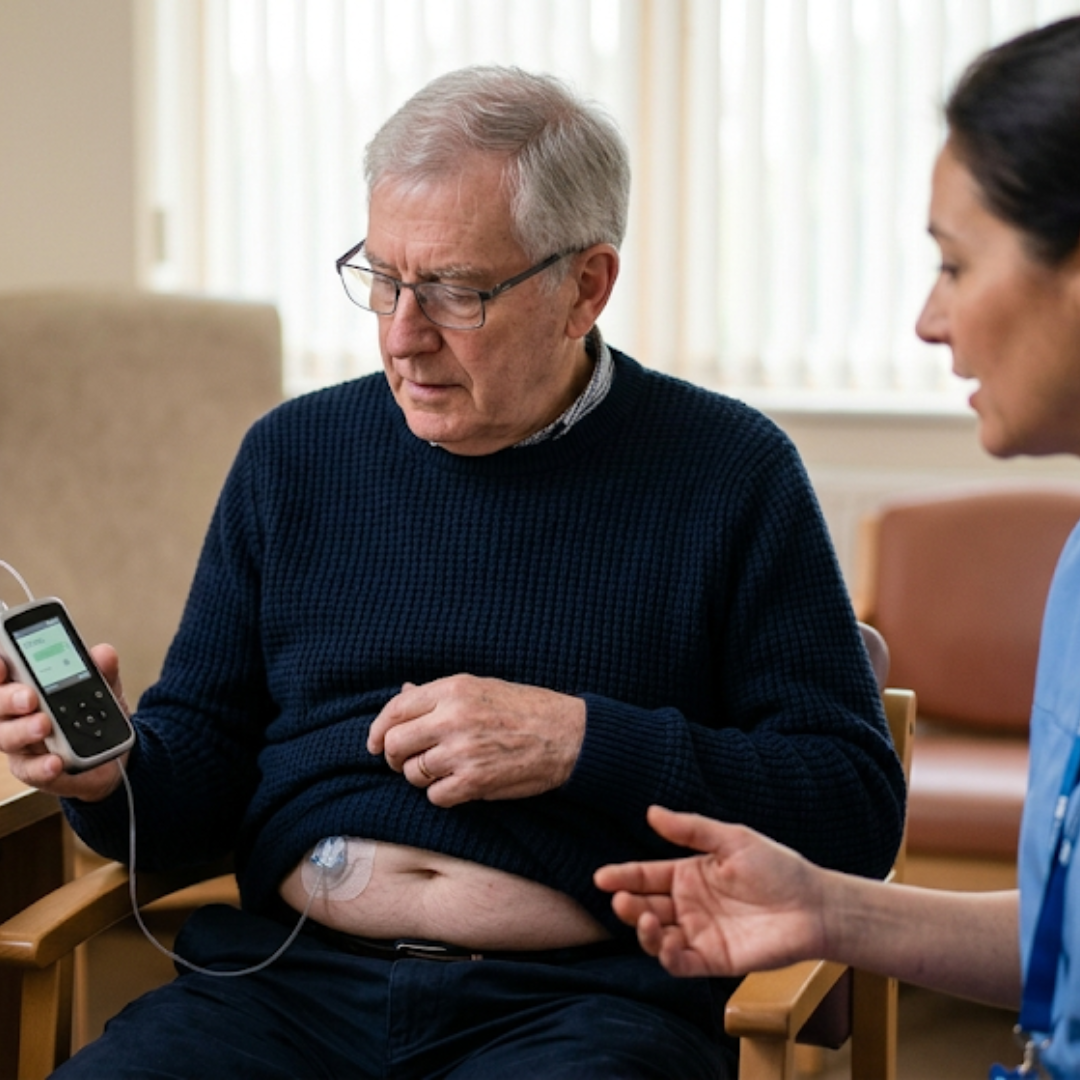
New tracking data shows continuous pump treatment brings physical relief for advanced Parkinson's but sees a high rate of early dropouts
May 22, 2026
A fresh multicentre study has provided an honest look at how a relatively new liquid pump therapy performs when it moves out of highly controlled clinical trials and into the daily lives of people with advanced Parkinson's. The research tracked 108 people across seven medical centres for six months to see how they managed with a continuous subcutaneous infusion of foslevodopa/foscarbidopa. The results highlight a bittersweet reality: the treatment offers clear physical rewards, but a striking number of people stop using it very early on.
On the positive side, the continuous delivery of the medication delivered on its core promise of smoothing out the daily rollercoaster of symptoms. Over the six-month period, people experienced a significant reduction in movement complications and found the non-motor hurdles of daily living much easier to handle. While overall quality-of-life scores remained mostly stable throughout the study, there was a stand-out victory at the three-month mark, where people reported a major drop in bodily discomfort. For those looking for relief from the physical aches and pains of advanced symptoms, the pump proved it could deliver tangible comfort.
However, the real-world data also uncovered a significant hurdle: staying on the therapy. Close to forty per cent of the people in the study decided to stop the continuous infusion within the six-month window. Even more telling was the timing, as the vast majority of these dropouts happened within the first ninety days. When researchers looked at why people were pulling the plug so quickly, the most common reasons given were either a feeling that the pump was not working well enough or the frustration of dealing with troublesome side effects.
This high dropout rate led the research team to hunt for clues that could predict who might struggle most during those critical first few months. They discovered a clear pattern. People who had been living with Parkinson's for a much longer time were statistically far more likely to stop the treatment early. Furthermore, the team found that a person's mindset and support system before starting the therapy played a huge role. Challenges with emotional well-being, feeling a sense of stigma, lacking strong social support, or experiencing cognitive issues were all heavily linked to a higher chance of giving up on the pump.
The ultimate takeaway from the study is that this advanced pump is a powerful tool, but it is not a simple plug-and-play solution. The real-world evidence suggests that success relies on much more than just the medicine itself. Because the first ninety days are so critical, medical teams can use these findings to spot vulnerable beginners early. By identifying who has a longer history with the condition or who is struggling emotionally, clinics can step in with tailored training, robust psychological support, and closer monitoring to help people get through the tough early phase and successfully reap the physical benefits of the therapy.
Comments (0)
Loading comments...