


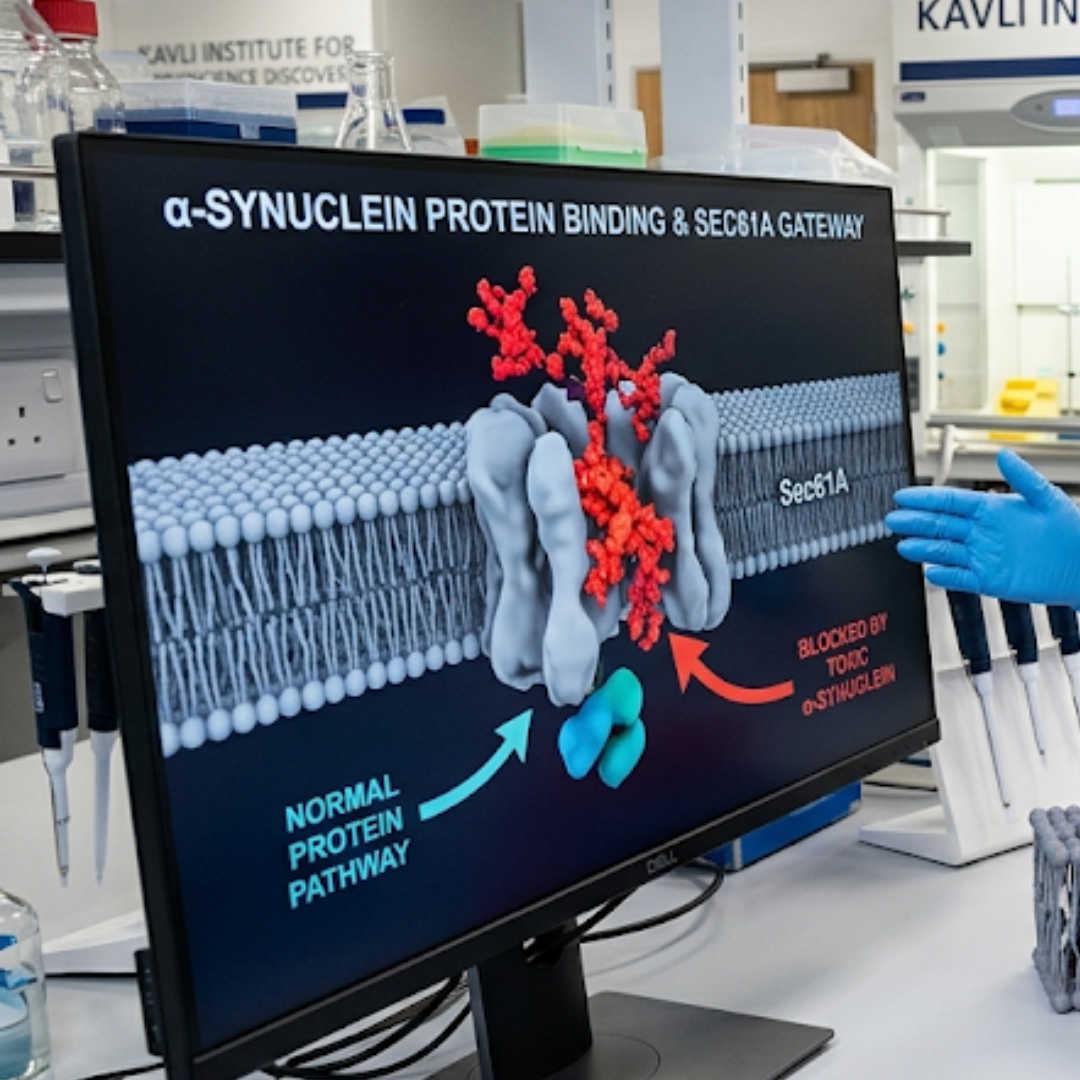
Oxford researchers discover how toxic alpha synuclein protein blocks internal transport in brain cells
August 7, 2026
 Beatrice
Scientists at the University of Oxford have solved a major piece of the puzzle explaining how alpha synuclein, the key protein linked to Parkinson's, causes widespread damage inside brain cells. Led by Professor George Tofaris, the research team studied human stem cell models alongside brain tissue samples to track the very first stages of cell breakdown.
Inside healthy dopamine producing brain cells, newly made proteins need to pass through a specific doorway to enter the cell's main manufacturing centre, known as the endoplasmic reticulum. The Oxford team discovered that sticky, toxic clumps of alpha synuclein attach themselves directly to a doorway protein called Sec61A, effectively jamming the entrance shut.
With this gateway blocked, essential working parts cannot get into the factory. Strangely, this blockage does not set off the usual alarm systems that cells use when they are under stress. Instead, the brain cells switch on a lesser known backup safety protocol called UFMylation, which acts as a hidden early warning signal that something has gone wrong.
The ripple effect of this microscopic traffic jam is serious. Among the trapped items are critical components needed to keep the cell's recycling units, called lysosomes, working properly. Without these parts, the recycling units fail, and waste begins to pile up inside the cell. To cope with the mess, struggling brain cells start dumping extra alpha synuclein into tiny bubble packages called extracellular vesicles and pushing them out into the bloodstream, where they might one day help doctors detect the condition early through a simple blood test.
This breakthrough also connects several dots regarding genetics. Many of the trapped proteins belong to genes already known to increase the risk of developing Parkinson's, showing that different genetic risk factors actually lead back to this same broken delivery route.
Most encouragingly, the researchers proved that this damage can be undone. By turning down alpha synuclein production using gene editing, or by using existing approved medicines to boost the cell's natural waste disposal systems, they successfully cleared the roadblock and got internal transport moving normally again. While more work is needed before clinical trials can begin, restoring this crucial delivery route opens up an exciting new path for early treatment.
Comments (0)
Loading comments...