


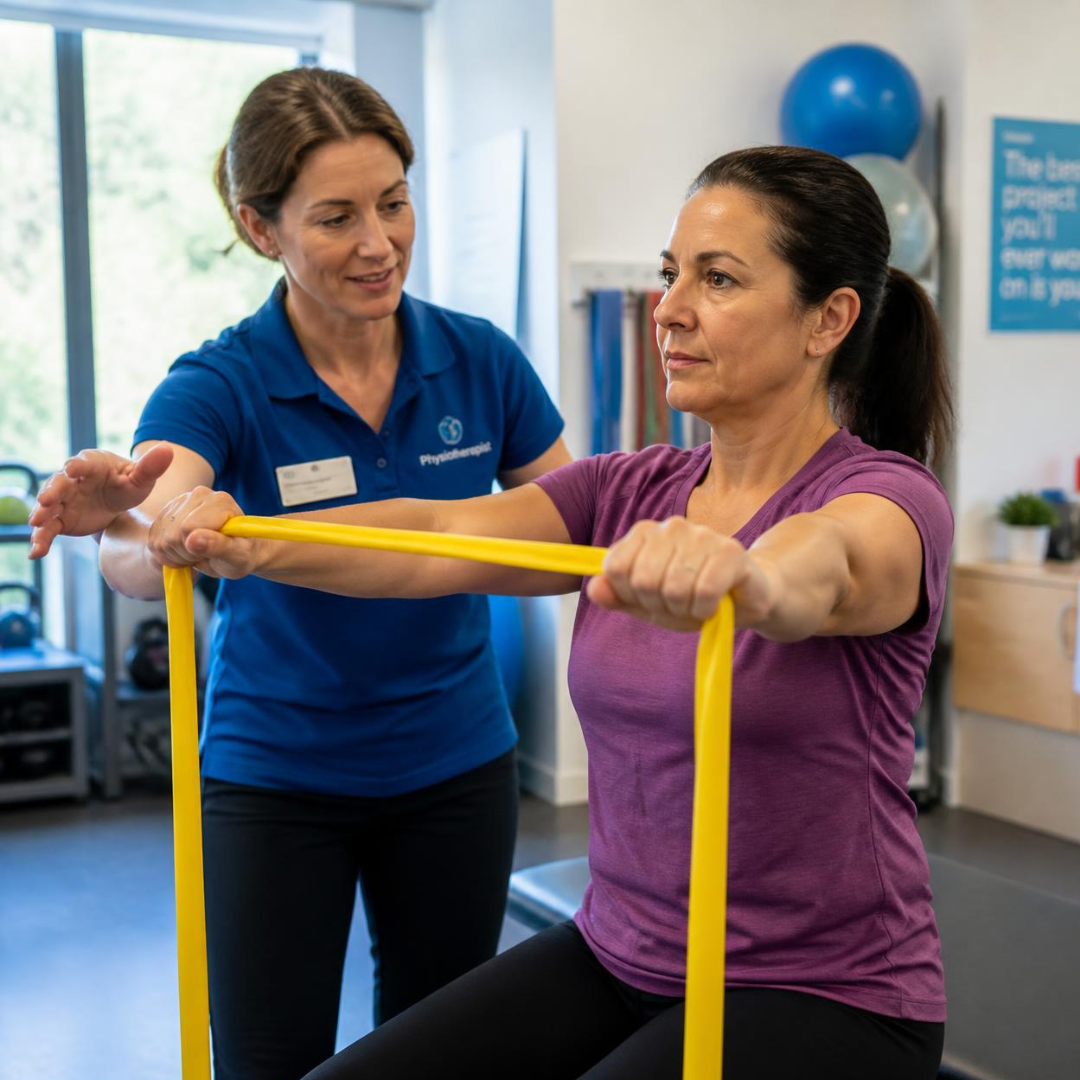
Instead of painkillers for regional pain, scientists suggest physiotherapy to unlock mobility
July 6, 2026
A new study published in the Journal of Neurologic Physical Therapy reveals that localised body pain is a direct and aggressive anchor dragging down day to day physical mobility in people with Parkinson’s. Led by Dr Ryan P. Duncan and a team of physical therapy researchers, the study delivers a powerful wake up call to the medical community. Pain is not just a quiet, unfortunate side effect of Parkinson's, but a major roadblock that actively stops patients from moving properly.
To truly understand this, one must look at the specific type of discomfort the researchers investigated. This was not a vague, generalised whole body ache, but rather regional pain, which is discomfort that nests stubbornly in targeted areas like the lower back, the neck, the shoulders, or the hips. In people with Parkinson’s, this regional pain is often ignited by a cruel combination of the disease's primary symptoms. The constant, involuntary muscle stiffness places an unrelenting strain on the skeleton, while subtle changes in posture and walking mechanics force certain joints to bear an unnatural, exhausting amount of wear and tear.
Historically, if a patient struggled to rise from a chair or lost their balance during a routine test, a clinician might logically assume that the neurological disease itself was progressing. The assumption was that the brain’s movement signals were simply degrading. What Dr Duncan’s research elegantly demonstrates, however, is that regional pain creates a secondary, independent layer of disability. Even when two patients have the exact same stage of neurological Parkinson's, the individual burdened by regional pain will perform significantly worse on objective physical tests.
This happens because the human body naturally protects itself from discomfort. When a person’s lower back throbs or a hip pinches with every movement, they instinctively shorten their stride, slow their pace, and alter their centre of gravity to avoid the ache. In doing so, the pain itself becomes the primary reason they cannot walk smoothly or stand steadily. It turns out that a patient might not be failing a mobility test simply because their brain signals are slow, but because their body hurts too much to execute the movement.
This shift in perspective completely rewrites the playbook for rehabilitation and care. For decades, pain management in Parkinson’s has often been treated as a matter of comfort, something to be eased with a mild prescription so the patient feels better while resting. This study flips that approach on its head, framing pain relief as an absolute prerequisite for physical mobility.
For physical therapists and healthcare providers, the implications are massive. It means that standard Parkinson’s rehabilitation programmes, which often focus exclusively on general balance drills and neurological gait training, are missing the mark if they ignore the orthopaedic reality of the patient's body. If a therapist wants to improve how a patient walks, they must first aggressively target and treat the specific, localised shoulder stiffness or knee pain holding that patient back.
Ultimately, the research provides a message of profound hope for patients and families. By revealing that regional pain is a major culprit behind fading mobility, it opens up a concrete, highly treatable avenue for intervention. When physical therapists use targeted manual therapy, specific stretching, and localised strengthening to alleviate regional discomfort, they are not just making a patient more comfortable. They are actively unlocking the body, removing the physical anchor, and allowing people with Parkinson's to move more freely, exercise effectively, and maintain their hard won independence for years to come.
Comments (0)
Loading comments...