


New Brain Map Reveals the "True Source" of Parkinson's May Be a Network Glitch
February 5, 2026
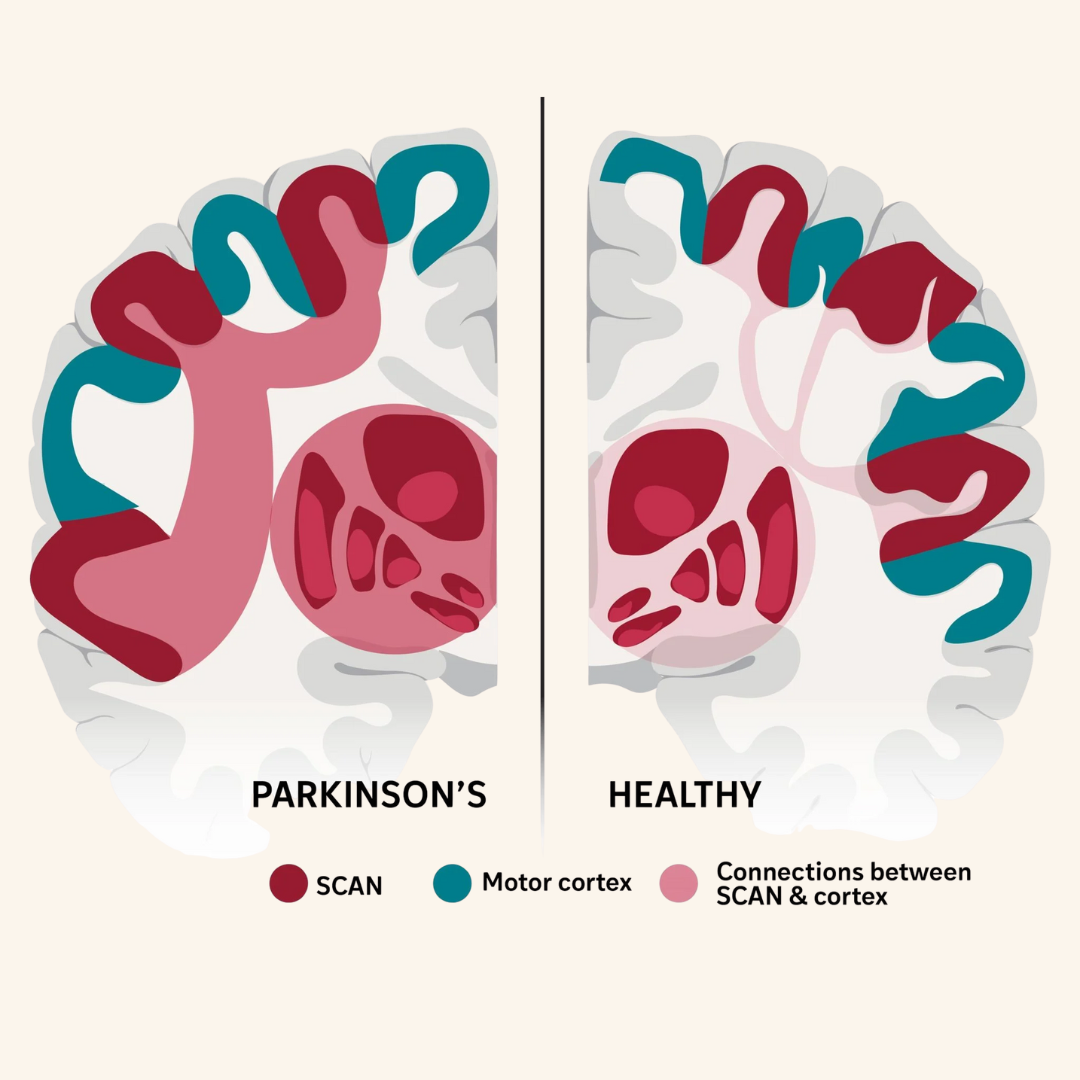
For decades, we have been told that Parkinson's is primarily a problem of the basal ganglia—the deep brain structures that control movement. However, a groundbreaking study published this week in Nature has completely reshaped that picture. An international team of scientists has identified a specific brain network, known as the Somato-Cognitive Action Network (SCAN), as the potential "true source" of the condition.
The research, led by Washington University School of Medicine and the Changping Laboratory, suggests that Parkinson’s is effectively a "SCAN disorder."
What is the SCAN?
First identified in 2023, the SCAN is the brain's crucial interface between thinking and moving. It is the system that translates your plans ("I want to pick up that cup") into physical action, while simultaneously monitoring how that action unfolds.
What the researchers discovered is that in people with Parkinson's, this network is not broken; it is working overtime. Brain scans of over 800 participants revealed that the SCAN is "hyperconnected" to the subcortex—the area responsible for emotion, memory, and motor control.
Why "Hyperconnectivity" Matters
You can think of this like a telephone switchboard that is flooded with too many calls at once. This excessive connectivity disrupts the clear signals needed for smooth movement. Crucially, because the SCAN links movement with cognition and bodily functions, this "wiring fault" explains why Parkinson's is so much more than just a tremor—it also affects sleep, motivation, and digestion.
A New Target for Treatment
The most exciting part of this discovery is that it is not just theoretical. The team tested a non-invasive therapy called Transcranial Magnetic Stimulation (TMS) to target this specific network.
The results were remarkable. When they aimed the magnetic pulses precisely at the SCAN to calm down this hyperconnectivity, the symptom relief was more than double that of standard stimulation. In fact, 56% of participants saw a significant improvement after just two weeks, compared to only 22% when nearby brain regions were targeted.
Moving Toward Precision Medicine
This finding moves us away from the "one-size-fits-all" approach. By defining Parkinson's as a network disorder, we open the door to precision treatments that can reset these specific brain circuits without the need for invasive surgery. As co-author Dr. Nico Dosenbach noted, targeting this network could potentially slow or even reverse the progression of the condition, rather than just masking the symptoms.
Comments (0)
Loading comments...