


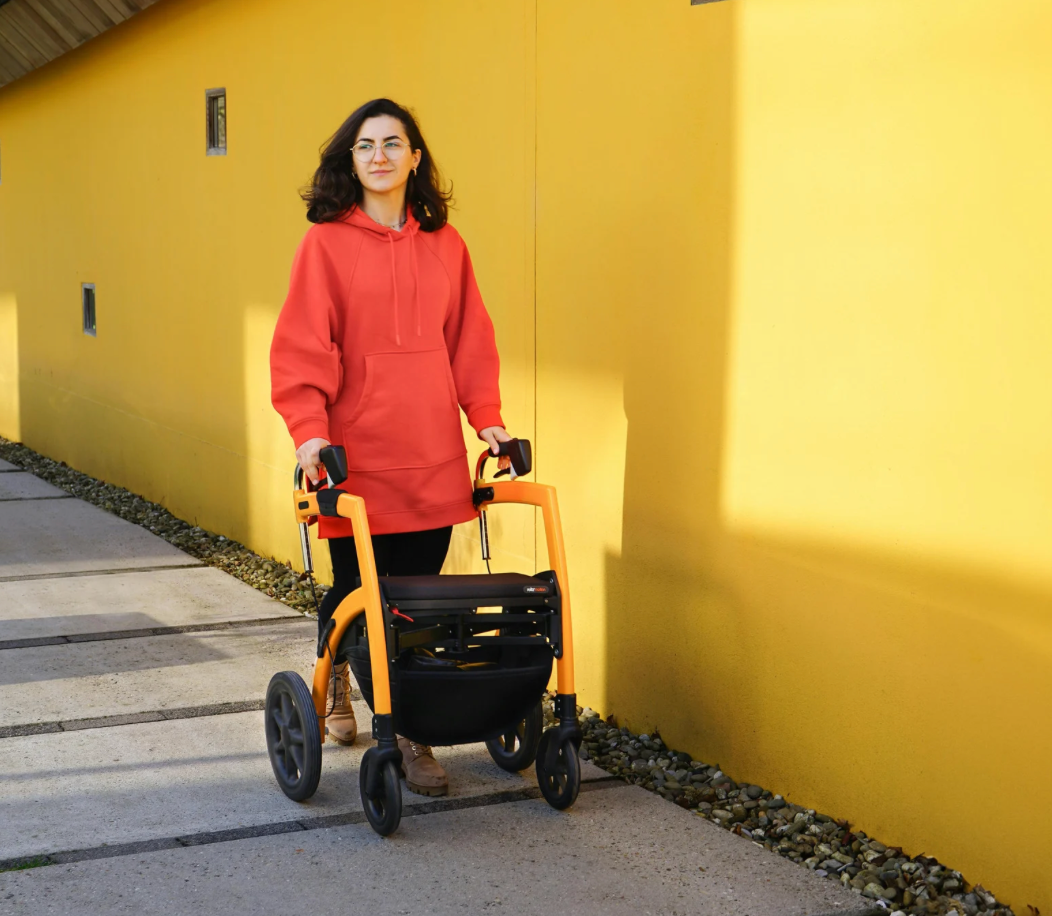
Using Mobility Aids: Understanding the Challenges and Finding What Helps
June 1, 2025
 LeahJS
If you live with Parkinson’s disease, you may already know how important tools like canes, walkers, or crutches can be to help you move safely and avoid falls. But you may also have mixed feelings about using them—and you’re not alone.
A recent study listened to the voices of people with Parkinson’s to understand what makes it easier—or harder—to use assistive devices. Here’s what they found, and what might help.
🚧 Barriers That Can Make Using Aids Harder
People in the study shared some real and valid concerns about using mobility aids. These included:
🚻Physical and Movement Challenges
Parkinson’s symptoms like freezing, tremors, or stiffness can make it harder to hold or control a device.
Crowds, curbs, or uneven sidewalks can make moving with a walker or cane more difficult.
🧠
Cognitive or Attention Issues
Some people shared that it’s harder to multitask, like walking and talking at the same time, when using a device.
💭 Emotional and Social Feelings
Many said they felt uncomfortable being “seen” with a cane or walker.
Some felt judged or ignored by others.
One person shared: “It’s difficult to accept the need for these devices to maintain mobility.”
✅ What Can Make a Difference
The study also shared what helped people feel more confident and supported when using mobility aids:
🩺 1. Support From Healthcare Providers
When doctors or therapists clearly recommend a device, it helps people feel more secure in their choice.
“If the health team thinks it’s best for me, I’ll follow their advice,” said one participant.
🗣️ 2. Raising Awareness and Reducing Stigma
Some people said they’d feel better if others better understood what Parkinson’s is.
Involving younger people in awareness efforts helped others feel seen and respected, not pitied or ignored.
🤝 3. Support Groups
Meeting others who use devices helped people feel less alone and shared tips for daily life.
👤 4. Personalized Choices
What works for one person may not work for another. Many said it helped when their doctor took time to understand their specific needs and goals.
🧩 Why This Matters
This research shows that it’s not just about the device—it’s about how people feel using it, and the support they receive.
Whether you’re using a cane, walker, or thinking about trying one, you deserve to feel safe, confident, and supported. What matters most is what works for you.
💡 Final Thoughts
Using a mobility aid doesn’t mean you’re giving up—it means you’re choosing safety, independence, and confidence. And that’s a sign of strength, not weakness.
If you’re struggling with using a device or wondering if it’s right for you, talk to your healthcare team. You don’t have to figure it out alone.
Comments (0)
Loading comments...