


Bridging the Gap: How AI is Finding the Hidden Links Between Alzheimer’s and Parkinson’s
April 20, 2026
While Alzheimer’s and Parkinson’s have traditionally been viewed as two distinct conditions, researchers have long suspected they share common biological roots. A sophisticated new study published on bioRxiv has used "explainable machine learning" to pinpoint shared physical changes in the brain that connect these two conditions, potentially opening the door for unified treatments.
The researchers used a technique called "importance inversion transfer." In simple terms, they trained a computer to recognise the brain patterns of one condition and then "transferred" that knowledge to see if the same patterns existed in the other.
Finding the Shared "Signature"
Using advanced brain imaging from hundreds of individuals, the AI identified specific neuroanatomical features—actual changes in brain structure—that are common to both Alzheimer’s and Parkinson’s.
The study found that the "overlap" isn't just a coincidence. There is a shared signature of thinning in the brain’s cortex and shrinkage in deep structures like the hippocampus (the memory centre) and the putamen (which helps regulate movement). This suggests that while the visible symptoms of the two conditions are different, the underlying "structural decay" follows a surprisingly similar map.
The Power of "Explainable" AI
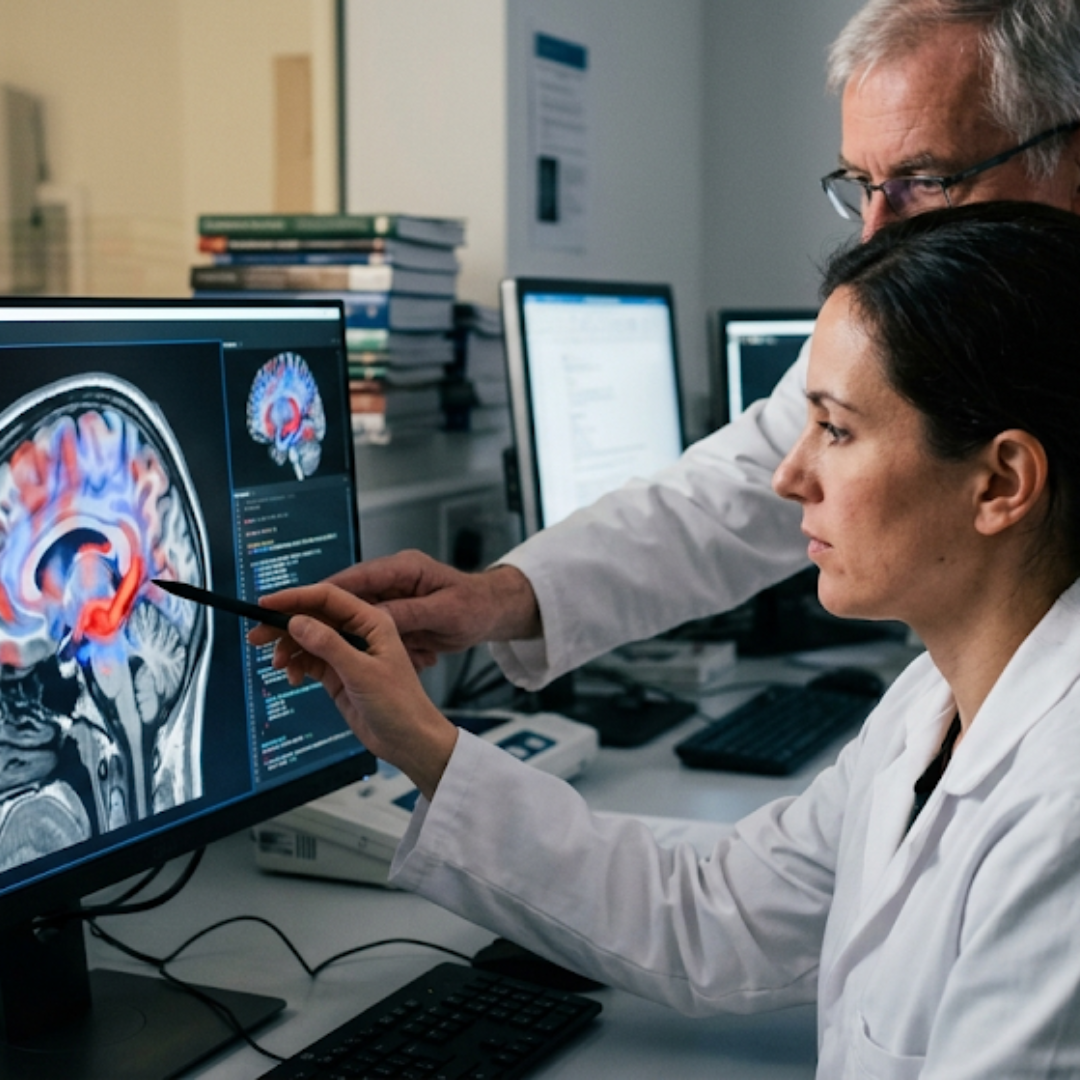
One of the most important aspects of this research is that the machine learning was "explainable." In many AI projects, the computer gives an answer but cannot explain why. In this study, the researchers used a method that forced the AI to show its work, highlighting exactly which parts of the brain it was looking at to make its decision.
This transparency allowed the team to confirm that the AI wasn't just finding random noise. Instead, it was identifying the same vital regions that neurologists track in the clinic, such as the areas responsible for executive function and motor control.
Why Does a Shared Link Matter?
Identifying these shared features is a major breakthrough for several reasons:
Earlier Detection: If we know the shared "starting point" for these structural changes, we might be able to identify people at risk much earlier, before the symptoms become condition-specific.
Repurposing Drugs: If a drug is found to protect the brain structures shared by both conditions, a medication originally designed for Alzheimer’s might prove highly effective for Parkinson’s, and vice versa.
A Unified Theory: This research moves us closer to a "unified theory" of neurodegeneration. Instead of fighting two separate battles, scientists can begin to target the fundamental biological weaknesses that allow both conditions to take hold.
A New Map for Future Care
This study proves that the boundaries between neurological conditions are more blurred than we once thought. By using AI to look "under the bonnet" of the brain, researchers are mapping out the common ground where these conditions meet.
For those living with Parkinson’s, this research is incredibly hopeful. It means that the vast amount of global research being done into Alzheimer’s could directly benefit the development of new therapies for Parkinson's. We are no longer looking at these conditions in isolation; we are looking at the health of the brain as a whole, using technology to find the universal keys to protection and repair.
Comments (0)
Loading comments...