


Could an Ayurvedic therapy influence inflammation in Parkinson’s?
October 6, 2026
 Beatrice
nflammation is attracting increasing attention in Parkinson’s research. Scientists are studying how inflammation in the brain and body, as well as changes in the gut, might contribute to the disease. A new review explores whether an ancient Ayurvedic treatment called Basti could influence one of the body’s main anti inflammatory pathways: the vagus nerve.
What is Basti?
Basti is an Ayurvedic treatment in which a liquid containing oils, herbal preparations or other medicinal substances is introduced into the rectum. The treatment is traditionally used to support bowel function and is believed in Ayurveda to balance certain bodily processes.
From a modern medical perspective, the researchers are interested in something more specific. Because the treatment acts directly in the lower gut, they propose that it could affect the gut lining, gut bacteria and nerves in the digestive system. These signals could then influence communication between the gut and brain.
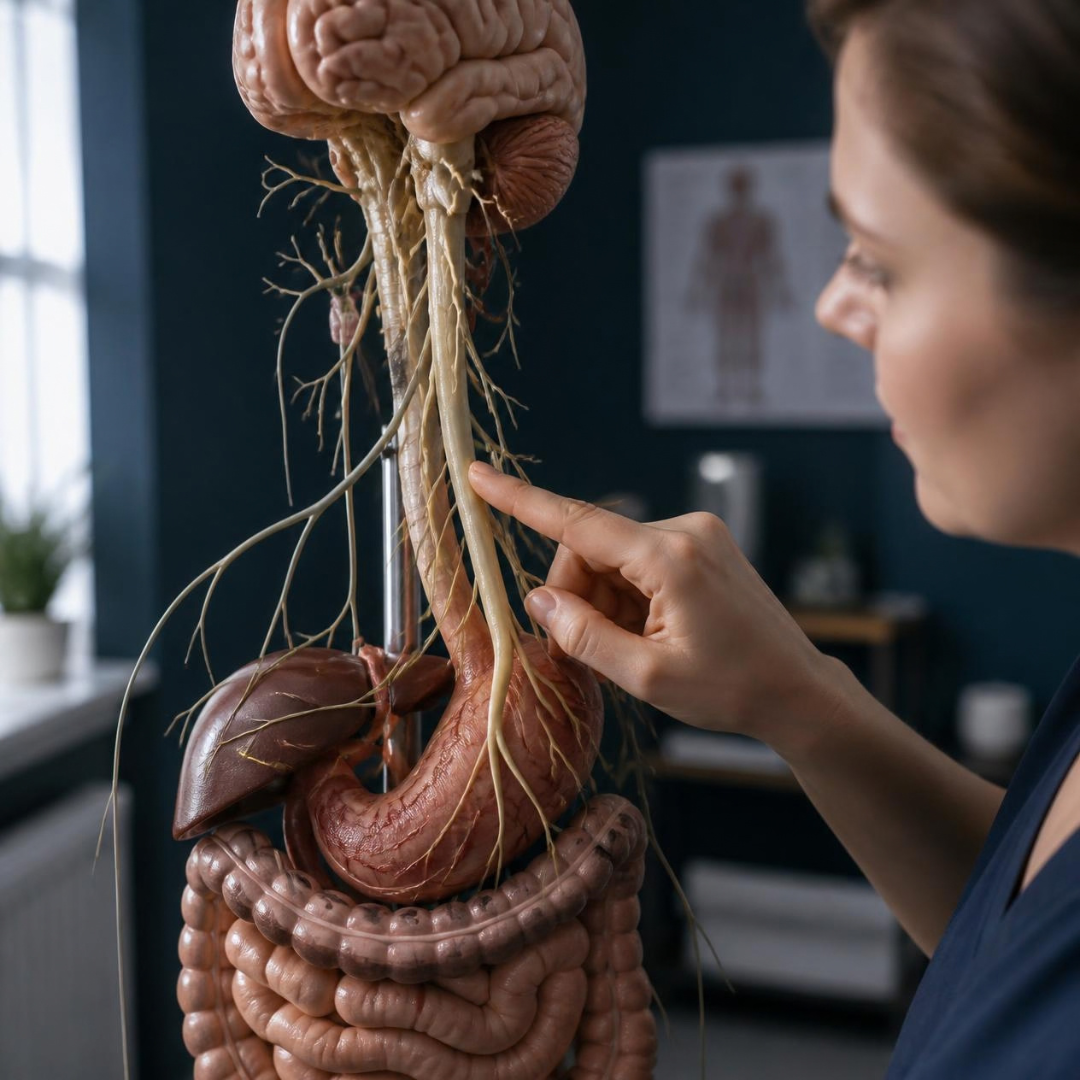
One important pathway is the vagus nerve, which connects the brain with the digestive system and also plays a role in controlling inflammation.
Why could this matter in Parkinson’s?
The vagus nerve is already being studied as a way of reducing inflammation. Electrical vagus nerve stimulation has shown anti inflammatory effects in other areas of research.
The authors suggest that Basti might influence some of these same pathways without directly stimulating the nerve with an electrical device. In simple terms, the theory is that changing what happens in the gut could change signals travelling between the gut, immune system and brain.
This is an interesting idea because Parkinson’s is increasingly being studied as a condition involving more than just the brain.
But does Basti treat Parkinson’s?
Not yet. This paper does not show that Basti improves tremor, stiffness, walking or other Parkinson’s symptoms, nor that it slows the disease.
The researchers are proposing a possible mechanism that needs to be tested. Future studies would need to find out whether Basti actually changes vagus nerve activity or inflammation, and whether those changes lead to meaningful benefits for people with Parkinson’s.
For now, Basti is an interesting research hypothesis, not an established Parkinson’s treatment. The bigger message is that researchers are looking more closely at the connection between the gut, immune system and brain, and the vagus nerve may be an important part of that story.
Comments (0)
Loading comments...