


How two distinct types of subthalamic brain cells control levodopa-induced dyskinesia in Parkinson's disease
July 4, 2026
 Beatrice
For people living with Parkinson’s disease levodopa is incredibly important. It acts like a chemical replacement for dopamine, which is the brain messenger that allows us to move smoothly. In the beginning, levodopa feels like a miracle drug because it stops the stiffness and shaking. But over time, a frustrating side effect usually develops. The medicine begins to trigger a secondary problem called dyskinesia, which causes a person to experience jerky, uncoordinated, and completely uncontrollable body movements.
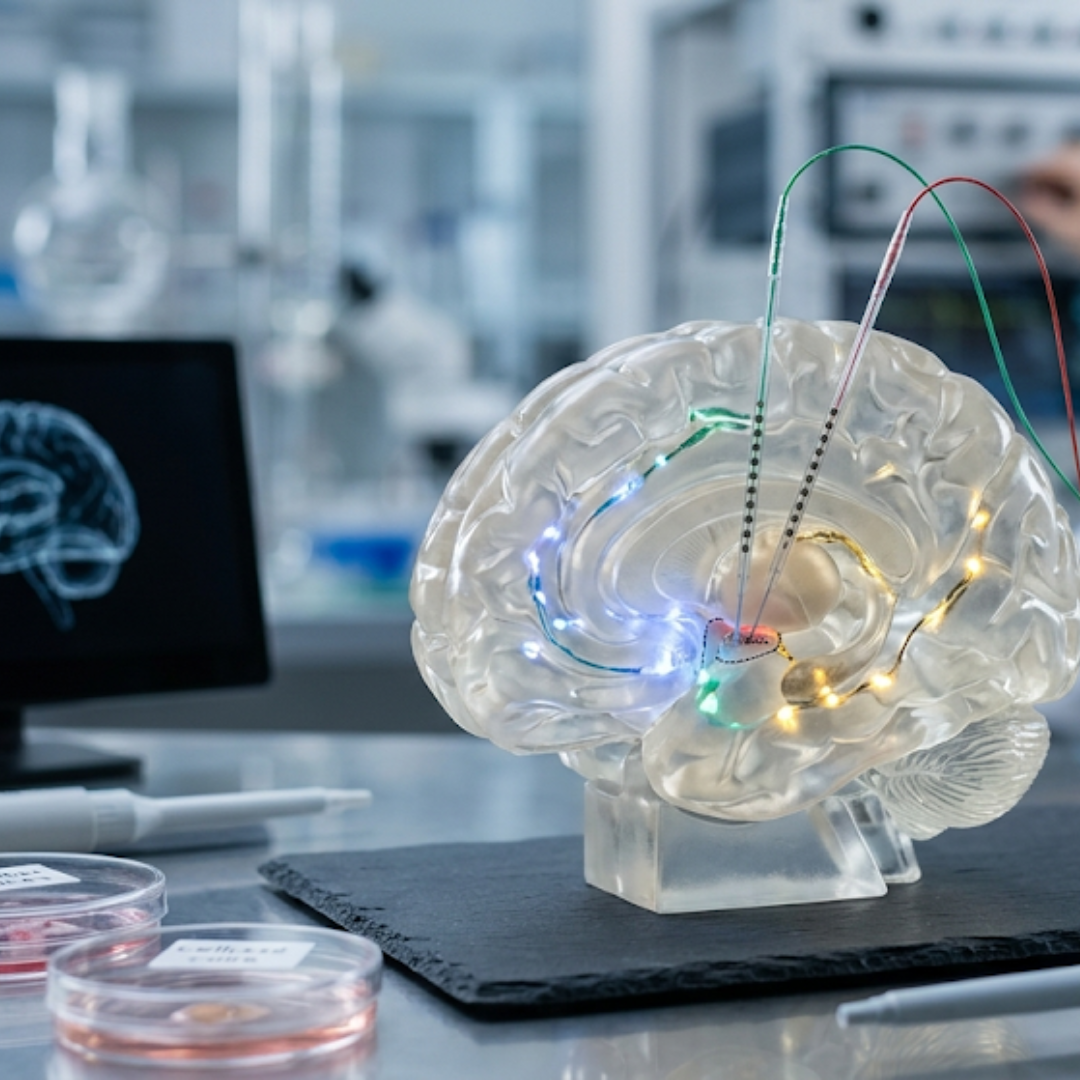
To combat this, doctors often turn to a treatment called Deep Brain Stimulation, or DBS. During this procedure, doctors implant a tiny wire deep into a part of the brain called the subthalamic nucleus. This wire delivers mild electrical pulses to calm the chaotic movements down. While DBS has worked well for years, scientists never truly understood the exact biology behind why it worked. They viewed this tiny brain region as one single lump of tissue that just needed to be shocked into compliance.
A recent study changed everything by proving that this brain region is actually split into two entirely different teams of cells. These two groups of cells act like opposing lanes of traffic, and they respond to Parkinson’s medication in totally different ways.
The first group of cells acts like a natural brake system for these jerky movements. When the researchers artificially turned this specific group of cells on, the wild, uncontrollable movements stopped almost entirely. However, there was a major catch. While turning these cells on stopped the jerkiness, it also made the body move much slower overall, bringing back some of the original stiffness.
The second group of cells acts more like an accelerator. Normally, when a patient takes their medication, these cells are supposed to go quiet and sleep. But the researchers found that if they forced these accelerator cells to wake up while the medication was in the body, it made the wild, jerky movements much worse.
This discovery is a great help for the future of medicine. Right now, DBS devices zap the entire area all at once, which can sometimes cause unwanted side effects. By showing that there are actually two different pathways at play, this study gives scientists a map to design much smarter treatments. In the future, instead of zapping the whole region, doctors might be able to program DBS devices to target only the helper cells while leaving the accelerator cells alone, giving patients perfectly smooth movement without any of the distressing side effects.
Comments (0)
Loading comments...