


Pitt Researchers to Study Alternate Brain Circuit in Parkinson’s Patients
November 10, 2024
University of Pittsburgh neuroscientists are pursuing an innovative approach to Parkinson’s disease with support from the Aligning Science Against Parkinson’s (ASAP) initiative. The team, led by Dr. Peter L. Strick, recently received an additional $8 million to continue their work on a project titled “Basal Ganglia Circuits in Parkinson’s Disease.” This project, which began in 2021 with an initial $12 million grant, focuses on an unusual brain pathway that might bypass some of the motor difficulties associated with Parkinson’s disease.
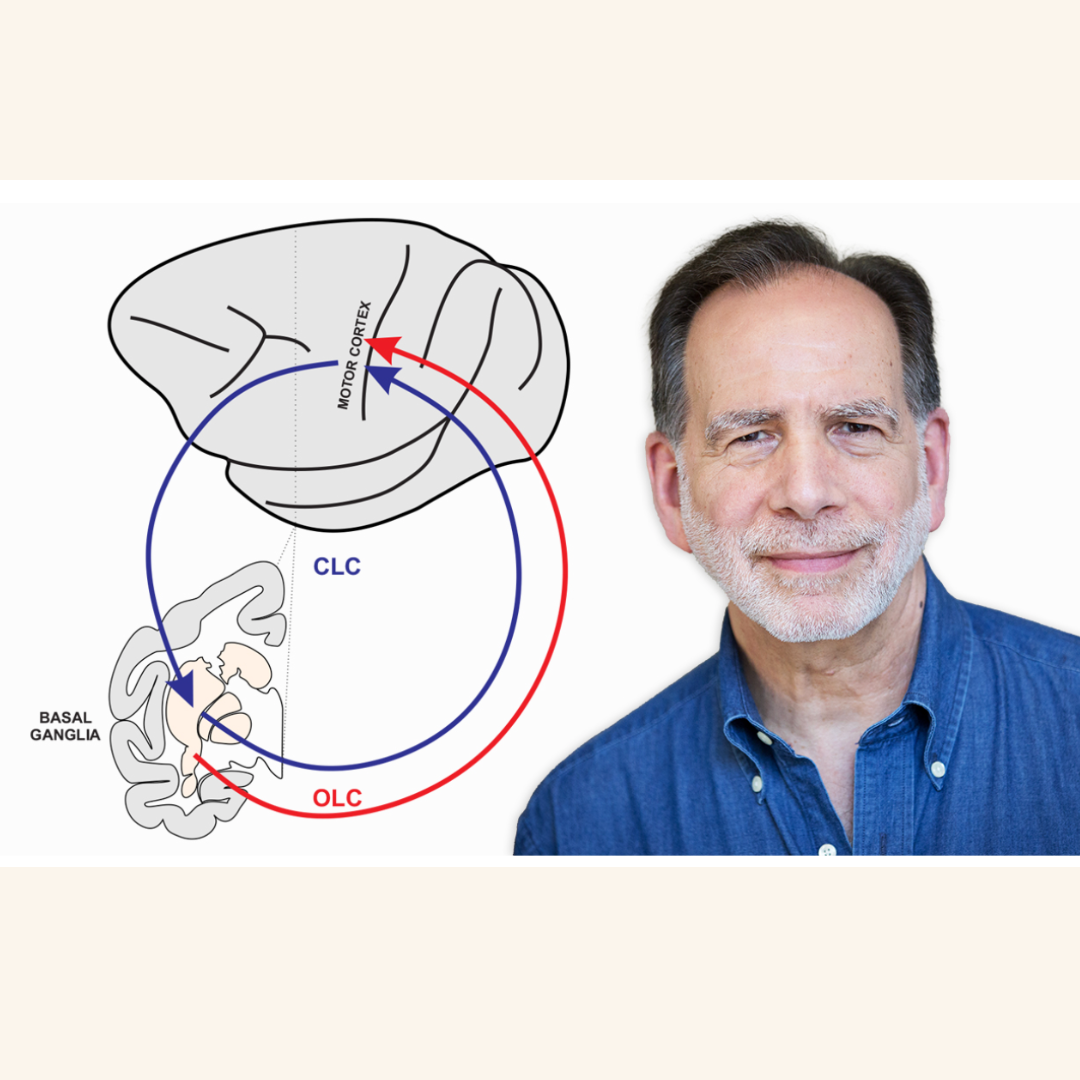
Parkinson’s disease often leads to movement difficulties, such as slowed walking, muscle stiffness, and hand tremors. These symptoms result from the progressive loss of nerve cells in a brain region called the basal ganglia. However, individuals with Parkinson’s sometimes experience a phenomenon known as "paradoxical kinesia," where they can suddenly move normally during moments of intense emotion, like running from danger. The team has hypothesized that a particular brain pathway—termed the Open Loop Circuit (OLC)—may be responsible for this temporary return of motor function.
With their initial funding, Strick and his team confirmed the presence of the OLC in both monkeys and humans and showed that it can help trigger movement. They even found that this circuit remains functional in monkeys with Parkinson’s-like symptoms.
In the coming years, the team will use advanced brain imaging to study the OLC in people with Parkinson’s. They will also explore whether stimulating this pathway in monkeys can restore movement and analyze the circuit’s molecular features. If these studies are successful, they aim to develop new treatments by activating the OLC through deep brain stimulation.
“This research could open up new possibilities for understanding the brain,” said Dr. Strick, who is known for his work in brain mapping. “We’re constantly learning more about how brain circuits work, and each experiment reveals something fundamental.”
The research team includes scientists from the University of Pittsburgh and Dr. Scott Grafton from the University of California, Santa Barbara. ASAP, an initiative dedicated to advancing Parkinson’s research through collaboration and shared data, awarded this grant with funding provided by the Michael J. Fox Foundation for Parkinson’s Research.
Through this work, researchers hope to uncover new ways to manage and treat Parkinson’s disease, ultimately leading to better outcomes and quality of life for those affected.
Photo By Anita Srikameswaran
Comments (0)
Loading comments...