


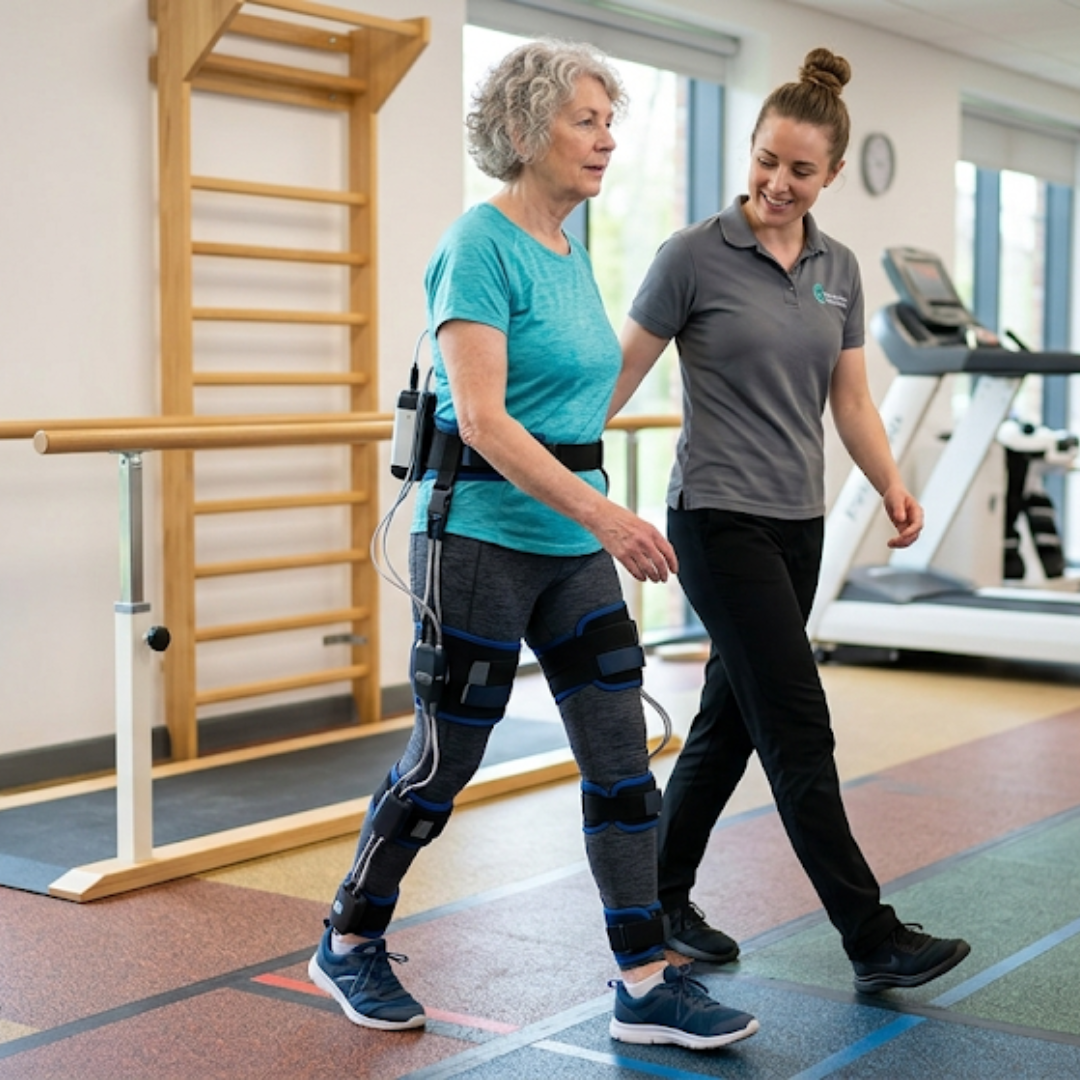
Wearable soft robots help people with Parkinson's improve walking speed and balance
April 29, 2026
A new pilot study suggests that "soft" robotic exoskeletons could offer a comfortable and effective way to help people with Parkinson's improve their walking and stability. While traditional robotic suits are often heavy and rigid, these soft versions are made of lightweight fabrics and cables, making them much easier to wear during rehabilitation sessions. Researchers conducted a randomized controlled trial to see how this technology compares to standard gait training.
The study followed twenty-four people with Parkinson's who were divided into two groups. One group practiced walking while wearing the soft robotic suit, which provides gentle, timed assistance to the legs, while the other group underwent traditional walking exercises without the device. Both groups completed their training over several weeks to see which method provided the most benefit for long-term movement.
The results showed that those using the soft robotic exoskeleton experienced significant improvements in their walking speed and stride length. Perhaps more importantly, the participants reported feeling more stable on their feet, with clinical tests showing a boost in overall balance. These improvements were not just temporary; the benefits remained evident even when the participants were not wearing the device, suggesting that the robotic assistance helped "re-train" the brain and muscles to walk more effectively.
Traditional physiotherapy is vital for managing movement, but it can be physically demanding for both the person with the condition and the therapist. The soft exoskeleton acts as a supportive partner, providing a consistent boost that allows people to practice walking for longer periods without becoming overly fatigued. Because the suit is flexible, it moves with the body rather than forcing it into rigid patterns, which participants found much more natural and comfortable.
While this was a small pilot study, the success of the technology opens the door for more personalized home-based rehabilitation. If these devices become more widely available, they could allow people to maintain their mobility and independence from the comfort of their own living rooms. The researchers concluded that this microengineered support system is a promising tool to help people stay active and reduce the risk of falls as they live with the condition.
Comments (0)
Loading comments...