


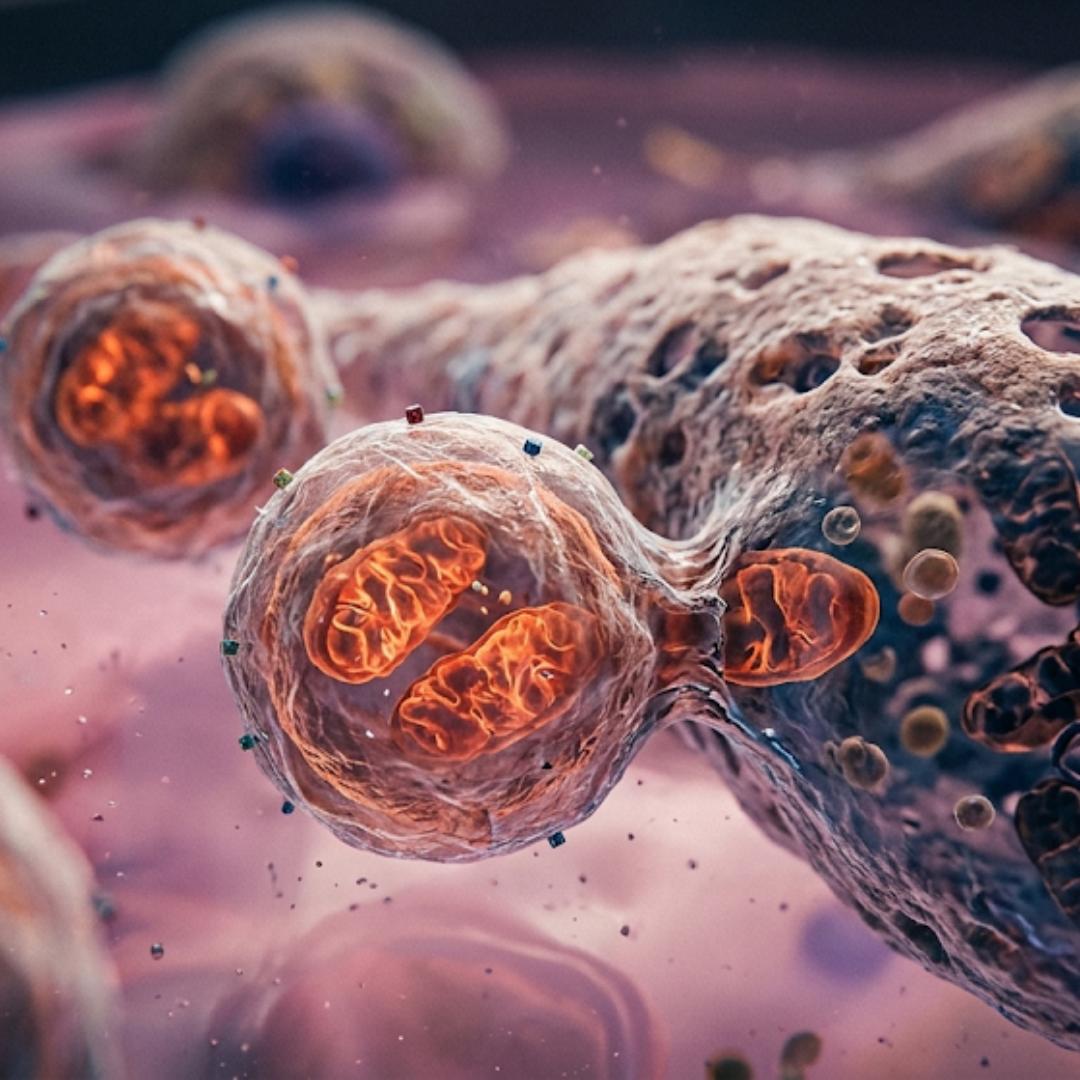
Encapsulated mitochondrial transplants show promise in restoring cell energy and protecting brain cells in Parkinson's models
May 25, 2026
A research team from the CAS Guangzhou Institutes of Biomedicine and Health has developed a clever way to deliver tiny powerhouses directly into damaged cells, offering an exciting new avenue for treating Parkinson's.
Mitochondria act as the generators inside our cells, turning food into the energy that keeps everything running smoothly. When these generators become faulty or worn down, cells begin to struggle and fail. This energy drop is particularly damaging to the specialised brain cells that produce dopamine, and their decline is a central part of why movement becomes difficult for people with Parkinson's. While scientists have long thought about replacing damaged mitochondria with healthy ones, getting new mitochondria safely inside cells has always been a significant hurdle.
To overcome this, researchers created a clever delivery method by packaging healthy mitochondria into tiny protective wrappers made from red blood cell membranes. These microscopic packages, called mitochondrial capsules, are only about one-thousandth of a millimetre wide. The protective coating allows the capsules to travel safely and slip into target cells with remarkable efficiency, successfully delivering the vital cargo to about eighty per cent of the target cells.
Once inside, the new mitochondria do not just sit there idle. They actively merge with the cell's existing network, taking over energy production and helping to dilute the impact of any remaining damaged mitochondria. In laboratory models of Parkinson's, this boost of fresh energy produced striking results. The treatment prevented the ongoing loss of dopamine-producing brain cells, restored normal energy levels in the affected areas, and significantly improved motor skills, bringing movement control almost back to normal levels.
Crucially, the benefits of the therapy continued well after the initial treatment, showing that the new powerhouses had settled in for the long term. While this research is still in the animal testing stages and requires much more development before it can be tried in clinics, the ability to successfully ship working components directly into cells opens up a fascinating new strategy for protecting the brain and restoring movement.
Comments (0)
Loading comments...