


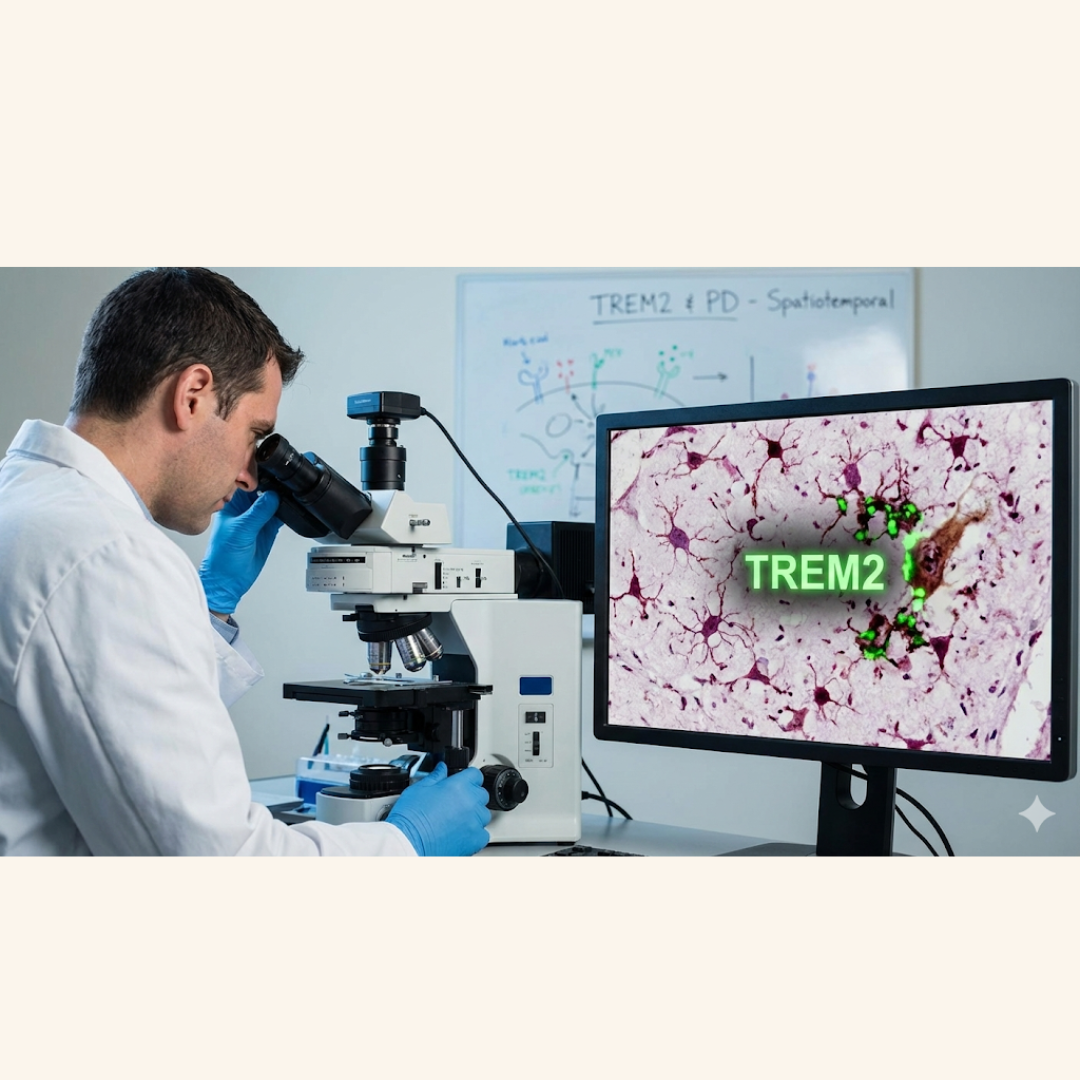
New Reseach Identifies TREM2 Protein as a Critical Timing Switch for Brain Immunity
January 14, 2026
A comprehensive new review published in npj Parkinson’s Disease has highlighted a specific receptor on the surface of the brain’s immune cells as a pivotal target for future therapies. The paper details how a protein known as TREM2 acts as a master switch for microglia, the brain’s resident cleanup crew, dictating exactly when and where they react to toxic buildup.
The researchers argue that the role of these immune cells is not static; it changes dramatically depending on the stage of the condition. In a healthy brain, microglia simply survey the environment. However, when they encounter the toxic clumps of alpha-synuclein associated with this condition, they need a signal to shift gears into a protective, cleaning mode. TREM2 is that signal. It allows the cells to sense the damage, cluster around the affected neurons, and attempt to engulf the debris.
Crucially, the authors discuss the "spatiotemporal" regulation of this process, which essentially means that timing and location are everything. In the early stages, high levels of TREM2 activity appear to be protective, helping to contain the spread of toxic proteins. However, as the condition progresses, this system can become overwhelmed or dysregulated. The receptor can be shed from the surface of the cell, floating away into the spinal fluid as "soluble TREM2." When this happens, the immune cell loses its ability to sense the problem effectively, potentially leaving inflammation to run wild and cause further damage to nerve cells.
This insight opens the door to a new class of treatments similar to those currently being tested in Alzheimer’s research. The review suggests that rather than just trying to suppress the immune system, we should look for ways to boost or sustain the function of TREM2. By using specific antibodies to keep this switch turned "on" or preventing it from being shed, we might be able to keep the brain’s own janitorial staff working efficiently for longer, helping to clear the toxic proteins before they can destroy the neurons responsible for movement.
Comments (0)
Loading comments...