


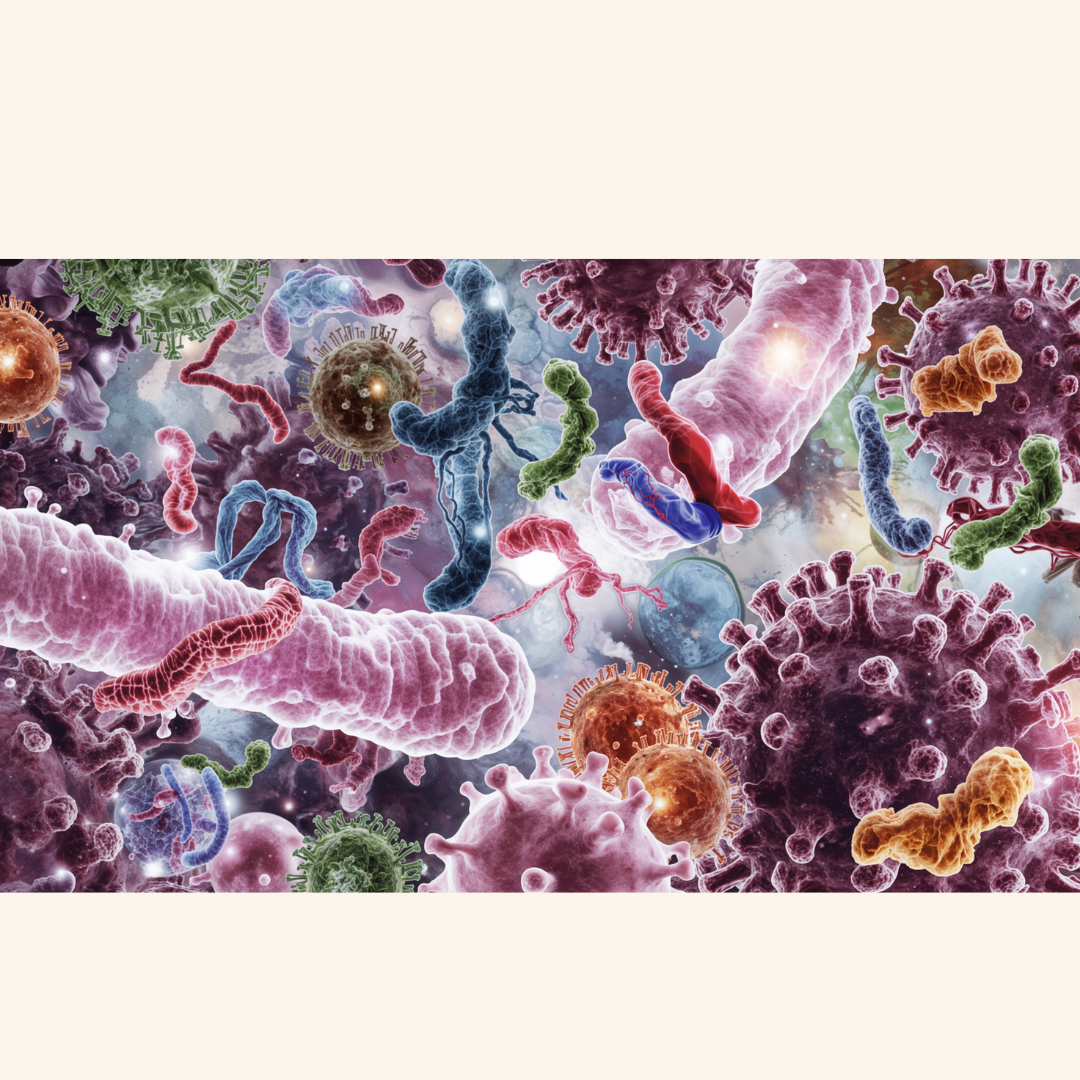
The Gut Microbiome as a Contributor and Therapeutic Target for Parkinson's Disease
November 14, 2025
 mister green
Dr Sarkis Mazmanian is one of the world’s leading experts on the human microbiome. He is the Luis and Nelly Soux Professor of Microbiology at Caltech and a MacArthur Fellow. His work has changed the way scientists think about the tiny organisms living inside us and how they shape our health. He has received many major awards for discoveries that have pushed the field forward.
He recently spoke at a conference hosted by the USC Dornsife Institute of Armenian Studies and the Armenian Society of Fellows. The event brought together scientists, technologists and researchers from California and Armenia to share the latest breakthroughs. It also highlighted how collaboration across borders can help tackle global challenges and how universities play a key role in driving progress.
The Gut and the Brain Speak to Each Other
The gut and the brain are in constant contact. Nerves, hormones and immune cells carry signals between the two. Scientists now see this connection as a kind of two way motorway inside the body.
Over the years, his laboratory has studied several conditions including inflammatory bowel disease, multiple sclerosis, autism and depression. Fifteen years ago, the team turned their attention to Parkinson’s because the early signs of the disease often appear in the gut.
Constipation affects most people with Parkinson’s and often comes decades before movement problems such as tremors or stiffness. This raised an important question. Could Parkinson’s begin in the gut before it reaches the brain
The idea is not new. James Parkinson himself suggested a link in the early 1800s. More recent studies have shown that in some cases this may indeed be true.
The Microbiome May Play a Role
The microbiome is the huge community of bacteria living in our intestines. In fact our bodies contain more bacterial cells than human cells. These microbes help shape our immune systems metabolism and even some nerve activity.
The Caltech team analysed stool samples from people with Parkinson’s and compared them with samples from healthy people. They found clear differences in the mix of microbes. Certain bacteria were more common in people with Parkinson’s while others were reduced. This suggested that the microbiome might be involved in the disease.
Clues from Animal Studies
To explore this further the researchers used special mice that develop Parkinson’s like symptoms. When the mice had a normal microbiome they showed motor problems and constipation. But when their microbiome was removed the symptoms almost disappeared. They also showed fewer clumps of a protein called alpha synuclein the substance that builds up in the brains of people with Parkinson’s.
The team then transplanted microbiomes from human donors into mice. Mice given a microbiome from a person with Parkinson’s had worse symptoms than mice given a microbiome from a healthy person. This showed that something in the Parkinson’s microbiome was making the condition worse.
They found that around twenty percent of people with Parkinson’s had unusually high levels of a type of E coli that produces a protein known as a bacterial amyloid. This bacterial protein behaves much like alpha synuclein. It forms sticky fibres that can trigger clumping. In mice this bacterial protein was able to spark alpha synuclein buildup first in the gut and then in the brain.
A New Way to Treat Parkinson’s
If the condition begins in the gut there may be a new way to treat it. Instead of trying to push drugs into the brain which is extremely difficult the team wondered whether they could target the harmful bacterial proteins in the gut.
This led to the creation of a new company in 2016 and the development of a drug called AX 5006. It is taken by mouth and stays only in the gut. It does not enter the bloodstream or the brain. Its purpose is to stop the bacterial amyloid from folding into the harmful fibres.
In laboratory tests AX 5006 prevented the bacterial protein from forming clumps. In mice it reduced both gut and brain aggregation of alpha synuclein. Most strikingly the drug not only prevented symptoms but actually reversed them even in older mice that already had movement problems.
Because the drug stays in the gut it may cause fewer side effects. It is expected to enter clinical trials soon.
What This Means
This research points towards a fresh view of Parkinson’s. Differences in the gut microbiome may act as early triggers. Bacterial proteins may spark the buildup of alpha synuclein. Targeting these pathways in the gut could offer a new and simpler route to treatment. It may also open the door to other approaches such as diet changes or faecal transplants.
The work is early but offers hope. Understanding the gut brain link may give us new ways to spot, slow or even prevent Parkinson’s disease.
Comments (0)
Loading comments...