


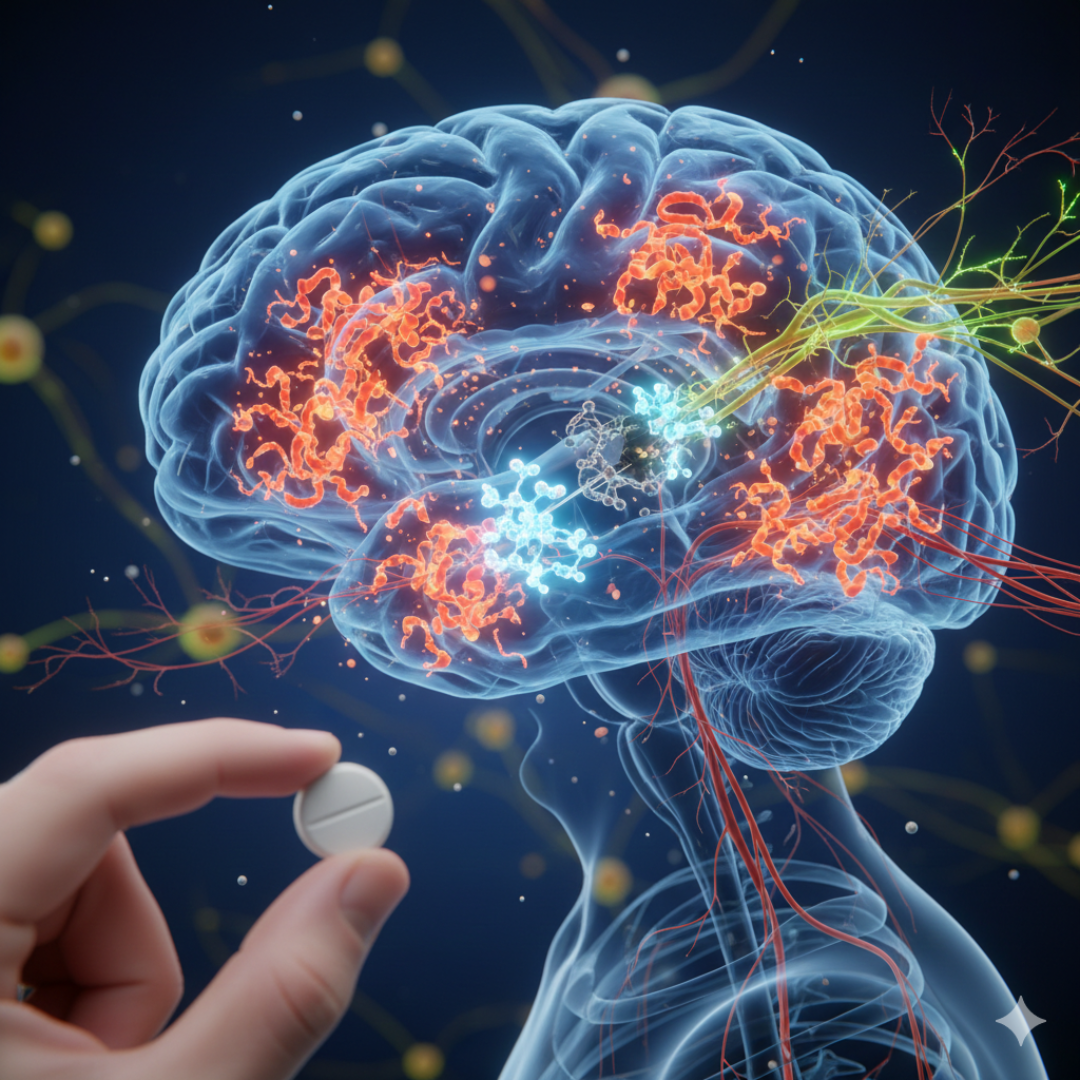
Risvodetinib Shows Promise in Halting Parkinson’s Progression
February 23, 2026
A landmark clinical trial has provided fresh hope for the Parkinson’s community, revealing a potential new way to slow down or even stop the progression of the condition. Published in the journal Nature Aging on 20 February 2026, the final results of the "201 Trial" suggest that an experimental drug called risvodetinib is not only safe and well-tolerated but may also directly tackle the underlying cause of the condition.
The study, which was a placebo-controlled, randomised phase 2 trial, focused on people with untreated Parkinson’s. For decades, treatments have focused primarily on managing the symptoms—such as tremors and stiffness—rather than addressing the biological processes that cause them. Risvodetinib, however, works differently. It is a small-molecule inhibitor that targets "c-Abl," a specific enzyme that, when overactive, is linked to the buildup of toxic proteins in the brain.
The most exciting finding from the trial is that risvodetinib led to a measurable reduction in alpha-synuclein pathology. Alpha-synuclein is a protein that clumps together in the brains of people with Parkinson’s, forming "Lewy bodies" that damage nerve cells. This trial represents the first time a treatment has shown a direct reduction of this toxic protein within the human body. By lowering these levels systemically, risvodetinib aims to protect neurons and preserve the brain's function.
Because the drug is taken as a once-daily oral tablet, it offers a practical approach for long-term management. Participants in the study showed that the drug was easy to tolerate, which is a crucial hurdle for any new therapy. While the primary goal of this phase was to ensure safety, the drop in alpha-synuclein levels provides a strong signal that the drug is hitting its target and could change the trajectory of the condition for many.
This research marks a significant shift from "symptom management" to "disease modification." If further trials confirm these results, risvodetinib could become one of the first therapies capable of reversing some of the functional loss caused by Parkinson’s. For now, the successful completion of the 201 Trial offers a vital piece of evidence that scientists are getting closer to a treatment that doesn't just mask the condition, but actively fights it.
Comments (0)
Loading comments...