


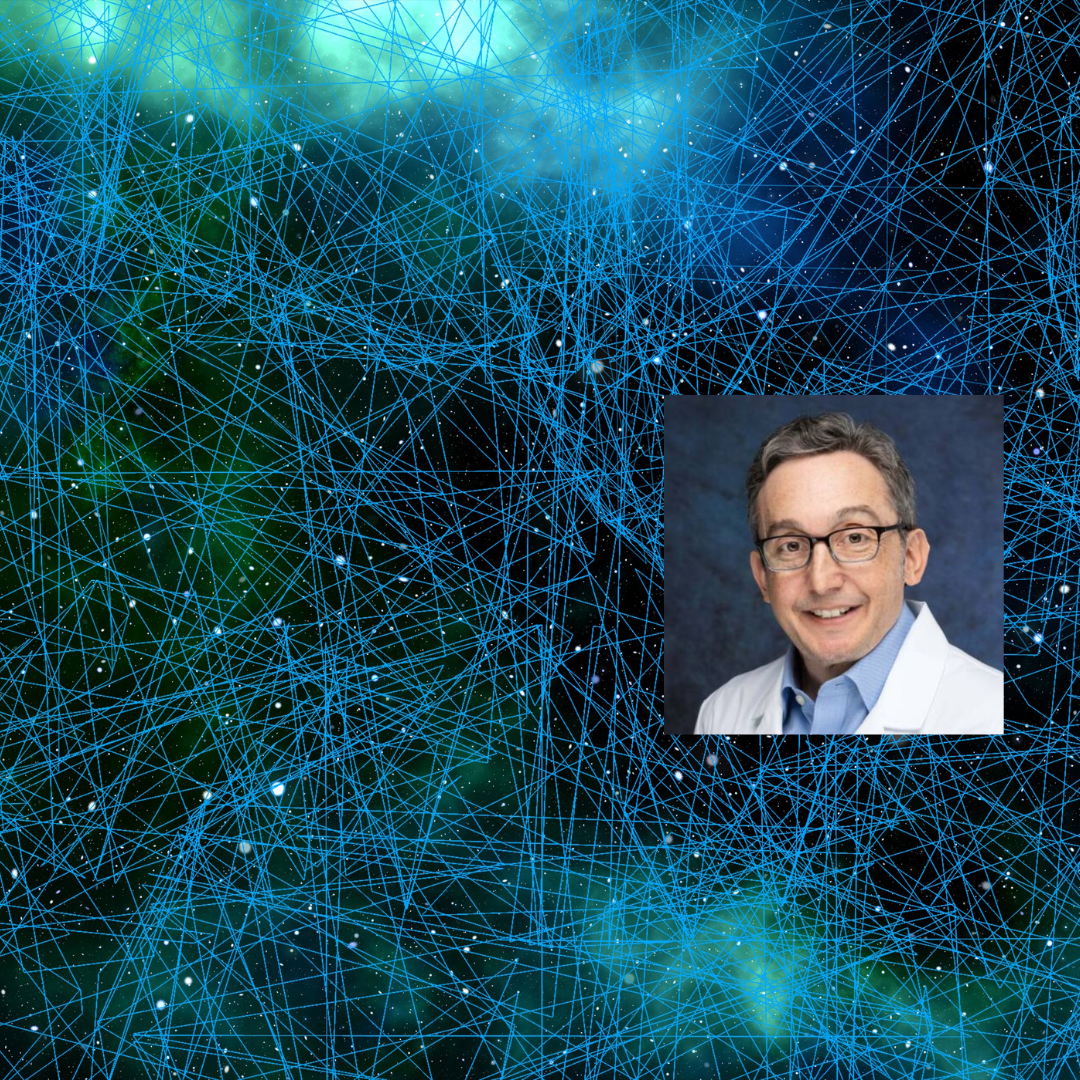
Dr Michael Okun explains where we stand with treatments that could slow down Parkinson's
November 4, 2026
 Beatrice
In a webinar hosted by the Parkinson's Foundation on 14 September 2026, world renowned neurologist Dr Michael Okun sat down with Dr James Beck to answer the questions on everybody's mind. How close are we to slowing down Parkinson's, what is actually happening with stem cells, and why is genetics suddenly taking centre stage?
Instead of dry medical slides, the conversation offered a candid, grounded look at where the science stands today and how we should think about the future of care.
The three buckets of treatment
To make sense of the research landscape, Dr Okun divides treatments into three simple buckets.
The first bucket is symptomatic therapy. This includes everything we already use today to feel better and move more easily, from daily medications and surgical devices to exercise and nutrition.
The second bucket is what scientists call disease modification. Rather than just helping you manage today's symptoms, a treatment in this bucket aims to slow down the actual progression of the condition over the years. Years ago, researchers talked a lot about neuroprotection, or saving brain cells from dying. However, early trials taught scientists a lesson in humility: you can sometimes protect brain cells in a laboratory without actually changing how a person feels or functions in daily life. Today, the focus has shifted to slowing down the condition in a way that genuinely preserves your quality of life and keeps you doing what you love for much longer.
Importantly, Dr Okun noted that a treatment that slows progression might not give you an immediate "wow effect" when you take it. Unlike levodopa, which noticeably eases stiffness or tremor within an hour, a therapy that slows the condition works quietly in the background over many years.
The third bucket is what Dr Okun calls the "P bucket" for precision medicine, rather than the "C bucket" for a cure. Because Parkinson's is not just one uniform condition, finding a single magic bullet is unlikely. Instead, the future lies in precise, targeted combinations of therapies tailored to an individual's specific biology.
What stem cells can and cannot do
For over twenty five years, headlines have promised that stem cells are just five years away from solving everything. While science has made massive leaps, including the ability to create stem cells from a person's own skin cells, it is vital to separate hope from hype.
Think of a stem cell as a young cell that hasn't decided what it wants to be when it grows up. Scientists have learned how to guide these cells to become dopamine producing cells and transplant them through surgery into specific circuits of the brain. When placed into the brain's movement circuit, these new cells can help ease motor symptoms like tremor, stiffness, and slowness. Careful, regulated clinical trials are currently underway in the United States, Europe, and Japan to test standardized ways of doing this safely.
However, Dr Okun was crystal clear on one major point: stem cell therapy does not slow down Parkinson's. Replacing lost cells is very different from stopping the underlying reason those cells struggled in the first place. A stem cell transplant is essentially a sophisticated way to treat motor symptoms, much like Deep Brain Stimulation, rather than a way to halt the condition.
Because the promise of stem cells is so tempting, predatory clinics around the world have set up lucrative "stem cell tourism" businesses. They charge tens of thousands of pounds out of pocket for unproven infusions into the veins or spinal fluid. Dr Okun shared a heartfelt warning about the financial and emotional devastation these unregulated clinics cause when their false promises of a cure fall flat. If a clinic asks you to pay to be in a study, or promises a miracle, walk away. Legitimate research trials rarely charge participants; in fact, they usually reimburse you for your travel and time.
Targeting the sticky protein
If stem cells only replace what is lost, how do we actually slow the condition down? One major clue came back in the 1990s from studying a large Italian and Greek family where many relatives developed Parkinson's. Researchers discovered that this family had a genetic quirk causing their bodies to make three times the normal amount of a protein called alpha synuclein.
In most people with Parkinson's, this protein misfolds and clumps together into clusters known as Lewy bodies. For decades, doctors could only see these clumps during an autopsy. Today, thanks to remarkable new biological markers and advanced microscopes, scientists can detect and measure this protein in living people.
Researchers are now testing several clever ways to tackle alpha synuclein. Some trials are trying to stop the body from producing too much of it, while others aim to stop it from clumping together or spreading from cell to cell. Even more exciting, young researchers are using modern tools to look further upstream, trying to figure out what causes the protein to misfold in the very first place.
Genetics and the cellular rubbish bin
While environmental factors play a big role in Parkinson's, genetics provide what Dr Okun calls the biological foothold, like putting cleats into the ground to gain traction on a steep hill.
Parkinson's is not a simple plumbing problem where fixing one pipe solves everything. However, studying specific genetic variations, such as LRRK2 and GBA1, gives scientists a clear roadmap of what is going wrong inside the cells.
For example, the GBA1 gene is linked to how a cell manages its internal waste disposal system, scientifically known as the lysosome. You can think of the lysosome as the cell's rubbish bin, responsible for clearing out misfolded proteins and cellular clutter. When that waste disposal system runs slowly, rubbish builds up. Researchers are currently testing whether boosting the enzymes that power this cellular rubbish bin, such as trials studying high doses of a repurposed cough medicine ingredient called ambroxol, can help keep brain cells healthy.
Targeting a specific genetic group allows researchers to test a medicine in people whose biology is very similar. Dr Beck pointed to the inspiring history of cystic fibrosis: the very first precision treatment helped only two percent of people with that condition, yet that single foothold unlocked the science that now helps ninety five percent of the community live decades longer. Scientists hope that proving a treatment works in a small genetic subgroup of people with Parkinson's will quickly open the door to helping the wider community, even those without a known genetic link.
How to approach clinical trials and the years ahead
With several promising treatments moving into large phase three trials, volunteering for research is one of the most powerful ways to help move science forward. However, Dr Okun advised approaching clinical trials with clear eyes rather than desperation.
Before joining a study, check that it is listed on an official registry like clinicaltrials.gov, ask for the written protocol and consent forms, and review them with your own neurologist. Consider the practical side too: early trials often involve hours of sitting around for tests and frequent travel. If you live too far away or cannot commit the time, you should never feel guilty. Furthermore, you should never stop taking your current Parkinson's medications just to try to qualify for an unmedicated trial. Torturing yourself by going without effective daily symptom relief for years is simply not worth the toll on your wellbeing.
When asked whether we will see a major breakthrough in the next five years, Dr Okun urged the community to ditch the frustrating five year countdown clock. While new therapies for mobility, sleep, mood, and continuous medication delivery are certainly on the horizon, nobody should ever put their life on hold waiting for a scientific miracle.
On his personal wish list for the future, Dr Okun is keeping a close eye on gene therapies, smarter adaptive Deep Brain Stimulation, focused ultrasound, GLP 1 medications, and the complex world of the gut microbiome. In the meantime, the closest thing we have to modifying the course of the condition right now is looking after our overall brain health: staying physically active, protecting our sleep, eating well, and keeping blood pressure, cholesterol, and blood sugar in check. Live your life to the fullest today, optimize the treatments we already have, and let the scientists keep taking steady bites of the apple.
Comments (0)
Loading comments...