


PLA2G6: The Molecular Glue Keeping Your Brain Cells Powered
March 20, 2026
New research published in Nature Communications has uncovered a vital "wiring fault" in the brain that explains how a specific gene helps prevent the condition. While scientists already knew that mutations in a gene called PLA2G6 could lead to an early-onset form of Parkinson's, they haven't always understood exactly why. This study finally reveals that this gene acts like a protective shield for the power stations inside our cells.
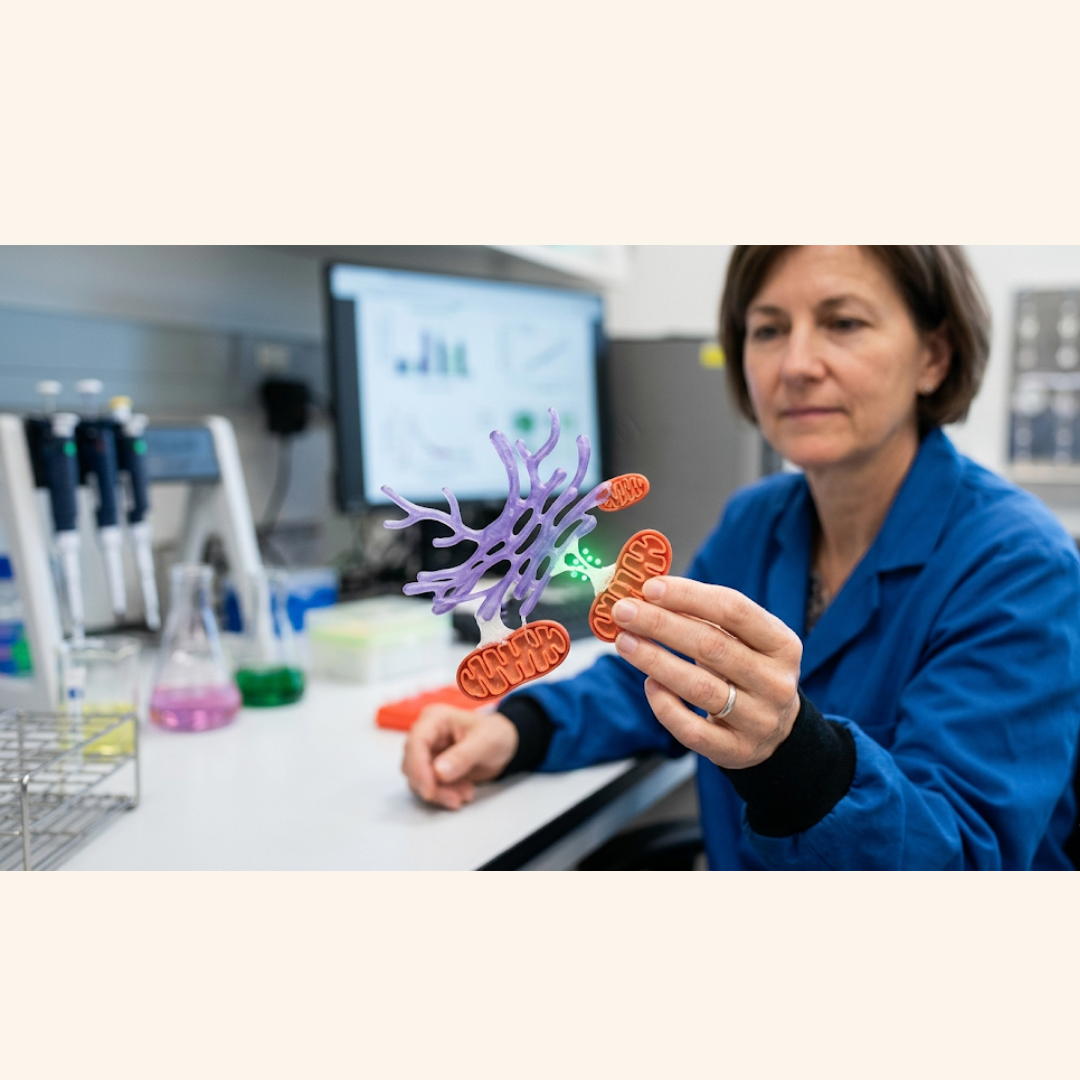
To stay healthy, our brain cells rely on two main components working together: the mitochondria, which act as the cell's "batteries," and the ER, which handles protein production and calcium storage. For these two to function, they must physically link together to swap calcium. This calcium transfer is the essential spark that tells the batteries to start producing energy. Without it, the cell essentially runs out of power and dies.
The researchers discovered that the PLA2G6 protein acts as a guardian for the "molecular glue" (a protein called IP3R1) that holds these two parts together. When this gene isn't working properly, the glue is destroyed, the connection snaps, and the calcium flow stops. This "power failure" is what eventually leads to the loss of neurons and the development of motor symptoms.
Most promisingly, the study showed that by protecting this molecular glue, the connection could be restored and the cells rescued. This discovery is a significant step toward precision medicine, as it gives scientists a clear target for new treatments. By developing therapies that mimic this protective "shielding" effect, we may be able to keep these cellular power stations linked and healthy, potentially stopping the progression of the condition at its source.
Comments (0)
Loading comments...