


Why walking cues work brilliantly for some people with Parkinson's and fail for others
October 27, 2026
 Beatrice
Counting steps in your head or marching to the steady click of a metronome is a classic physiotherapy trick. For one person, that simple rhythm acts like a magic switch that unlocks a smooth, confident stride. For the person standing right next to them in the clinic, the exact same trick does nothing at all, or even makes walking feel more awkward.
To figure out why responses vary so wildly, a team of researchers led by Cindel Albers and Jorik Nonnekes at Radboud University Medical Center teamed up with universities in Belgium, Italy, and Israel. Together, they assessed 277 people with Parkinson's who were experiencing walking difficulties.
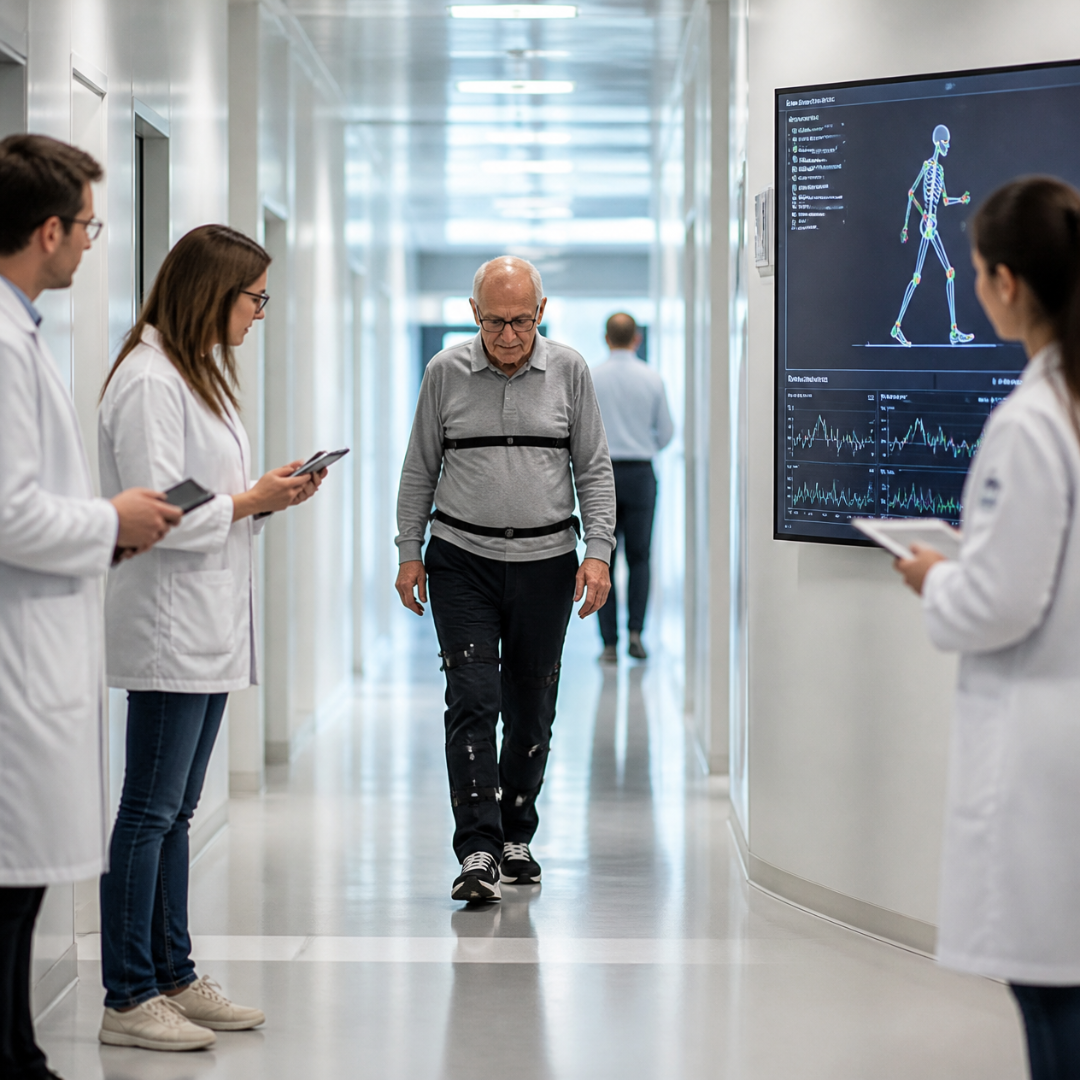
During the trial, every participant had their walking tested in three different ways while wearing small motion sensors on their wrists, ankles, and lower back. First, they walked normally at a comfortable pace for two minutes. Next, they walked using an external cue, which meant matching their footsteps to a digital metronome adjusted to fit their natural pace. Finally, they walked using an internal cue by silently counting from one to four over and over in their heads. Alongside the walking tests, the researchers measured everyone's balance, walking speed, memory, attention span, and mood, including levels of anxiety and apathy.
To judge whether the cues worked, the scientists looked closely at the consistency of the timing from one step to the next. When walking becomes unsteady and shuffling, the timing between steps becomes erratic, which is a major trigger for trips and falls. If a cue makes the timing of those steps more regular and predictable, it is doing its job.
The results showed that the people who got the biggest boost from both the metronome and silent counting were actually those who had the most irregular, erratic footsteps to begin with. If your walking rhythm is already quite steady, adding a cue does not leave much room for improvement. Crucially, whether or not someone experienced freezing of gait made no difference to how well the cues worked, meaning people with Parkinson's who freeze can benefit just as much from these strategies as those who do not.
Having an unsteady walk is only half the story. To actually use a cue, your brain has to bypass its faulty automatic pilot and steer your legs manually. The researchers discovered that no single clinical test can predict if a cue will work for you. Instead, success relies on a broader blend of your overall physical fitness, your thinking skills, and your emotional state. People who walked a bit faster, had better balance confidence, and had sharper attention and working memory saw the greatest improvements when using cues. You need enough of a walking problem to need the help, alongside enough physical and mental reserve to put the strategy into action.
One of the most reassuring discoveries came when looking at internal cueing, where people counted silently in their heads. The team found a clever backup system at play between physical ability and mental sharpness. If someone had slightly weaker memory or attention skills, they could still get great results from counting steps as long as their physical balance and walking speed were strong. On the flip side, if someone had more severe physical trouble with their balance and speed, having sharp attention and working memory picked up the slack and allowed the mental counting to work. Strong capability in one area simply steps in to cover for limitations in the other.
There was also an unexpected twist regarding mood and anxiety. People with Parkinson's who scored higher on anxiety scales actually responded better to silent counting than those who were less anxious, an effect that did not happen with the metronome. The researchers suspect that when you are anxious, worrisome thoughts hijack your attention and make walking much harder. Giving your brain a strict mental job like counting steps forces your focus back onto your feet and leaves less mental space for anxious thoughts to interfere.
Because these tests were done in a quiet, straight hospital hallway for just two minutes at a time, the team is continuing their work to see how well these strategies hold up in the busy, unpredictable real world over the long term. For now, the takeaway is practical and encouraging. Walking cues are not a one size fits all prescription, and if a metronome app does not suit your brain, silently counting your steps just might.
Comments (0)
Loading comments...